





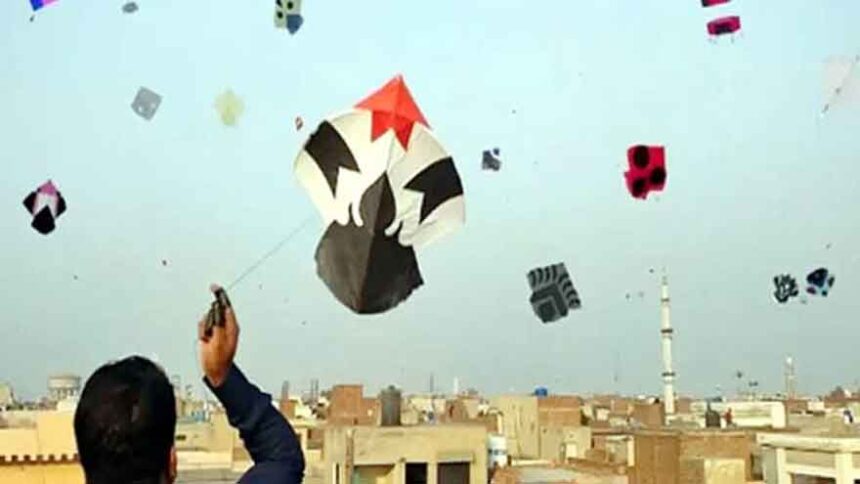
For centuries, Basant marked the arrival of spring in the historic city of Lahore like a shared heartbeat. The narrow streets of the old city rejoiced with the festival, where every rooftop became a stage. Long before it became controversial, the kite-flying festival defined Lahore’s cultural identity and is set to return after 25 years.
The festival of Basant transcends borders, celebrated in Punjab on both sides of the Pakistan-India divide. The cities of Lahore, Kasur and Amritsar have attracted tourists for decades. The festival reached Lahore over the centuries through the cultural traditions of subcontinental Punjab. The word ‘Basant’, verbatim for ‘Vasant’ in the language Sanskrit, means ‘spring’. It was traditionally celebrated on the fifth day of the Hindu month of Magh, marking the arrival of spring.
In the 19th century, the Sikh Emperor Maharaja Ranjit Singh patronised Basant in Lahore, where he and his queen, Moran, dressed in yellow and held events at palaces, such as soldiers dressed in yellow demonstrating their martial prowess. Over the next century, the city continued to celebrate Basant, making it one of the most popular cultural festivals held in South Asia.
The Old City of Lahore drew hundreds during the month of February every year to have a shared experience of the tradition rooted in Punjab. The gardens and courtyards would fill with families and friends to watch the city’s best kite-runners compete during the festival. But the prep began long before the annual festival.
The artisans would work on crafting the best kites throughout the year. The articulate mastery required aeronautical bends and elasticity for the kites to soar in the skies. Skilled craftsmen primarily used bamboo strips as a canvas, using razor-sharp knives with accuracy to maintain flexibility while exercising precision to prevent injury. Once the frame was complete, master artisans applied vibrant kite paper while mastering a wrinkle-free surface.
The competition became so intense that the largest and best-crafted kites were reserved for the master flyers known as the ‘khilarris’, while others used standard kites, which required less expertise to control them. It was common to see women flying kites, a rare aesthetic in a South Asian country.
Each team member undertook a unique role; while the flyer was the prima facie leader, the most intricate task was performed by the person managing the ‘pinna’, who had to be vigilant throughout, remaining alarmed about at what intervals he should rotate the ball to release the next ‘perri’. Even a momentary slip in handling the ball was considered a grave mistake, as breaking the flow of the string meant risking a potential win.
Three major reasons contributed to the ban of Basant in Lahore. In 2005, reports of nineteen deaths and over 200 injuries raised concerns regarding the safety of kite-flying. These were primarily due to the use of ‘manjha’, a metal-coated or glass-coated string designed to cut the opponent’s strings. However, it often seriously injured or was fatal when these strings fell across streets or ran through the air.
The Supreme Court officially banned it in 2005, but Lahories continued to celebrate it on a smaller scale. The final nail in the coffin came in 2007 in Basant, where, during the period of three days, 11 people died, attributed to celebratory gunfire, razor-sharp kite strings, and players falling from rooftops while chasing these kites.
The Punjab Kite Flying Ordinance 2025 officially lifted the ban on Basant. After 25 years, a fully organised, large-scale Basant festival will be held in February 2026. While the traditional fervour returns, the government has introduced a robust structure to avoid related accidents.
Minors are prohibited from participating, and in case of violations, penalties will follow: PKR 50,000 for the first offence and PKR 100,000 for a subsequent violation. Formal approval from the government will be required, and registered vendors will have QR codes for citizens to ensure the kites purchased are made using safety protocols.