





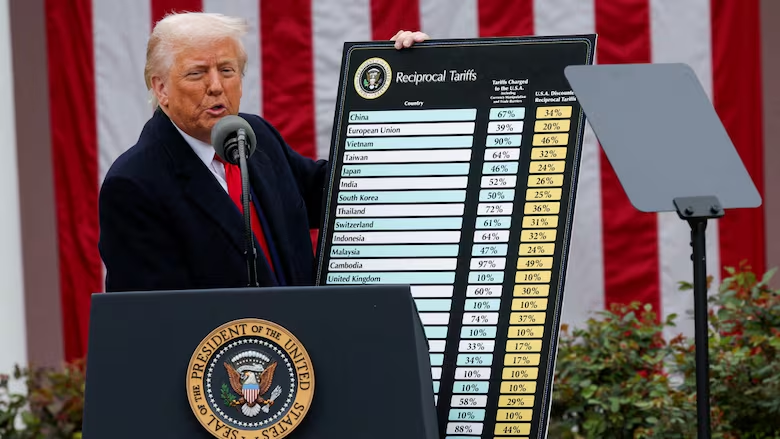
Following the recent imposition of tariffs by U.S. President Donald Trump, concerns are mounting that the administration may employ financial instruments to pressure allied nations into trade concessions. Potential strategies include leveraging the U.S. dollar’s global dominance by restricting foreign central banks’ access to dollar liquidity through the Federal Reserve’s swap lines, which are crucial during financial crises. Additionally, the U.S. could exploit the widespread use of American payment systems, such as Visa and Mastercard, to exert influence. Economists warn that such actions could destabilize global markets and diminish confidence in the dollar as the world’s reserve currency.
The administration has also considered a “Mar-a-Lago accord,” reminiscent of the 1985 Plaza Accord, aiming to weaken the dollar by persuading foreign central banks to appreciate their currencies. However, experts are skeptical about the feasibility of such an agreement, citing current economic and political differences from the past. Should diplomatic efforts fail, more aggressive measures, like limiting dollar access, might be pursued, potentially leading to significant disruptions in global financial systems.
European officials are contemplating countermeasures, including tariffs or restricting U.S. banks’ access, but remain cautious to avoid escalating tensions. The European Central Bank has acknowledged vulnerabilities due to reliance on U.S. payment systems and is exploring alternatives, such as a digital euro, though implementation faces delays.