




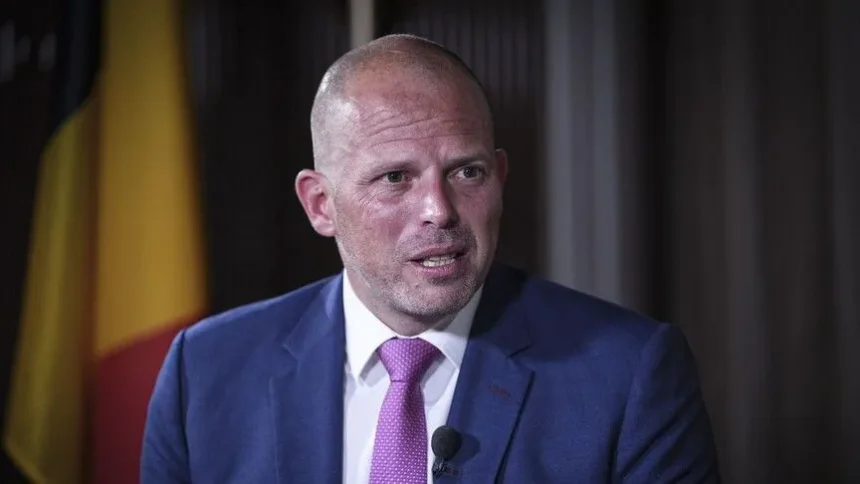
Belgian intelligence agencies have launched investigations into three suspected arson attacks targeting companies associated with the country’s defence industry, as Defence Minister Theo Francken accused a far-left activist group of carrying out the incidents.
The attacks, reported between late August and early November in the Liège region, affected three businesses: Belgian Advanced Technology Systems (BATS) in Sart-Tilman, precision engineering firm Mockel in Baelen and automotive company ReulSport in Dison.
According to local media reports, all three companies maintain commercial links with the defence sector. Mockel and ReulSport are also reportedly involved in supplying components to FN Herstal, one of Belgium’s leading weapons manufacturers.
The most serious incident occurred in early September at the BATS facility, where investigators discovered three separate points from which the fire appeared to have originated.
The public prosecutor’s office suspects that the blaze was deliberately started.
BATS specialises in advanced technological systems, including radar equipment and technologies designed to identify, track and neutralise drones, making the company a supplier of equipment relevant to military and security operations.
In a statement published on social media platform X, Defence Minister Theo Francken attributed the attacks to a far-left collective identifying itself as the International Fire Faction Against War.
Francken said the organisation had claimed responsibility for the incidents through statements published on its website.
The minister maintained that all three targeted companies had direct connections with Belgium’s Defence Department and described the incidents as part of a broader campaign against the country’s military industry.
According to Francken, the group opposes what it regards as the increasing militarisation of society and has allegedly targeted businesses associated with defence production and military technology.
However, Belgian authorities have not yet independently established whether the organisation was responsible for the attacks.
The country’s civilian intelligence agency, the State Security Service, and its military intelligence agency, ADIV, are examining the incidents to determine whether the collective was genuinely involved.
Investigators are also assessing the circumstances surrounding the three fires and any possible connections between them.
The investigation remains ongoing, with the allegations against the far-left collective yet to be independently confirmed by Belgium’s security and intelligence services.