





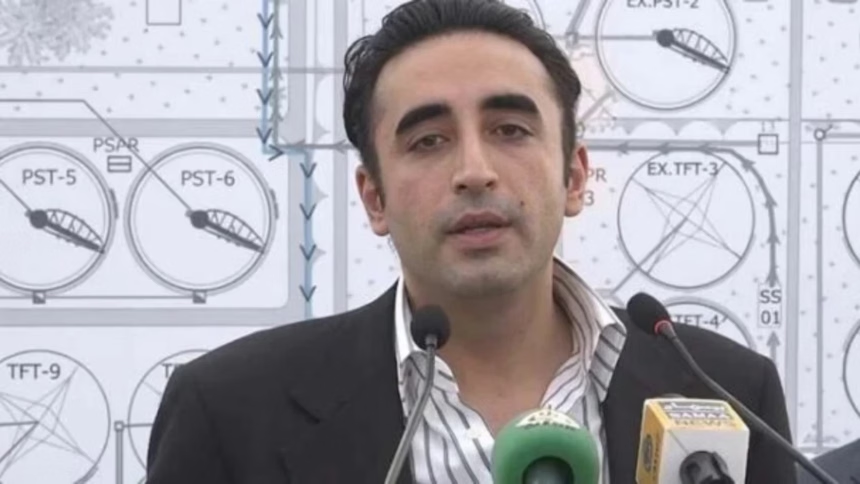
Pakistan Peoples Party (PPP) Chairman Bilawal Bhutto Zardari on Tuesday strongly opposed proposals to divide Sindh, warning that any attempt to create new provinces against the wishes of the people could provoke widespread unrest and bloodshed.
Addressing a press conference at the Karachi Press Club, Bilawal said his party would resist any attempt to alter Sindh’s territorial boundaries through force or without following the constitutional process.
“If Sindh is divided by force, there will be blood on the streets of Karachi, not garbage,” he warned, adding that those responsible for such a move would be held accountable.
The PPP chairman argued that forcibly dividing the province would create hostility between communities and deepen social divisions, potentially leading to violence among people who had lived together for generations.
He expressed concern that the consequences of such a decision would extend beyond Karachi to other cities, including Hyderabad, Mirpur Khas, Tando Allahyar and Nawabshah.
“I do not want to see such bloodshed,” Bilawal said, stressing that political decisions affecting the province’s future should not be imposed against the wishes of its residents.
Questioning the renewed debate over the creation of additional provinces, Bilawal claimed that the issue was being raised artificially despite having neither been formally discussed in parliament nor considered by the federal cabinet.
He criticised federal ministers for publicly discussing the possible division of provinces without what he described as appropriate consultation or constitutional deliberation.
Bilawal also questioned Prime Minister Shehbaz Sharif’s ability to maintain discipline within his cabinet, saying ministers should not be allowed to raise politically sensitive issues without proper coordination.
He maintained that Shehbaz Sharif was the prime minister of the entire country and said he wanted the government to succeed.
However, he argued that the prime minister must exercise effective authority over members of his cabinet.
“If the prime minister cannot control his own minister, then the system is heading towards collapse,” he remarked.
Responding to suggestions that a referendum could be held on the creation of new provinces, Bilawal rejected the proposal, arguing that the central issue was not merely the mechanism of public consultation but the intentions behind raising it.
He claimed that referendums had historically been used in Pakistan to advance undemocratic objectives rather than strengthen democratic decision-making.
The PPP chairman maintained that the Constitution already established a procedure for creating new provinces and that any proposal must be pursued strictly within the existing constitutional and legal framework.
He argued that suggesting a referendum outside that process raised concerns about attempts to bypass constitutional requirements.
Bilawal reiterated that the PPP would firmly oppose any unconstitutional attempt to divide Sindh, insisting that decisions concerning the province’s territorial integrity must respect the Constitution and the wishes of its people.
His remarks came amid renewed political debate over the formation of additional provinces, an issue that has long generated disagreement among political parties over provincial autonomy, administrative arrangements and constitutional safeguards.