





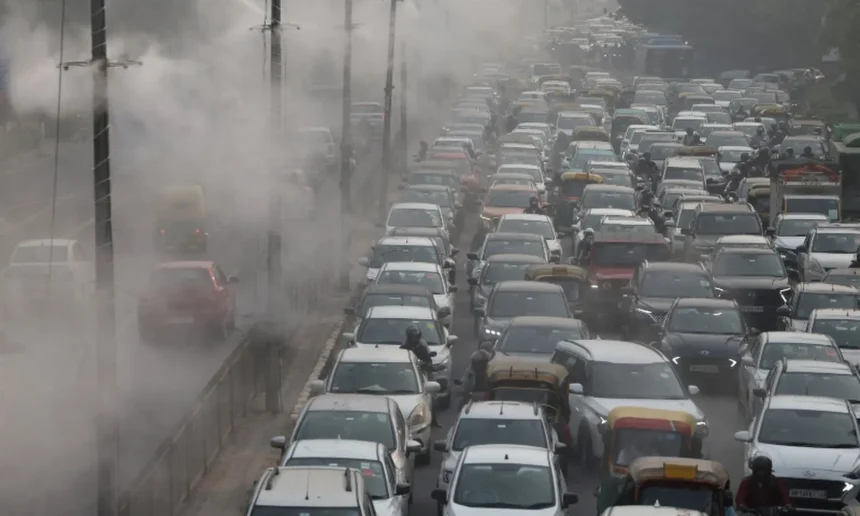
India’s capital, New Delhi, overtook Lahore to become the world’s most polluted major city on Friday as thick smog engulfed the metropolis, reducing visibility and exposing millions of residents to hazardous air quality.
According to Swiss air quality monitoring organisation IQAir, Delhi recorded an air quality index (AQI) of 334 earlier in the day, placing it at the top of the global pollution rankings.
The reading indicated extremely unhealthy air conditions in the city, which is home to approximately 20 million people.
An AQI reading of 50 or below is generally considered good, indicating minimal health risks, while substantially higher readings signal increasing concentrations of harmful pollutants.
India’s Central Pollution Control Board (CPCB), meanwhile, recorded an AQI of 403 in Delhi, classifying the city’s air quality as “severe”.
The difference between the readings reported by IQAir and the CPCB reflects variations in the scales, methodologies and pollutant measurements used by the two monitoring systems.
Despite the alarming pollution levels earlier in the morning, IQAir’s hourly data showed some improvement, with Delhi’s AQI declining to 208 by 11am Pakistan time.
At the same time, Lahore ranked seventh among the world’s most polluted major cities, recording an AQI of 155.
The latest figures represented a relative improvement for Lahore, which had occupied the top position in global pollution rankings for several consecutive days.
In Delhi, dense layers of smog reduced visibility across major roads, with vehicles emerging through the haze and street lights appearing partially obscured.
Video footage released by Indian news agency ANI showed cars and motorcycles travelling through heavily polluted streets as the thick blanket of smog restricted visibility.
Air pollution typically intensifies across northern India and Pakistan during the winter months, when falling temperatures and stagnant atmospheric conditions trap pollutants close to the ground.
Vehicle exhaust, industrial emissions, construction dust and smoke from agricultural residue burning contribute to deteriorating air quality across the region.
Cold, dense winter air can prevent pollutants from dispersing, allowing harmful particles to accumulate over urban areas and creating prolonged episodes of smog.
The seasonal pollution crisis poses significant health concerns, particularly for children, older adults and people with respiratory or cardiovascular conditions.
Although Lahore’s pollution levels showed improvement on Friday, both cities continued to experience unhealthy air quality, highlighting the persistent environmental challenges facing densely populated urban centres in South Asia.