





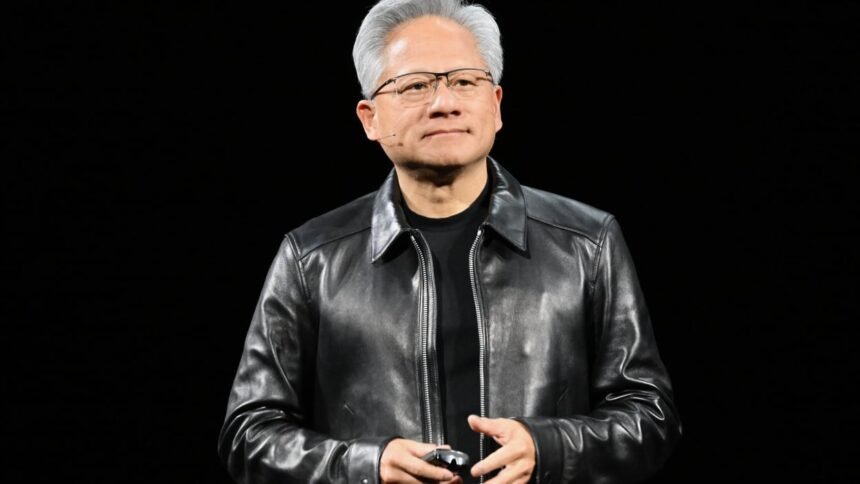
Jensen Huang has resigned as chief executive of Nvidia, ending his 33-year leadership of the technology giant he co-founded in 1993, as the company faces growing scrutiny over allegations concerning his personal relationships.
Nvidia’s board of directors announced on Thursday that Huang had stepped down as president, chief executive officer and board member with immediate effect, marking the first leadership change at the top of the company since its establishment.
The company did not disclose a reason for his departure, which follows reports of two extramarital relationships, including one involving a woman identified by US intelligence officials as a suspected Chinese intelligence asset.
Huang, who transformed Nvidia from a graphics-chip manufacturer into a dominant supplier of processors powering artificial intelligence, had led the company throughout its history.
The board appointed Colette Kress, Nvidia’s executive vice president and chief financial officer, as interim CEO while it searches for a permanent successor.
Kress, who has overseen Nvidia’s finances since 2013, will retain her responsibilities as chief financial officer while temporarily leading the company.
The board said it would consider both internal and external candidates for the permanent chief executive position, although no timetable for the appointment has been announced.
In a further leadership change, Nvidia appointed longtime director Harvey C. Jones as its first chairman of the board.
The resignation comes amid mounting scrutiny following reports that Huang had an extramarital relationship with a Chinese businesswoman suspected by US intelligence officials of having links to Beijing’s intelligence services.
Huang subsequently acknowledged the relationship, while China denied the espionage allegations.
The New York Times also reported allegations of a separate relationship between Huang and Kimberly Powell, Nvidia’s vice president of health care, who reports to him.
Nvidia’s board had opened an investigation into the earlier allegations, raising questions about corporate governance, potential conflicts of interest and the company’s handling of sensitive relationships.
However, Nvidia has not publicly established that either reported relationship was the reason for Huang’s resignation.
The leadership transition represents a significant moment for one of the world’s most influential technology companies, whose rapid expansion during the artificial intelligence boom made Huang one of the industry’s most prominent executives.
Kress will now oversee Nvidia’s operations during the transition as the board begins the process of selecting a permanent leader to succeed its co-founder.