





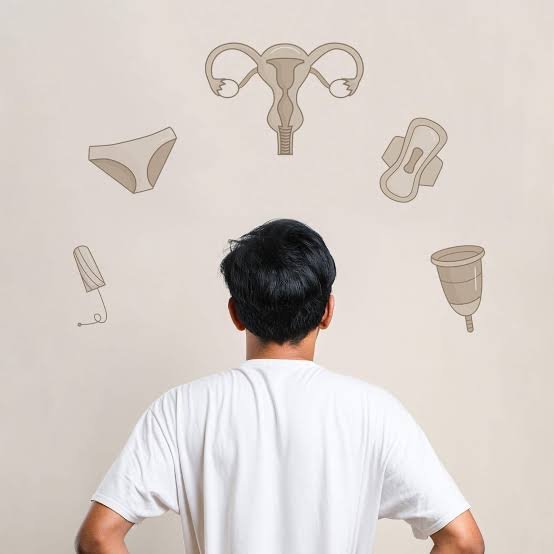
Many Pakistani men reach adulthood without ever being taught what menstruation is, how it affects the women around them, or what it requires of a household or a school. This is rarely a matter of individual indifference. It follows from how the subject is handled: boys receive no formal instruction, the topic is treated as private to women, and almost no research has asked what men actually know. The gap matters because men share schools, workplaces, and family budgets with the women whose health depends on informed decisions.
The clearest evidence of how boys learn, or fail to, comes from a 2004 survey by the Marie Stopes Society of 398 married adults in four districts. Only 16 per cent of the men said they had sought advice from anyone about puberty. Most of those who had consulted a friend, and one consulted his mother. The survey also asked women whether girls should be told about menstruation before it begins. Men were not asked whether boys should be told about puberty. The data are two decades old and cover a small number of districts, but they illustrate an assumption that persists: that information about the body flows between women, and that men are outside the conversation.
Formal education offers little correction. A 2023 review of menstrual health education in Pakistan reports that the National Curriculum Framework makes no mention of menstrual health management. Documented school programmes, including those supported by UNICEF, have concentrated on girls. Exceptions exist: the DASTAK Foundation, a Pakistani organisation, runs school workshops on menstruation for boys and has called for such provision to become policy. No published national data show how many schools teach boys about menstruation, and the available evidence suggests it is rare.
Evidence on what men know is correspondingly limited, and the limitation is itself informative. A 2024 undergraduate project at the Institute of Business Administration, Karachi, interviewed 11 men aged 18 to 25 and found that their understanding was shaped by education, relationships, religion, culture, and social media. A 2022 letter in the Journal of the Pakistan Medical Association, written by medical students at Dow Medical College, argued that men’s knowledge of menstrual hygiene management has never been studied in Pakistan. It is therefore not possible to state how much Pakistani men know. What can be said is that few structures exist to teach them, and none has been systematically evaluated.
The practical consequences are plausible and, in part, documented. In a 2017 UNICEF Pakistan poll conducted through its U-Report platform, 28 per cent of respondents said they missed school or work during their periods. Among the reasons given were fear that boys would find out, alongside embarrassment about stains and pain. The poll was voluntary and conducted by SMS, so it is indicative rather than representative. Even so, it suggests that girls regard boys as a source of social risk — an expectation that boys who have never been taught about menstruation have little reason to dispel. The Dow Medical College authors made a related argument: that bullying by male classmates and teachers contributes to absence and dropout at puberty, and that men who do not understand the need for sanitary products may treat them as an unnecessary expense. These are the authors’ arguments, not measured findings, but they point to mechanisms worth testing.
There are reasons to think the situation is changeable. In the Marie Stopes focus groups, some mothers first said that discussing menstruation with daughters would compromise their innocence. After talking through their own experiences, they agreed their adolescence would have been easier with advanced information. The report noted that question order may have influenced answers, and a 2004 survey cannot show how norms have shifted since. A 2023 pilot in Bangladeshi schools, published in the Journal of Water, Sanitation and Hygiene for Development, found that a programme including boys raised their awareness of menstruation by 15 percentage points and their comfort discussing puberty by 13. The confidence intervals were wide and the setting differs from Pakistan’s, so the result is suggestive only. It does indicate that boys can be taught this material and that many are willing.
Reasonable objections exist. Girls may speak more freely in sessions without boys, and the Marie Stopes Society itself ran separate sessions for girls, boys, and parents to build trust before addressing sensitive questions. Some families and schools may oppose mixed-gender teaching on this subject, and the same organisation sought the support of religious and community leaders, with imams attending some sessions. These considerations argue for careful design, not for excluding boys altogether.
The central finding is a gap in provision and in knowledge about provision. Pakistan has built some programmes to inform girls about menstruation, but boys and men have been left out of both instruction and inquiry. Surveying what men understand, adding menstruation to the curriculum for all pupils, and evaluating pilot programmes for boys would convert an untested assumption into evidence. Without them, the people who control household spending, run institutions, and share classrooms with menstruating girls will continue to learn about the subject by chance, if at all.