





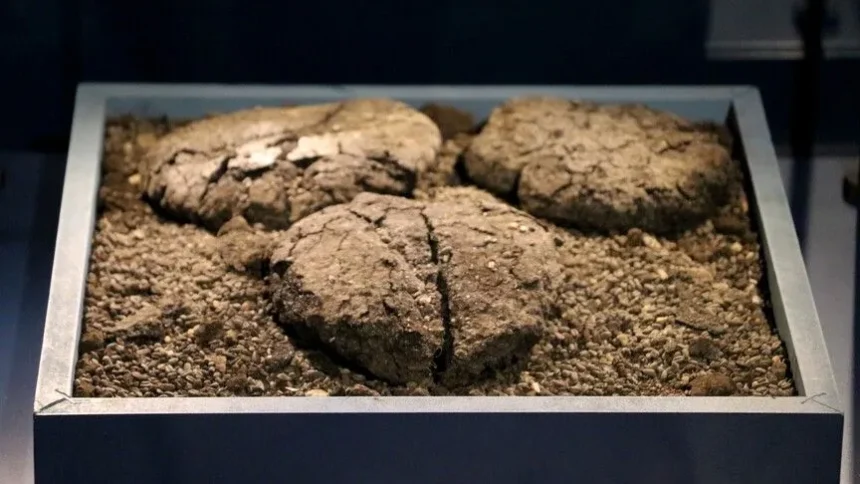
Archaeologists working at an ancient settlement in western Türkiye have discovered eight pieces of bread preserved by a fire nearly 5,000 years ago, offering a rare glimpse into the food and domestic life of early Bronze Age communities.
The remains were uncovered during rescue excavations at Seyitömer Mound in Kütahya province, where archaeological investigations are taking place within the grounds of a thermal power plant.
The excavation programme was initiated to recover and preserve archaeological material before the area’s underlying lignite coal reserves could be exploited.
The work is being conducted by the Kütahya Museum Directorate under the supervision of archaeologist Sevgi Gürdal, who also serves as director of the Kütahya Archaeology and Mining Museum.
Speaking to Anadolu Agency, Gürdal explained that excavation teams were examining settlement layers dating to the Early and Middle Bronze Ages when they encountered evidence of an ancient cooking area.
During work conducted last year, researchers identified an oven inside a room, along with traces of shelving built against one of its walls.
Further examination revealed eight charred pieces of bread lodged between the shelf supports near the oven.
“During our excavations, we found eight charred pieces of bread between the shelf supports in the area where the oven was located inside the room,” Gürdal said.
The team also recovered evidence of other foodstuffs stored or used in the same space.
“We also discovered remains of wheat and lentils around the bread,” she added.
According to Gürdal, the archaeological context places the discovery in the first quarter of the Early Bronze Age, approximately 5,000 years ago.
The survival of the bread is particularly noteworthy because organic food materials generally deteriorate over time. In this case, exposure to intense heat appears to have carbonised the pieces, allowing them to remain preserved for thousands of years.
The discovery provides tangible evidence of ancient food preparation and storage practices, while the accompanying wheat and lentil remains offer further clues about the ingredients available to the settlement’s inhabitants.
The ancient bread has also attracted public interest, drawing visitors to the local museum to learn more about the region’s prehistoric communities and their everyday lives.