





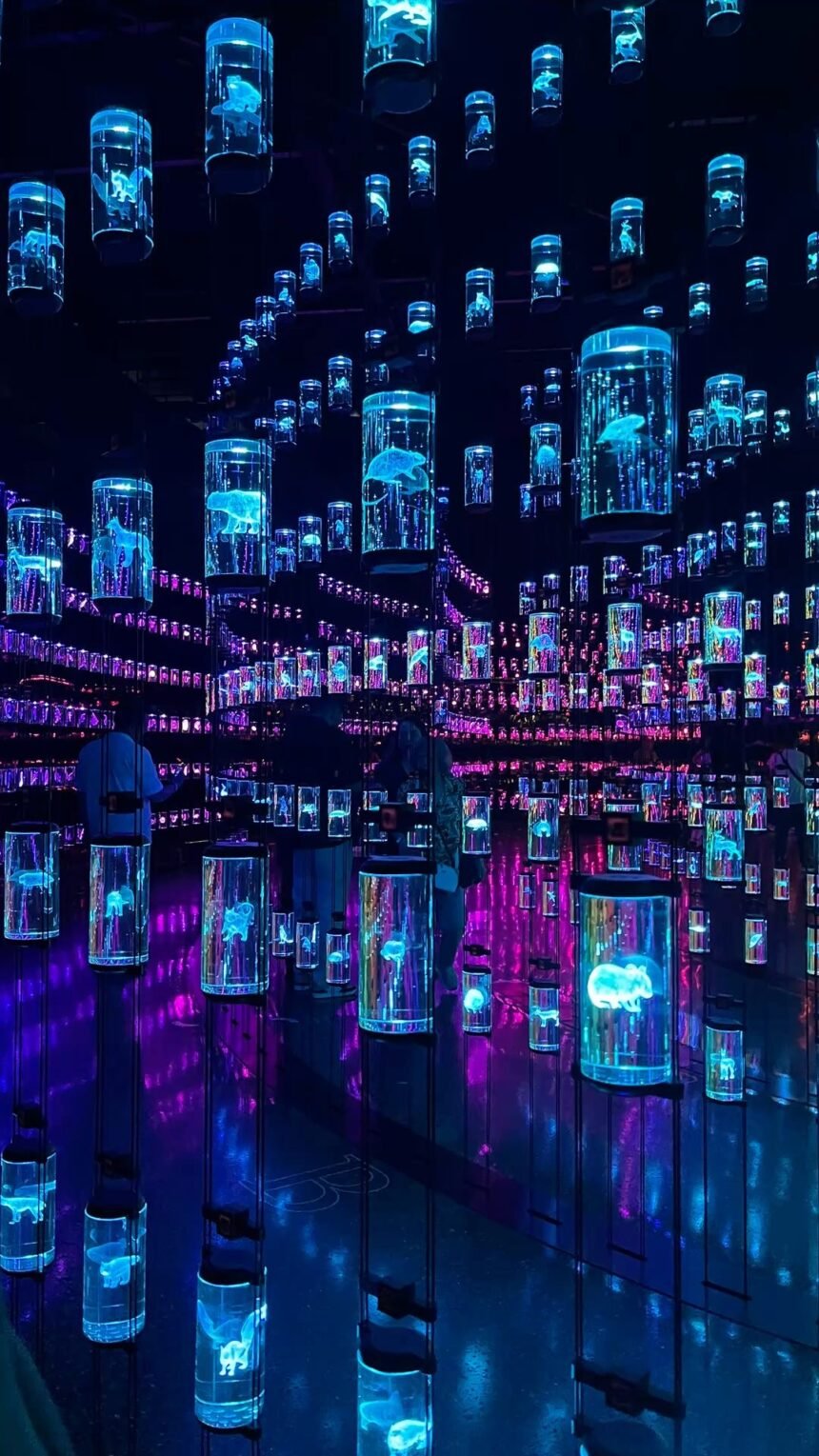
Presently, we have museums in our environments. These museums refer to buildings constructed for the preservation of historical objects where these items are arranged and displayed for the purpose of tourism. People pay and then go in to view these ancient objects for sightseeing, learning, and preserving good memories — capturing beautiful pictures within the museum premises. The existence of museums has a positive influence on the economy due to monetary benefits.
Regarding the educational aspect of visiting a museum, curators — the individuals responsible for taking care of the museum — as well as art experts are normally available when tourists visit. These specialists interact with visitors regarding the artefacts, the history behind their existence, and other relevant information. In this way, people learn and expand their knowledge of art and history.
Digital Experiences and Physical Heritage
Digital experiences are increasingly positioned to complement or replace physical encounters with historical objects. Traditionally, people participate in tourism by physically visiting ancient historical objects for various purposes. Today, online platforms are created for people to enjoy similar tourist experiences without visiting museums physically. Technologies such as virtual reality, artificial intelligence, and 3D reconstruction offer mechanisms through which individuals can experience heritage, whether physically on-site or online.
- Virtual Reality: Experiencing an immersive environment through computer-generated three-dimensional spaces that allow the user to enter and interact with alternate realities. This is achieved using specialized headsets and motion-tracking sensors to monitor head movements as the user looks around and interacts with the virtual environment.
- Artificial Intelligence: Utilizing online platforms that assist in research and complement human cognition — such as Google, Meta AI, and related tools. Here, users provide instructions by typing research topics concerning any aspect of heritage and tourism.
- 3D Reconstruction: Applied alongside virtual reality to display stereoscopic images that provide a realistic 3D effect.
Preservation, Recreation, and Digital Archives
The digital experience also encompasses online research, where one reads theoretical literature and examines high-resolution images of historical assets, including ancient monuments and artefacts. Individuals observe the structure of these ancient items for specific educational purposes. Beyond general tourists, art experts consult a wide range of online articles and imagery to aid in the virtual recreation of historical objects that may have crumbled or degraded due to their age.
Because these historical objects are ancient, having existed for a very long time, they inevitably suffer damage over time. As objects of history, they are often preserved in their current state for tourism, allowing people to admire unique historic structures that feature characteristics quite distinct from modern architecture.
However, over time, these heritage sites remain in danger of being renovated into modern structures when they become dilapidated, which risks erasing historical narratives. In this context, physical renovation and digital reconstruction represent two distinct sides of technology’s impact on heritage.