





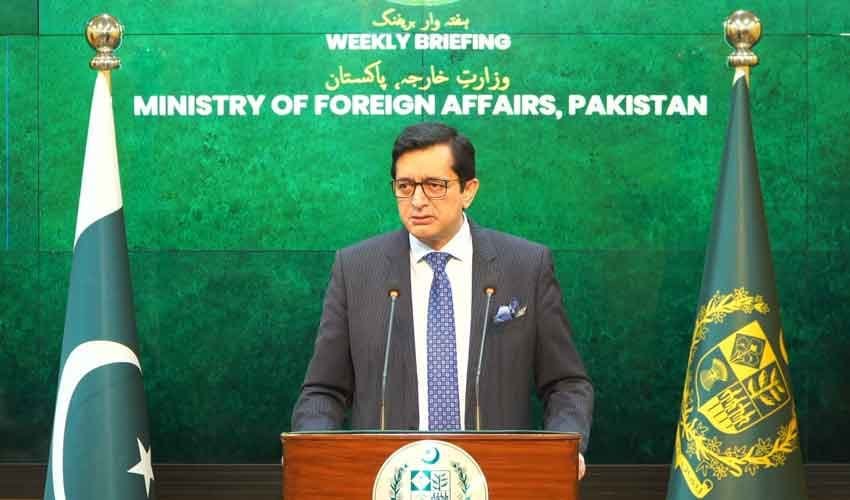
Pakistan has reaffirmed its support for Saudi Arabia’s right to self-defence following attacks by Houthi forces, while renewing its demand that Afghanistan prevent militant groups from using its territory to launch attacks against Pakistan.
Addressing the Foreign Office’s weekly press briefing, spokesperson Sajjad Haider Khan said Islamabad strongly condemned the attacks on Saudi Arabia, warning that such incidents threatened regional peace and security.
He noted that the Organisation of Islamic Cooperation (OIC) had also condemned attacks targeting Saudi airports and reiterated Pakistan’s solidarity with the kingdom amid continuing security concerns.
Turning to Afghanistan, Khan said Pakistan remained committed to diplomatic engagement with friendly countries, international partners and multilateral organisations to promote stability in the neighbouring country.
He emphasised that Islamabad would welcome constructive initiatives aimed at improving Afghanistan’s security situation, provided they also addressed Pakistan’s concerns about cross-border militancy.
The spokesperson alleged that militant groups operating from Afghan territory continued to pose a serious threat to Pakistan, particularly in Khyber Pakhtunkhwa and Balochistan.
He further accused Indian-backed proxies of involvement in terrorist activities inside Pakistan. These allegations were presented as the Pakistani government’s position.
According to Khan, Islamabad’s principal demand was that the Afghan Taliban authorities provide credible assurances that Afghan territory would not be used to organise or carry out attacks against Pakistan.
However, he claimed that the Taliban administration had so far been unwilling to offer the assurances sought by Islamabad.
During the briefing, the spokesperson also rejected remarks by India’s defence minister, describing them as provocative, and reiterated Pakistan’s stated commitment to regional peace.
The briefing highlighted Pakistan’s continuing diplomatic and security concerns involving Saudi Arabia, Afghanistan and India, alongside efforts to modernise consular services.