





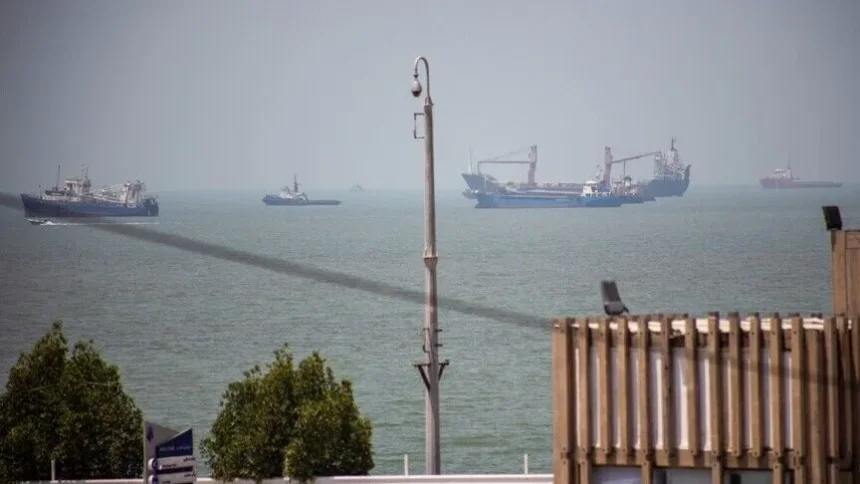
Global trade is experiencing its most severe disruption in 80 years, with instability around the Strait of Hormuz threatening to push up food and fertilizer prices worldwide, World Trade Organization (WTO) Director-General Ngozi Okonjo-Iweala has warned.
Speaking on the sidelines of the WTO Public Forum in Geneva, Okonjo-Iweala said the international trading system had so far demonstrated resilience despite geopolitical tensions, but the continuing Middle East conflict posed a significant challenge for the organisation’s 166 members.
Global merchandise trade has grown by a stronger-than-expected 4.6% this year, she said, while around 72% of world commerce continues to operate under WTO rules. The initial forecast had projected goods trade growth of 1.9% for the full year, but first-quarter growth of 3.2% exceeded expectations.
A substantial part of the expansion has been driven by booming trade linked to artificial intelligence. Okonjo-Iweala said low- or zero-tariff arrangements covering approximately $3 trillion in global semiconductor and chip shipments had helped fuel that growth.
She cautioned, however, that the benefits remain heavily concentrated in North America and East Asia, raising questions about whether developing economies are receiving an adequate share of the opportunities created by rapidly expanding AI-related trade.
Turning to the Middle East, the WTO chief warned that disruption to shipping through the Strait of Hormuz could have increasingly serious consequences if it persists. National reserves have so far helped cushion markets, but a prolonged blockage would eventually increase agricultural costs, particularly through its effects on energy and fertilizer supplies.
Previous WTO estimates indicated that crude oil reaching $90 a barrel could reduce overall trade growth by around 0.5 percentage points. Current oil prices have already moved above that level.
Shipping companies have managed to maintain trade flows by diverting vessels to alternative routes, but Okonjo-Iweala warned that longer journeys are adding substantial costs and may not provide a sustainable solution if disruption continues.
Governments are consequently developing contingency plans to reduce their vulnerability to future failures at critical global trade chokepoints.
At the same time, geopolitical instability and rapid technological change are adding urgency to discussions over reforming the WTO and updating international trade rules.
Okonjo-Iweala said comprehensive institutional reform was essential to making global development more equitable, acknowledging that existing arrangements had frequently failed to deliver sufficient benefits to developing economies.
She urged developing countries to play an active role in shaping new trade rules so they can take advantage of emerging economic opportunities rather than being left behind.
A WTO report released in connection with the Public Forum warned that a breakdown in multilateral cooperation, combined with a failure to modernise global trade rules, could reduce potential global economic growth by as much as 10% by 2050.