





When trainers see a high-energy horse, the traditional instinct is often to work them hard to take the “edge” off. In the training world, “high energy” is too often misunderstood as a synonym for a nervous, frantic, or spooky animal. But there is a massive difference between a horse that is anxious and a horse that simply possesses a powerful, brilliant internal spark while remaining perfectly safe, never bucking, rearing, or bolting. With a highly sensitive breed like the Pakistani Indigenous Horse (PIH), force and exhaustion only create anxiety, whereas managing their true, functional power requires a completely different approach. The goal of pre-ride work is never fatigue; it is mental and physical decompression.
This is where we find the paradox: true relaxation doesn’t require a long, exhausting workout; it requires a brief, purposeful release of responsibility.
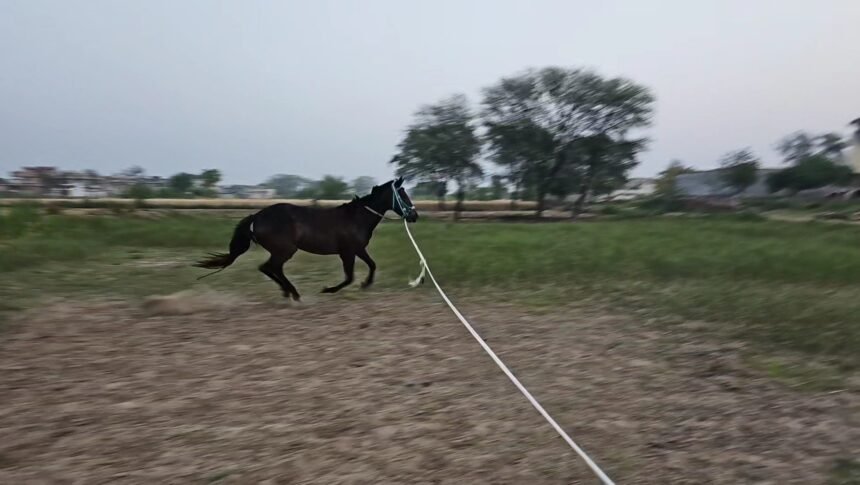
Spending just a few calculated minutes on the lunge line, relaxed, can completely transform the upcoming under-saddle session.
When a PIH is allowed to lunge quietly, offering a super low neck, a steady, slow trot, and a remarkably rhythmic, slow canter, they aren’t just warming up their muscles. They are finding their own self-carriage without the variable of a rider’s weight or balance.
For the Thoroughbred horse, this low-headed, steady rhythm acts as a physical reset button for the nervous system. Because they are wired to be highly reactive, this quiet time allows them to stretch their topline and find a calm, internal tempo. They enter the arena not with their energy suppressed, but with their mind relaxed and ready for a precise, focused conversation under saddle.