





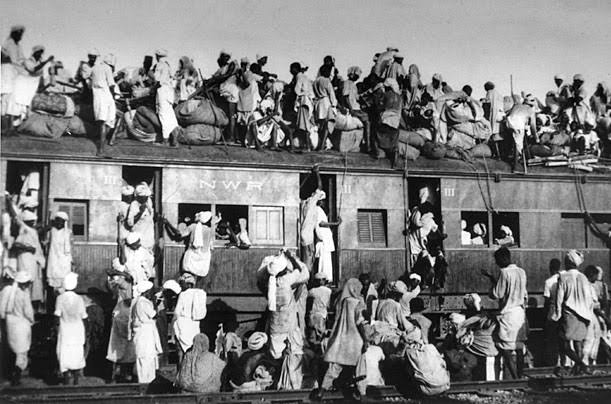
What do we mean, to be exact, when we assert that the Literature of Partition has been exhausted? The claim often appears in contemporary literary discourse to the point of seemingly having acquired the status of common sense. With the literary sphere oversaturated with novels, memoirs, poetry, oral histories, films, and family testimonies, it would be considered somewhat fair to assume that all stories have been extracted from the Partition of 1947. However, it is assumed that the literary canon is synonymous with the historical archive, and the definition of “Partition” rests upon stories most frequently translated, anthologised, taught, and remembered; the question “Are we done yet?” also rests upon this assumption.
This essay seeks to argue otherwise. The future of Partition literature depends upon developing new ways of reading those stories we already possess. To ask whether there is anything left to write about 1947 is a discursive question altogether. A more productive question is, “Why have certain ruminations of Partition so increasingly dominant that they now define our recognition of a Partition narrative?”
Literary canons are shaped by institutions of publication, translation, education, and criticism; they do not emerge organically. Hence, the difference between the two questions is not mere semantics. Canonisation of texts leads to the transformation of individual texts into representational texts. As time passes, these texts become stand-ins for history itself. Their symbols, their metaphors, and their emotional registers become historical signifiers; these texts become foundational vocabulary, shaping an entire generation’s learning of the past. The danger is not simplification of history by canonical works but that criticism often mistakes their immense influence for historical holisticness.
Marianne Hirsch, the philosopher of memory, helps approach this problem with a useful framework. Hirsch argues, through her concept of postmemory, that later generations’ inheritance of traumatic histories is so profound that these histories shape their identities despite not being a direct experience. Such memories are transmitted and experienced through photographs, family stories, inherited silences, and cultural narratives rather than personal recollection.
According to Hirsch, these are memories that are “remembered” rather than lived. Much of Partition’s contemporary literature belongs to this category of postmemory. Few writers today have lived experience of 1947, their experience is inherited; an archive already arbitrated by literature. This creates an interesting paradox. Literature once functioned as a medium through which trauma was remembered, it has increasingly become the simultaneous means through which trauma is inherited. Contemporary writers often remember Partition not only through family histories but also through Manto, Pritam, Khushwant Singh, and Bhisham Sahni. The literary archive has become part of the historical archive.
Can literary memory itself become canonical?
This question is important because memory is not simply the preservation of the past; it is a way of interpreting it. Different writers remember differently instead of merely remembering different events. Their texts showcase distinct philosophies of memory, each providing a different answer to what it means to carry historical trauma and catastrophe into the present time.
Saadat Hasan Manto provides an acute and striking demonstration of this. He refuses coherence demanded by nationalism of historical memory through his fiction. In Toba Tek Singh, he highlights the absurdity of the newly established border through madness, showcasing the inherent similarities of the two communities being partitioned. Bishan Singh’s act of refusal to belong to India or Pakistan results in his death within the strip of land separating the two states, a space existing between the two, the only place where his identity remains intact.
The story, often read as a satire on Partition, is in essence presenting a philosophy of memory itself. Manto, showcases that memory cannot be constricted within patriotic narrative. Memory, according to him, resists coherence, fractures language, and exposes the absurdity of political certainties. Remembering, in Manto, is an encounter with an irreparable rupture.
Where Manto dismantles patriotic narrative certainty, Khushwant Singh in “Train to Pakistan” reconstructs it through material memory. The train, within the novel, is the most enduring image; it highlights a symbolic transformation. It gradually becomes a silent archival symbol of violence as more and more trains begin arriving filled with dead bodies in place of passengers. Historical trauma is absorbed by objects, landscapes, and ordinary routines until they themselves become vaults of remembrance. Memory, then, according to Singh’s fiction, is concrete, which allows history to linger long after the event itself has passed.
Amrita Pritam introduces a mode of remembrance in her poetry that contrasts with that of Singh’s and Manto’s. Her renowned poem “Ajj Aakhaan Waris Shah Nu” is an account of Partition through a non-conventional documentative style; it invokes the eighteenth-century Punjabi poet Waris Shah, urging him to rise from his grave and witness Punjab’s suffering. Memory here becomes mournful and reinforced, the scab over a wound repeatedly picked at. The poem mourns along human lives, an entire cultural landscape whose moral and emotional fabric has deteriorated. Pritam’s remembrance is a collective act and lyrical in nature. She does not seek explanations or provide a diagnosis for the post-partition culture; she indulges in mourning.
The synthesis of these writers reveals that discussions of Partition literature often overlook the fact that the literary canon proposes fundamentally different theories of memory, rather than merely narrating through different perspectives. Over the course of these writers and their texts we learn different modes of remembrance, i.e., in Manto memory is a rupture, in Singh it resides within objects and landscapes, and in Pritam it becomes elegy.
The significance of these literary canon texts, therefore, lies in how they teach readers to remember. Which is precisely why these texts dominate the imagination of the Partition narrative. The exorbitant influence of these works has resulted in the determination of what might be called the dominant vocabulary of remembering Partition. These literary metaphors have become so deeply ingrained within literary criticism that they now appear almost indispensable from Partition itself. However, that seems to precisely be the issue, a dominant vocabulary of remembrance illuminates some, while the rest remains shadowed.
Mainly the Punjabi canon has come to define the vocabulary through which Partition is remembered. However, other literary traditions invite us to reconsider memory itself. Their significance lies in proposing different ways of understanding what survives historical trauma. They’re not to be read as “forgotten voices” but hailed for their larger intervention. They expand the Partition archive and the possibilities of remembering it.
This is particularly evident within Sindhi literature. Sindhi narratives linger on the quieter, slower erasure of cultural worlds. The Partition of Sindh produced displacement on a massive scale; however, its literary pieces unfold through absence rather than violence. In the fictional works of Amar Jaleel, he showcases memory as something that repeatedly returns to landscapes that lack familiarity, neighbourhoods that have increasingly becoming emotionally inaccessible, and estranged identities.
Sindhi literature portrays a tale of attrition. Home is gradually rendered unrecognisable, and that is seen as the real destruction. Trauma finds its true emergence in the decades that followed Partition, as communities adapted to places transformed by political borders and demographic change. Sindhi literature is a reminder that catastrophe unfolds through the slow erosion of cultural continuity.
A similar and comparable reimagining takes place within Bengali literature; however, it is distinctive as it structures remembrance in time rather than space. Bengali writers resist a chronological telling of Partition. In works such as The River Churning and Nilkantha Pakhir Khonje, Partition is not depicted as a completed event; it is portrayed in recurring migrations, fractured domestic lives, and the continuing instability of borders. Bengali literature asks how the loss of Partition continued to shape everyday life across subsequent decades. The creation of Bangladesh in 1971 further cemented this.
A reading of these diverse modes of remembrance proves that there isn’t a singular emotional vocabulary for remembering Partition. Recognising the differences transforms and adds nuance to the understanding of the literary canon. Discourse on the canon currently hinges on who has been represented and who has not been represented: a purely demographic accounting of literature. What’s far more important is concerns around interpretation. We need to ask and ascertain why one mode of remembering has become so strongly embedded within Partition that alternative modes now appear peripheral? The answer in the institutional processes through which texts circulate. Certain metaphors, symbols, and narrative structures have been set as the definitive language of Partition through translations, publication, university curriculum, and critical scholarship. The canon, hence, is an interpretive framework that shapes how subsequent literature is read.
This framework becomes especially significant when considering contemporary writers. Their challenge is to negotiate the weight of an already monumental canon. Take Kamila Shamsie, for example. She has repeatedly showcased how returned borders, nationalism, and inherited political divisions shape contemporary identities. Although her novels do not centre on the historical moment of 1947, she shows a keen attentiveness to its afterlife, portraying Partition as an ongoing condition.
Similar to Shamsie, Aanchal Malhotra, in Remnants of a Separation, particularly, shifts the attention towards intimate archives. Showing the survival of history in domestic objects such as Jewellery, utensils, handwritten letters, and family photographs; treating them as vessels of memory. Both writers suggest, in their own different manners that what changes across generations is not the event itself but the archive through which it is approached, i.e. if the first generation wrote from experience, the second from inherited oral transfer of experience, and contemporary writer writes taking fragments (symbols or objects that invoke memory of the Partition). Even though direct memory might recede, the archive continues to expand.
However, many of these symbols risk falling prey to repetition. In Partition literature symbols such as trains, borders, refugee columns, and abandoned homes have become instantly recognisable. Repetitive imagery has a risk of leading to desensitisation in a reader. The challenge facing contemporary literature is to ascertain whether these symbols have overshadowed other equally meaningful forms of remembrance. This issue is precisely why recent scholarship has taken a turn towards examining everyday archives.
Mundane things such as recipes passed down through displaced families, altered cityscapes, bureaucratic documents recording abandoned property, forgotten dialects, and inherited household objects. These materials help take a deeper look into a genre of writing that otherwise seems saturated but moreover, it transforms the Partition from a demographic of loss to something deeply human and deeply personal. This also showcases the survival memory that was susceptible to fading through ordinary practices through which people continue living.
To conclude, Partition has never possessed a single literary consciousness. It has always been remembered through competing aesthetic forms, regional traditions, and philosophies of memory. Hence, the literature of Partition has not reached a state of exhaustion because memory is not exhaustible. The reason there’s a risk of exhaustion is because of our willingness to read beyond the literary canon, inept. In order to make a meaningful contribution to the Partition literature, one must engage in different modes of remembrance and what prevails as a result of engaging in them.