





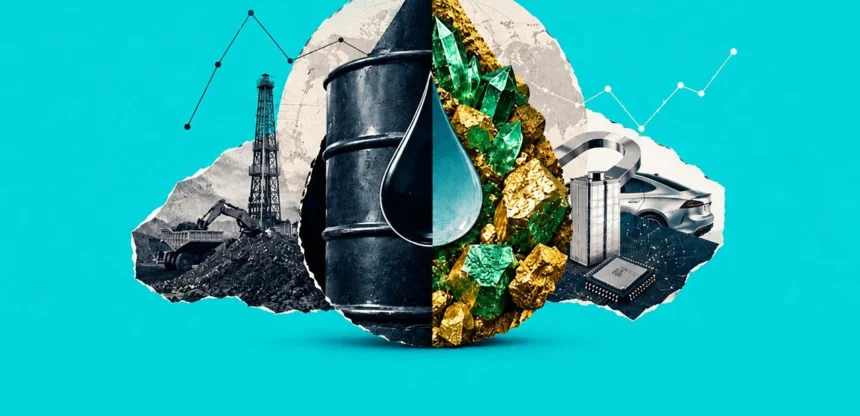
Electric vehicles are becoming increasingly common on the roads, with their sales having increased dramatically in the past decade. Electric vehicles are the lowest-emission transportation option, and while they don’t require oil, they still require non-renewable resources: minerals.
Most EVs rely on lithium-ion batteries, accounting for 80% of the global lithium-ion demand in 2024. An estimated 90% of the world’s batteries are lithium-ion, meaning they are in high demand by countries and corporations all over the world; however, lithium is not easy to acquire. Although it is highly abundant on Earth, it’s found mostly within rocks and other minerals, causing it to be difficult to extract. 94% of all lithium produced is from six countries: Australia, Chile, China, Zimbabwe, Argentina, and Brazil.
Most lithium-ion batteries use a cobalt cathode. Cobalt is almost entirely produced in the Democratic Republic of Congo, which dominates the market by producing 84% of all cobalt globally. The DRC has been the top producer of cobalt since 2003 and is likely to remain in its position, were it not for the severe ethical issues regarding the country’s cobalt mines. An estimated 40,000 children are employed in cobalt mines and work in highly dangerous and toxic conditions, earning about $2 USD a day. The DRC has been on the UN’s list of least developed nations for 35 years, and the exploitation of these child labourers is a direct consequence of foreign involvement in the country’s mining industry.
In February of 2025, the DRC banned cobalt exports for 4 months, and in June of that year, they extended the ban until September in efforts to combat price pullbacks from 2022. After lifting the ban, they announced only 96,600 metric tonnes of cobalt were to be exported from the country annually, starting 2026. By mid-2026, the cobalt market price surged to 160% of what it had been prior to the export ban and rebounded 92% since March 2025, showing the structural repricing of cobalt in the market.
The DRC’s cobalt industry is dominated by both Chinese and Western companies, with CMOC from China and the Switzerland-based multinational company of Glencore being the largest producers. While both Chinese and Western companies face identical circumstances in terms of quotas, China has been in the lead since the ban due to their integrated supply chains in the DRC. From mines to cathode precursors, China has the ability to process and refine cobalt in the DRC, allowing them to have an easier time regarding customs and quotas compared to Western mining companies that primarily export raw materials.
On the other hand, in early 2026, through a joint venture between the USA and India, the Congolese mining company Chemaf was acquired, which controls the mines that produce nearly 5% of all cobalt globally. This was a huge win for the US, as China had been attempting to gain control over Chemaf since it was put up for sale in 2023.
There have been rising concerns over the geopolitics surrounding the race for mineral resources, much due to the history of conflicts regarding oil. Many of the wars and conflicts in the past century have been regarding oil, from Hitler’s attempt at the acquisition of oil fields in Baku during World War II to the CIA’s coup of Iran in 1953 to overthrow PM Mohammad Mossadegh for wanting to nationalise the country’s oil reserves.
Even more recently was the US–British war on Iraq under claims of weapons of mass destruction. After the death of over 200,000 innocents, the claim was proven false, and the facts all point to this being a war for oil. Iraq holds the third-largest oil reserves, most of which were controlled by French, Russian, and Chinese companies before the US invasion. After US involvement, control of the oil reserves was handed over to companies like BP and Shell. Former Federal Reserve Chairman Alan Greenspan wrote in his 2007 memoir, “Everyone knows: the Iraq war is largely about oil.”
Whether or not these rare earths will cause conflicts as severe as those caused by oil is yet to be known; however, all the signs point to it being highly likely. As EV sales continue to boom, so will the demand for the minerals required for their batteries, and unless there can be a rapid switch from lithium-ion batteries to less environmentally harmful alternatives, conflicts within the industry should be expected.