





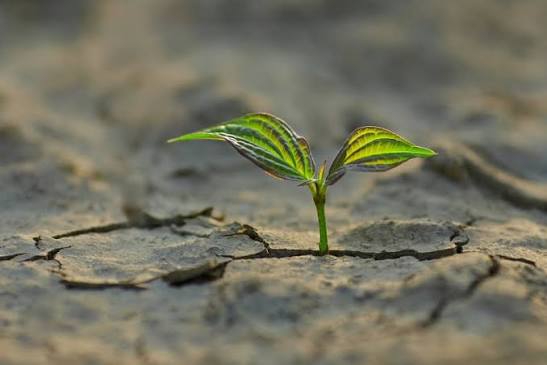
A philosophy of hope and resistance
Optimism is a mental attitude and expectation that the future will generally turn out positively. Whereas, Hope is the active desire for a specific outcome coupled with the willpower and motivation to make it happen. Throughout history, thinkers have considered hope a secret weapon against cynicism and despair. The power of hope has also been used as an active form of political and social resistance throughout history. Hence, in relation to this, an important question prompts: “Is hope a rational choice in the face of despair?”
To truly understand this perspective, we must first study the thinkers who held the latter view. Ernest Bloch—a German Marxist philosopher fleeing Nazi Germany — believed hope to be the center of human existence. Bloch argued that reality is unfinished and that the future is undetermined and constantly changing. With this philosophy, he eliminated the idea of fatalism and established the view that neither oppression nor periods of uncertainty are eternal. He rather describes the world as utopian and sees utopian thinking as the force that pushes people and societies forward. This positions hope as a form of resistance against the current system and opens a realm of possibilities in contrast to what is. This is where hope becomes rational. Hope is not wishful thinking; it is recognition that the world is still being made by those willing to change it.
Existentialism is another philosophical theory that considers hope as an act of resistance. Similarly to Bloch’s Utopia, Existentialists like Albert Camus believe that the future remains unclaimed and is like wet clay, waiting to be moulded into endless possibilities. However, this theory redefines hope as something radical rather than something passive– it rejects blind optimism and suggests that humans have control over what happens in their lives. Camus illustrates that human beings possess free will, and it is up to them to derive meaning and purpose from their lives. Camus used the myth of Sisyphus (a man condemned to roll a boulder up a hill for eternity) to show that finding joy and purpose in a meaningless task is the ultimate act of rebellion. Thus, this reinvents hope as a reaction and an action. Instead of waiting for life to take its course, one uses hope as resistance and changes one’s approach to overcome the eternality of despair.
Hope has been explored by many thinkers, including Paulo Freire. Freire viewed hope as the foundation upon which resistance and social transformation are
built. He invented the concept of critical hope and believed that hope without action was merely waiting. Like the others, his theory of hope stemmed from his opinion that the future is not predetermined and humans are not the spectators but the players in their lives. The centre of his theory was that hope is not the result of action; it is the condition that makes action possible. A quote from Freire perfectly summarises his view: “Without a minimum of hope, we cannot so much as start the struggle.”
To grasp hope as a powerful force, we must first look at its politically transformative contributions through the annals of history. Apartheid was a system of institutionalized racial oppression in South Africa, and inspired the anti apartheid movement by Nelson Mandela. This movement was derived by the hope of a democratic and multiracial South Africa. Despite the system trying to convince people that the structure was permanent, activists harnessed their hope as a form of resistance against inequality and did not let go of their demand to fight for their desired home. For years, apartheid seemed permanent. Yet the persistence of activists and ordinary citizens gradually eroded its foundations until the regime began to unravel in 1990, transforming hope from a distant aspiration into political reality.
The Pakistan movement (1940) is another instance when hope prevailed over uncertainty and despair. Years of colonisation and oppression by Hindus of the Congress Party in the Indian subcontinent induced the campaign for a separate homeland for the Muslims. For years, this movement was dismissed as unachievable and out of the ordinary, but the dream and hope of a free land and a better future were greater than any obstacle in the way. Muhammad Ali Jinnah, the leader of the movement, advocated that “with faith, discipline and selfless devotion to duty, there is nothing worthwhile that you cannot achieve.” Hence, their hopeful efforts became a form of resilience against the oppressors and led to the creation of the Islamic Republic of Pakistan.
Across history and philosophy alike, one conclusion stands out: the future belongs to those who are ready to work for it. Hope is the key and the force behind it all. It protects one from drowning in the shadows of despair and becomes the light in the dark, the resilience to the vulnerability, and the final straw that urges the struggle for change and betterment. The only condition is that one does not lose the very hope that keeps them going. Now we return to our previous question: “Is hope a rational choice?” Ultimately, from all perspectives, hope is rational not because success is promised, but because surrender guarantees nothing. As long as the future remains ours to complete, hope is a valid act of resistance. As William Earnest Henley once said, “I am the master of my own fate, I am the captain of my own soul.”
Extremely eye-opening article!!
very well written👏 love this topic and the words used in it⭐️ hope to see more articles like this posted soon✨
Love it!!!