





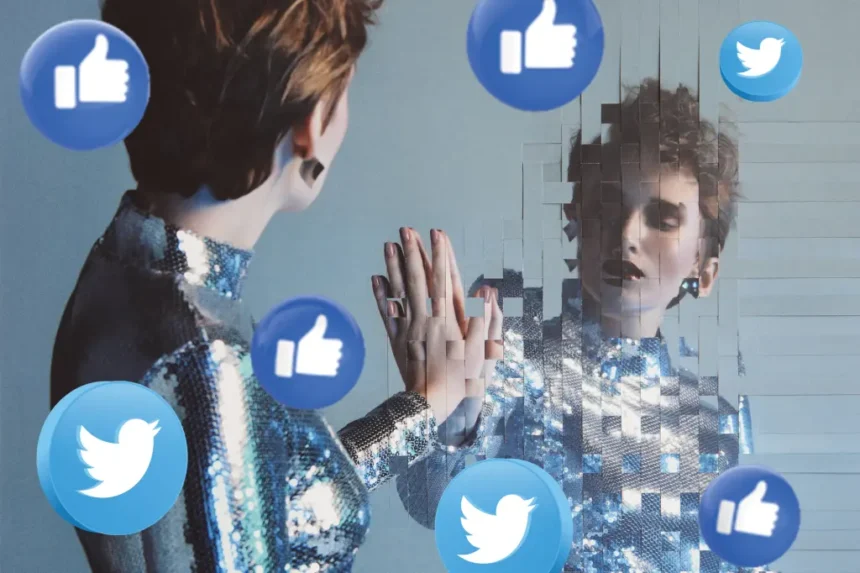
“Social media has twenty-year-olds feeling like they are falling behind in life.” This is a statement I came across the other day while scrolling on one of the social media platforms, and it has stuck with me ever since. We are aware that we are in an era where social media has become part of our daily lives, whether for connection purposes, for communication purposes, for educational purposes or for entertainment purposes, but with all this use, it also infiltrates the constant feeling of comparison between what you are seeing online and your actual life; this is where the fear of falling behind creeps in.
If you go to social media platforms such as Instagram, Facebook, TikTok, etc. You will surely find a lot of people talking about their achievements; different people talk about how they purchased their first car, house, or property before the age of twenty, started their company at the age of eighteen, graduated, got married, started a family or used the famous strategies on “how to make your first million in your early twenties.” Contrary to the idea of achieving a lot at a young age, people in their early thirties to fifties also say not to get discouraged about being successful, using themselves as examples of how they took a bit longer to achieve certain things. This put us in question about whether there is really a specific time or age to achieve certain goals. Is anyone “on time”?
While these stories of achievement can be inspirational, they reinforce a culture of urgency, the feeling of rushing success, and the sense that success takes a bit longer as a result of constant exposure to curated success. Although it may be true that a few people are successful at an early age, what is shown on social media is not the full truth, as some aspects are left out. Hence, only seeing the “edited” success comparison creeps in; one starts to lose touch with their own reality and wants to hop on the reality that they see online, which is fast, quick and has no “ugly parts.” Also, the constant comparisons make one stop living in their reality and start to feel like their life is over and that they are left behind. An article in Psychology Magazine argued that humans often find themselves in a trap of comparing themselves to people around them or those on social media, doing so to feel better or worse about themselves. This constant comparison only results in worry, a sense of unfulfillment, and a feeling of being left behind.
The curated success shown on social media shapes how we perceive success in reality. Instead of viewing it as something that happens gradually, it becomes something that happens overnight. When we don’t get it instantly, we begin to feel like failures, like we are missing something, and like we are falling behind. According to Psychology’s article, social media can cause a unique kind of stress, leaving one feeling left out, inferior, and inadequate. This is the psychological consequence of the pressure and comparison of wanting quick success, such as buying your own car at an early age or getting married early. But the truth is that not everything shown on social media reflects reality; some parts are intentionally left out or dramatised.
To not conform to this culture of comparison and urgency, one must understand that the concept of being on time is socially constructed, and it differs with people, as many people come from different backgrounds, whether economically, socially or financially, so the meaning of success and the period to achieve your goals will also differ. One must also understand that social media content is edited to meet certain standards and aesthetics. Lastly, the question one must ask oneself is whether they are really falling behind or comparing themselves to people who are very different from them.