





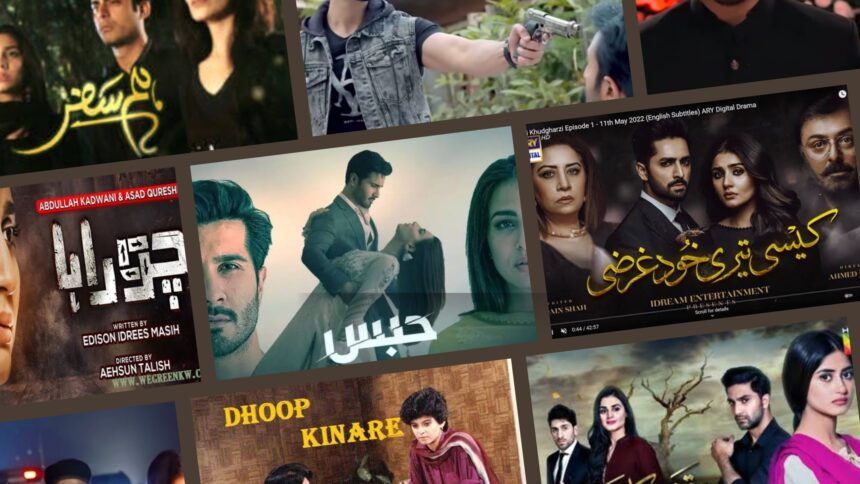
Today, Pakistani dramas have become a household staple. Families gather in front of the television during prime time. Those who don’t stream on their phone. The popularity of drama serials has extended beyond the screens, becoming a topic of discussion among friends, families, and wider social circles. Their effortless integration into people’s daily lives shows that they have evolved from a mode of entertainment into a shared cultural experience. But what impact does this cultural experience have on the people living it?
Drama serials have long faced criticism for relying on repetitive tropes and themes. The plots mostly revolve around toxic marriages, extramarital affairs, overbearing in-laws, and an oppressed character — most often a woman. These conflicts do exist in real life, leading many to believe that dramas simply project society. Contrary to this, the repeated portrayal of these dynamics bears the risk of such troublesome behaviours being accepted as a norm when, actually, they should be questioned. Therefore, the impact of drama serials becomes more profound.
These days, the audience is being presented with a familiar but flawed storyline — a female lead belonging to a middle-class background embodying a morally upright and virtuous character — in contrast to a male protagonist from an influential family bearing several negative traits — and the ongoing tale of ‘everything is fair in love and war.’ Gender stereotypes are being heavily relied upon, and the contemporary idea of a bold and independent woman is being oversimplified — through scenes where the female lead confronts her male counterpart in a socially inappropriate manner. At the same time, the secondary female character is desperately trying to gain the guy’s attention by using manipulative tactics. This extreme and polarised depiction of female characters reinforces the problematic themes persisting in the media.
Even though these narratives are being widely criticised, the highest viewership is achieved by dramas that revolve around these similar tropes. This is because they are marketed in ways that attract the audience — through the casting of popular actors, the fusion of engaging soundtracks and appealing shooting locations. Hence, in spite of the constant backlash, they continue to persist.
One may assert that such behaviour is the sole purpose of producing content — to give the audience what they want and, in return, generate high TRPs. What’s overlooked is that we’re caught in an endless loop: the media show the audience what they demand, and the audience stick to familiar storylines because they’re comfortable.
Therefore, neither side is ready to experiment with something different. Still, if nothing is done to break this loop, it will create subtle but significant effects. Creative growth within the media will be restrained, as will the cognitive development of audiences who continue to watch such dated narratives.
However, change is only possible when both the audience and the makers are on the same page — by taking creative risks in producing more unconventional stories and actively supporting them through engagement. When we begin to value the original concepts by creators, they will be encouraged to invest in more varied themes. This way, our drama serials will evolve into more thoughtful and progressive storytelling — one that better reflects our constantly changing society and also contributes to its growth.