





“Liberty lies in the restraint of power.” – Edmund Burke
A really unusual way to start an article that will later explore major health crises in our country. But I can not help but weave in philosophy. Let’s simplify the quotation.
What Edmund means is that we have this sense of power over the decisions we make in life. Infamously called “free will.” But that doesn’t mean you should go rogue in the environment and do whatever you want. Because the actual freedom in life, according to him, lies in restraint towards certain decisions that can harm us.
Now, in daily life, many decisions can be a little questionable, if not sometimes hazardous. Not just towards us but towards our surroundings. And most of the time, we probably don’t realise how big a problem is until… well, it is massive.
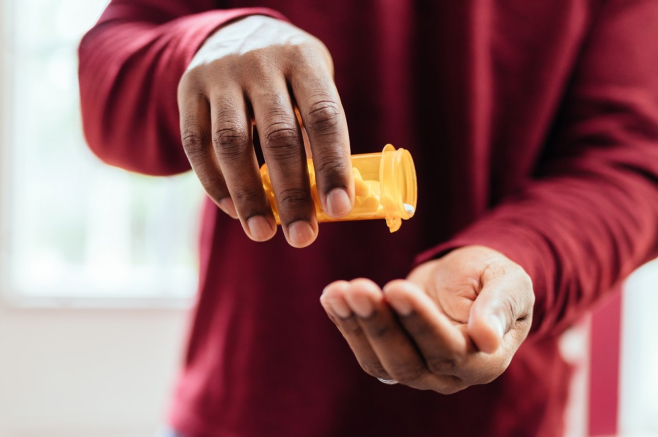
For example, you had a hard day. Your assignments went badly, or there are too many chores in your house. All of those problems turned into a huge headache. If you are from my homeland. It is muscle memory at this point. You reach towards this treasure box, and you find your treasure. A token that can free you from all kinds of pain in life. No, I am not being overdramatic. This is how paracetamol has been used in Pakistan for decades.
But how can a simple intake of a painkiller be, as I quoted myself, hazardous? How can such an innocent act be the misuse of free will? Because this innocent act, which is medically termed ‘self-medication’, is not like taking a candy during a bad day. Mind you, this is a drug. A formulation of chemicals. Chemicals that are able to alter some of our bodily reactions to alleviate affliction. Something a layman should not be playing with until it has been prescribed by a medical professional, aka a doctor.
And in Pakistan and many underdeveloped countries, this customary habit of self-medication does not limit itself to something as simple as paracetamol. No, it exceeds something as serious and dangerous as an antibiotic – the drug that has the ability to kill or limit the cause of fevers and diseases, i.e., the bacteria.
But isn’t it so simple? You get a fever. You get an antibiotic against it, the bacteria die, and you recover. Just like that. Where does any of this become a health and environmental crisis?
Because you might recover one time from it. Twice, maybe. But the bacteria evolve. It turns into a superbug. The drug has absolutely no effect on it. And we are challenged to produce a new drug. So, in the meantime, this emerging and seemingly never-ending issue remains with us. Antibiotic resistance.
The problem of taking a medicine on your own, which seemed so small, turns into massive death tolls. Because 590,000 Pakistanis die directly from resistant infections every year. That equals a small city disappearing every year.
And none of this is overlooked by the government. We have laws. The Drug Act of 1976 and 2012 legally restricts the manufacturing of substandard medication and requires prescription-only medicines to be dispensed only on a doctor’s prescription. There are also massive penalties mentioned in case there is a violation. Then, ironically, why the violation?
Because there are many flaws in this otherwise seemingly perfect story of law and order. So the story starts with – let’s say we have a guy named Dawd. He is sick, but he does not want to pay for the doctor. So he goes to this local pharmacy in his town, to the front desk, which should normally consist of a licensed pharmacist. But he is currently on vacation with his family. So as an alternative, we have this part-time high schooler named Abdul.
Following the normal protocol, Abdul asks for the prescription. Dawd does not have it. So, instead of actually going to a doctor, Dawd says, “2 din ki de do, phir test karwa laon ga.” Now Abdul weighs the cons. When was the last pharmacy raid done? Years ago. But there are pros. Antibiotics are high-selling items. There are profit margins. So Dawd gets the medicine, and the story ends.
Probably not because imagine how many Dawds and Abduls we have in our country. And because of this failure of the system, the drug resistance that is normally 30% in Europe has reached over 70% in Pakistan.
And there is one more plot twist to this tale. An antibiotic, unlike a painkiller, also requires a prescription from a doctor. It involves an entire pipeline of lab tests involving microbiologists and lab technicians. But, stating the obvious, this lab approval is also heavily neglected. So there is no legal enforcement against pharmacists. There is no collaboration between lab experts and doctors. And cherry on top, there is no FDA-level quality testing infrastructure. Because we never had enough funding, or it was never spent accurately on the said cause.
Moreover, we are not even held accountable internationally. WHO has guidelines. The United Nations has announced antibiotic resistance as a globally emerging issue. But there is no antibiotic police to punish the countries that are currently ignoring the rules.
But again, why should we rely on the world to fix us when the call is coming from inside the house? The government should actively enforce the laws and shut down pharmacies that violate them. It should provide the public with affordable doctor visits. Doctors should take help from the lab experts in reviewing hospital prescriptions. Activists should educate the general public and farmers about drug use.
And most importantly, the drawbacks of our system and of us as individuals should be putting a restraint on the liberty that was given to us by a faulty system. We should refuse the intake of medication without prescriptions and use our free will…correctly. Because to perfect a system, we must first try to perfect ourselves.