





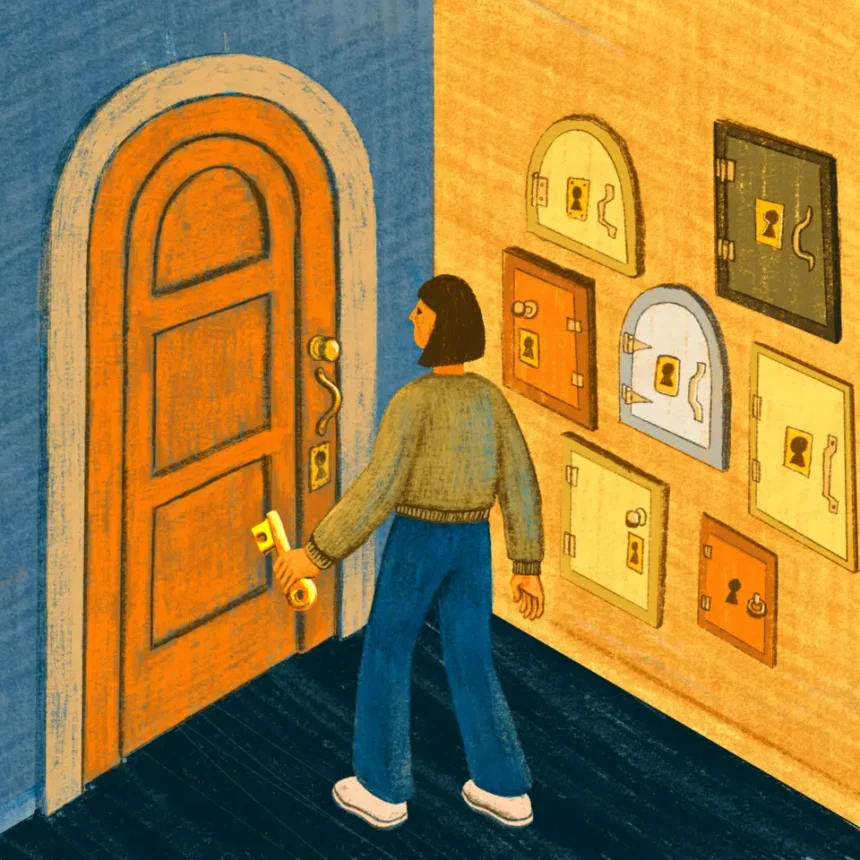
“It is my choice.”
A statement that has proved to be controversial not only on the internet but also within the analysis of politics and philosophy. To be human is to know the difference between right and wrong and to make a choice. However, this choice, often linked to significant life decisions, manifests in our daily lives, influencing everything from the clothes we wear, the language we use, the company we keep, and the diet we follow.
The idea of free will gained popularity with the hyperindividualist culture promoted in countries such as the US, in contrast to the collective culture of the Global South. Individuals have the agency to make decisions, and these choices will directly affect their lives; all consequences are up to the individual to bear. This concept implies that choices exist in a vacuum and outside influences are negligible.
“Men make their own history, but they do not make it as they please; they do not make it under self-selected circumstances but under circumstances existing already, given and transmitted from the past. The tradition of all dead generations weighs like a nightmare on the brains of the living,” says Karl Marx in The Eighteenth Brumaire.
On a political and philosophical level, free choice or free will is criticised by Marxists and different branches of feminism (except for liberal feminism). Marxism argues that human agency is limited and the choices made are determined by the Capitalist Economy. The choices one makes are a continuous result of the way human history has unfolded. Following the notions of liberalism and thus capitalism, free choice takes fault away from the system and its exploiters.
The capitalist notion of choice in a free market exists in a way that the consumer lives in a trapped reality. Instead of having a “free” choice to choose from the competition and varieties, they have to choose, and sustainable choices are scarce or available to only a few.
A common example is the beef industry and veganism. The beef industry is one of the biggest users of freshwater, contributing to the existing water shortages around the world. Meat industries generally produces a significant amount of pollution. The suggested reaction to this problem is veganism. Instead of consumers freely choosing meat consumption, they should opt for vegan practices. But free choice doesn’t exist for many, as vegan lifestyles are unable to exist in countries of the third world due to expense, quality and immunity challenges. The issue further goes into a paradox as agriculture exploits immigrant workers around the world.
Feminists, mainly radicals and Marxists, are perhaps the ones who most readily debate free choice in a world that is supported by patriarchy and capitalism.
Let’s assume a common instance. A woman has proposed that she wears makeup as a choice because “it makes me happy.” Liberal feminism advocates for such choices. As per the name, it applies the feminist theory to liberal practices, aligning the liberal (or capitalist) economy with it. The free market supports choice, as mentioned above; thus, this branch of feminism will argue that makeup is, in fact, a choice freely made for different reasons. More critical branches of feminism will go against this argument. Why is it that the act of wearing makeup makes one feel happy? Beauty relates to it, and patriarchal standards set beauty. The choice isn’t freely made because it promotes women beautifying themselves, and thus, the happiness comes from conformity.
However, it can be said that free will exists to an extent. This phenomenon is mainly seen where people critically question their reality and choices. Many feminists refuse things such as makeup, diet culture, etc. Postmodernism argues for intersectionality and diversity. Many truths exist. Where something is the oppressor, for others, it is a liberator. For this reason, the free will or choice argument faces many contradictions. What about those who reform oppressive practices after evaluating them and realising they were mainly chosen because of social conditioning? Communities such as transwomen and Black women in the US have seen makeup as an artistic expression that sets them apart.
A further consequence of forgetting human agency is fatalism. There is no choice that will bring any positive reaction because of forces larger than us. This pessimistic view of events will discourage people from making their lives better, especially when it comes to advocating for marginalised communities.
The illusion of free will exists and is all around. Most of what people are and have become is based on social conditioning and human socialisation. Class, gender, age, and cultures play an incredible part in it. But space should be given for people so that they don’t wave away a path to genuine choice but rather criticise and engage with their surroundings.