





It’s March 2024. 11-year-old Malak Ayad is flying a paper kite mere metres away from the barbed wire and concrete fence separating the Gaza Strip from Egypt. She’s named her kite “Butterfly.” She comes daily with her brothers and cousins to fly kites after being displaced from her home with her family to the southern city of Rafah. For a little while, the war melts away. But soon explosions from airstrikes force her to run back to her tent. Still, tomorrow she’ll return. The wind cannot carry her across the border, but she’ll launch her kite into it anyway.
Hope holds us up, but it can create its own set of challenges. When we hope, we believe that good things will happen if we just keep going. We tacitly accept the social and political systems we are placed in and think that patience within those frameworks is what will eventually emancipate us. We don’t face the reality that those systems were never designed to allow for the persecuted populace to overthrow their oppressors. Political theorist Lauren Berlant called it ‘cruel optimism’ — the condition of remaining attached to systems that hinder our flourishing. Positivity subdues the rage that would have let us feel the full extent of the personal and collective damage inflicted by oppression. It obscures what we experience, and so we calibrate our efforts wrongly. Therefore, ironically, oppression keeps maintaining its chokehold because we don’t stop believing in its potential to change itself.
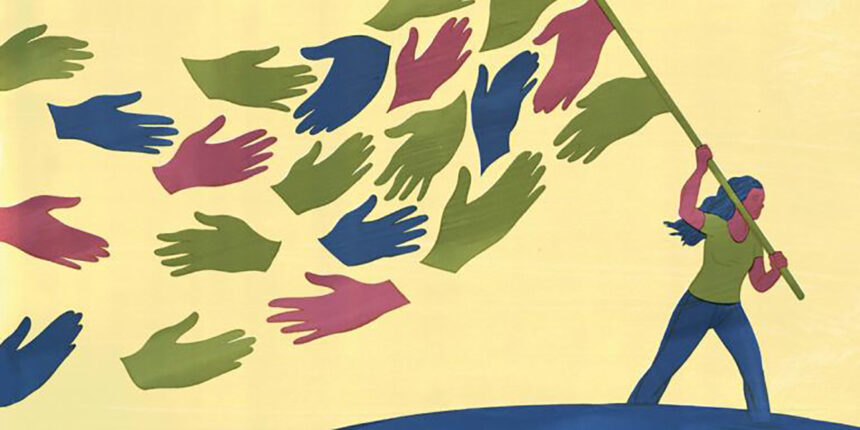
Despite its shortcomings, hope is oxygen for survival. And just as critical as the act of hoping is our approach towards it, because that determines how we behave in every aspect of our lives. If we merely fantasise about a distant utopian future to soothe our wounds, hope becomes a fleeting solace. We resign ourselves to suffering and accept our helplessness. We speak out less, question less, and pay less attention. In contrast, if hope fuels our resistance to being crushed by oppression, our every small action declares our defiance. Whether it’s playing music amidst rubble, writing poetry inside a dark cell, or simply continuing daily chores the next day, each effort strengthens the resolve to keep hope alive. And that hope in turn keeps us alive. If we are to keep going regardless of evidence, a conscious commitment to such acts is the only way to sustain resistance.
In political and social movements, hope is not just motivational, but the foundation that keeps them from collapsing against relentless opposition. It allows people to withstand greater pressure and to have a reason to keep getting back up when demoralising setbacks occur. And this resilience threatens the firm grip of oppressive authority. Even a tiny seed of hope can, over time, mushroom into a force that ends them. That is why crushing hope is the first goal of authoritarian systems when challenged. They use all the tools at their disposal. Media propaganda. Violent crackdowns. Weaponising laws. Anything to send the message that resistance is futile because the powerful have complete control and won’t budge. So throughout history, resistance against persecution was sustained through quiet reinforcement of hope. For instance, the Warsaw Ghetto underground press built morale by countering Nazi propaganda and mobilised armed resistance. Another example is Nelson Mandela who cultivated deliberate optimism on Robben Island to strengthen the anti apartheid movement. His dignified and compassionate demeanour with the jailers and inmates alike during his 18-year confinement reverberated globally as a source of inspiration. As long as there is hope, the movement has a pulse and the individual has something to trudge forward towards, despite their own suffering.
But hope is also a heavy burden. Though it is often held up as a limitless source of resilience, in reality, prolonged struggle can erode it. Year after year, without evidence, without reward, without relief, the fight to remain optimistic gets harder. Despair inches closer. Doubts begin to seep in. Will we ever be free? Is it a dream or a delusion? Will the dream even hold its promises? Nothing can erase or ease the suffering. The best that hope can do is direct it toward a purpose. But then we bear two loads: fighting with our circumstances and fighting with ourselves.
So, is believing in change itself a form of defiance? The question is complex because while hope shows a refusal to be broken, it often cannot change the conditions of oppression. If 11-year-old Malak decided not to fly her kite the next day, the bombardments would still happen. But she would lose the small window of time where she forgets the violence and reclaims her childhood. In a situation where safety and identity are systematically denied, the simple act of carving out a little space where she can exist is a quietly powerful defiance.