





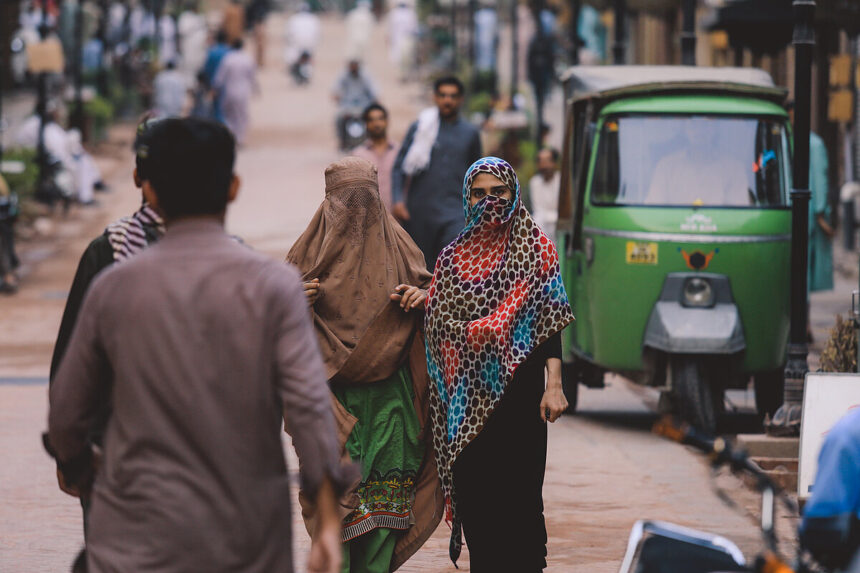
Pakistan is full of public spaces, as it is full of busy bazaars, overcrowded buses, tea stalls, parks and roadside markets. But these spaces are not always equally accessible to a number of women. Whereas men will walk freely on the streets and take any ride at almost any time of the day, women tend to be more calculated in their actions. The pursuit of the safe space has consequently risen to the forefront of the discourse of freedom and equality in Pakistan, as far as women are concerned.
In Pakistan, women are being seen in most of the cities, especially in Lahore, Karachi, and Islamabad, in universities, workplaces, and other institutions. In the last several decades, an increasing number of girls have received the opportunity to get an education and pursue professional lives. However, the streets still pose a challenge to free and safe movements.
Travelling every day is a series of safety calculations for many women. Taking a ride, going shopping in a busy store or going home late because of work may raise fears of harassment or being followed. Street harassment, including verbal remarks and intimidating behaviour, is a frequent occurrence for women in the nation. Such events might appear insignificant one after another, but they all lead to an atmosphere where women feel that they are under constant observation.
This situation leads to most of the Pakistani women developing survival mechanisms. There are some who do not go to particular streets or markets at night. Some even come in a caravan, use ride-hailing, or inform their family members of their current location during their commute. It is common to find families looking to make their daughters go home before it gets late, and in the process, they do not necessarily question their potential capabilities but fear that they will not be safe.
This fact presents an underlying cultural problem: places of publicity in Pakistan have always been perceived as male-dominated. Tea stalls, street corners, and even late-night food markets are usually dominated by men, with women being a less frequent sight in such places. When women venture into such spaces, they could be looked at or judged; thus, they might feel uncomfortable in those spaces.
Nonetheless, the attitudes are slowly shifting. Women in Pakistan are putting these restrictions to test by defying them and asserting their freedom to move. College students meet at cafes, females attend sports activities, and the adults work in different places alone. Families and women are also engaging more in social activities, and this has resulted in their inclusion in the public parks and cultural festivals.
The Aurat March is one of the most obvious organisations that promote the rights of women in Pakistan. This march, held in various cities every year, brings out issues that include equality in workplaces, domestic violence and the right to safe places. The participants are holding banners and slogans that seek respect, safety, and freedom of movement for women.
Other organisations like UN Women and the Aurat Foundation have also been trying to combat harassment and bring about gender equality in Pakistan. Their campaigns are dedicated to the reforms of the legislation, awareness campaigns, and systems that help women who suffer harassment or violence.
The governmental efforts have tried to enhance security in open spaces as well. In certain cities, there are women-specific transports or exclusive seating in buses and metro systems introduced. As an illustration, the Lahore Metrobus does have women’s passenger areas. Although the mentioned measures will help some people feel a bit more comfortable, some activists suggest that the ultimate result should be to ensure that all open areas are safe to all people.
Another device that has contributed to safety and independence is technology. Ride-hailing applications mean that women would not have to use the bus or metro, which has limited privacy, and mobile safety applications would provide people with an opportunity to send messages to loved ones in case of an emergency. Social media has also provided a platform on which women can share their experiences and hold them to account in case of harassment.
Cultural attitudes are still influential despite these improvements. The debate on how women can be safe in society often blames the women themselves — for what they wore or why they were outside at a late hour. Such an attitude will make victims reluctant to report. Education and open dialogues on the issues of respect, equality, and shared responsibility are the way to change such attitudes.
Simultaneously, one should also note that Pakistan is a multicultural nation and that there are varying realities both in the rural and urban regions. Women tend to move in open villages, but they might be restricted when they are going out of the village. Women can get more chances in cities, but also, they face congested areas, and harassment is more observed in such places.
Pakistan is not just searching safe spaces because of physical safety but also because of the right to belong in social life. Women are able to take a more active role in society when they feel at ease with parks, streets, universities and workplaces. This engagement empowers the women themselves as well as communities and the national economy.
After all, it is not aimed at establishing isolated areas in which women could feel a sense of security. The goal is to make public spaces safe for all. This would have to be done through collaboration between the government institutions, communities, and individuals.
Every citizen owns the streets of Pakistan, from Karachi’s busy markets to Lahore’s mediaeval lanes. When women feel free to go through these areas, the nation is a step closer to the future that will not be characterised by restriction but mutual liberation and respect.