





Artificial intelligence has become an essential part of our lives, just like salt in seawater. There was a time when the idea that machines were able to think was considered an alienating idea, but now it has become a reality in our lives. Today, whether it is the automobile industry or surveillance systems, production companies or the field of education, artificial intelligence has become inevitable. Artificial intelligence has rapidly developed over a very short period of time, from its initial basic models to the latest ones with much higher intelligence and better reasoning. The best example is the widely used AI platform, ChatGPT, with its first developed version, ChatGPT 3.5, released in November 2022. This version got 1 million users just within 5 days of its release, and by January 2023, this number had surplussed to 100 million. ChatGPT version GPT-5.4 is the new flagship model today, and it is estimated to have 1 billion users in 2026.
Artificial intelligence is not just a research and technology advancement; it has also entirely changed the dynamics of human society. The driving force behind the development of artificial intelligence was not just technological advancement, but there was another notion, which was that artificial intelligence would enhance human creativity and bring a major shift in every field of life. It has been over a period of human interaction and experience with AI.
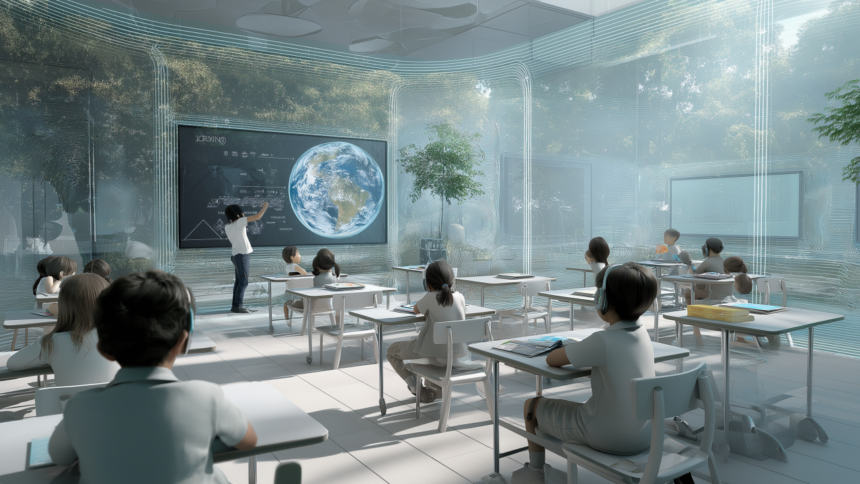
Artificial intelligence has also revolutionised the education field. Its implications for access to education are also intricate. AI-driven automated educational/learning tools have not only helped the students with self-paced learning, but they have also enhanced their productivity, extending their abilities to think outside the box. In Pakistan, many locally developed automated learning platforms, such as Taleemabad, Maqsad, and Nearpeer, are shifting the traditional learning system to digitised learning. These platforms work on machine learning algorithms that provide students with customised lessons and self-paced learning, with a wide range of assessments and quizzes. These platforms are making learning effective and enjoyable. Besides that, some international automated learning platforms like Khan Academy, ChatGPT, Gemini, and Grammarly are also used by a large number of people across the country for effective learning and personalised tutoring. Another great example of an automated learning platform is Duolingo, which uses AI to personalise the language lessons for its users and change the difficulty level based on the user’s performance.
These AI-driven automated learning tools have enhanced educational technology and helped provide a customised learning experience for students to address their varied needs and capabilities. However, the educational theorist Sugata Mitra highlighted that the inequalities in access to this technology and digital literacy could not benefit the marginalised students. Their inability to access these technology platforms due to economic circumstances or underdeveloped infrastructure prevents them from gaining benefits from the advanced tech.
In Pakistan, many institutions in the private sector have integrated artificial intelligence in their education system, providing the facilities of learning management systems (LMS) and Google classrooms that personalise instructions. Virtual and augmented reality integration in education has promoted interactive learning. These tools provide the students with an updated and digitised learning experience. On the contrary, most of the public sector schools don’t even have the basic facility of a computer. Moreover, the students in the remote areas have no access to the internet. Along with that, they don’t have sufficient economic resources to afford the devices (mobile phones, laptops) to access the services provided by the artificial intelligence platforms. The high prices of premium subscriptions to AI platforms have made them more inaccessible to marginalised students. As a result, the balance of the student’s potential and their learning capabilities is disturbed.
An American writer and Harvard professor, Shoshana Zuboff, has expressed her concerns regarding the aftermath of this digital capitalism. She highlighted that such development of artificial intelligence and technology, besides its benefits, is centralising the power and resources among a specific group of people. Thus, leaving many individuals at a disadvantage. One group is fully equipped with the latest technology and using it to its full potential, while the others don’t even know what this technology is.
The Government of Pakistan has taken initiatives towards digital learning, providing students with free courses and making digital learning accessible for all. “Digital Pakistan” is one of them. This platform equips the young people with essential digital skills through its courses, i.e., data analytics, business intelligence and artificial intelligence using Python. Also, the “National Institute of Excellence in Teacher Education” has initiated teacher training programmes to promote the adoption of AI in schools.
But introducing a new programme and inaugurating a new learning platform solely will not help when the digital infrastructure is insufficient to fulfil the requirements of these initiatives. The ability of artificial intelligence to overcome educational gaps is dependent on the equal access of all students to technological resources. But this equitable access is a major problem in numerous areas.
In short, artificial intelligence and automated learning systems are very crucial and need to be the order of the hour, and this technology would bring a major positive shift in Pakistan’s digital future, but only when everyone has equal access to it.