





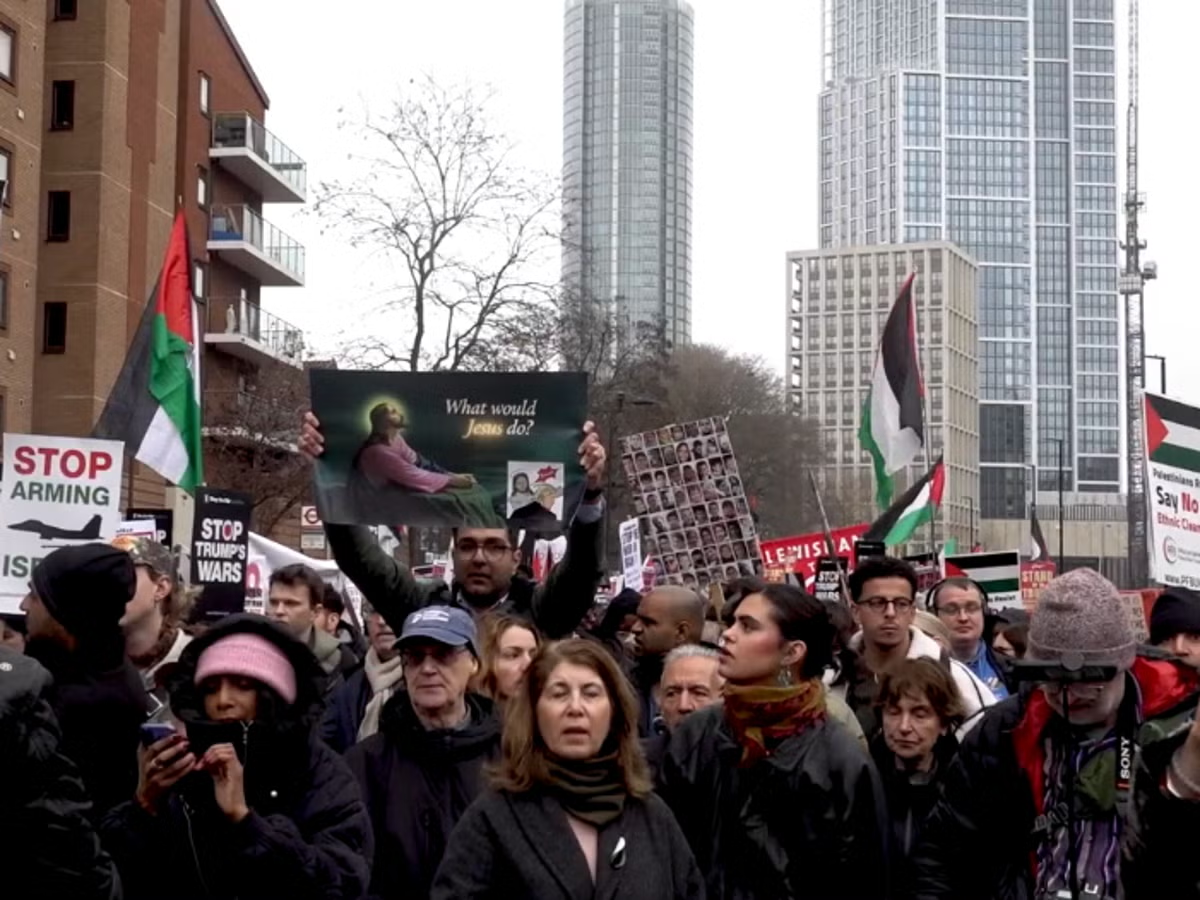
On 3rd March, following the recent US-Iran war, protestors gathered outside the US embassy in Rome, opposing the military intervention by the US. A few days before, on 1st March, unrest followed in Pakistan, especially in Islamabad, where demonstrations were held outside the diplomatic enclave, resulting in two deaths. This was in response to the death of Iran’s Supreme Leader, Ayatollah Khamenei. Demonstrators gathered outside a hotel in Islamabad to express their dissent, with reports claiming the use of rubber bullets and tear gas.
The Israeli offensive against Iran on 28 February, Operation Roar of the Lion, has initiated unrest in the region through pre-emptive air and missile strikes. The Israeli objective is to prevent Iran from acquiring nuclear weapons and eradicate the existential threat it poses to the state. To further exacerbate the tensions, the US began Operation Epic Fury against Iran to dismantle its military and missile capabilities. Many protests erupted across the globe as a response to these recent escalations, demanding an immediate ceasefire and for the US to hold back from intervening in the Middle East yet again.
Throughout history, anti-war sentiments have taken a large shape in the form of active, collective demonstrations in many cities worldwide. During the Vietnam War, there were mass protests organised largely by university students in the US, especially in San Francisco, New York, Oakland, and Berkeley. Then again, during the Iraq War in 2003, the anti-war movement became perhaps the largest demonstration, with around 6-30 million people involved.
Recently, protests to end the war in Gaza have been numerous, varied, and globally spread out. Though not as large as the mass demonstrations of the Iraq war, they are certainly more frequent.
One reason for the shrinking size of these protests, despite their more frequent nature, is the evolving role of social media, in which a large community is often mobilised to convey the message online. Moreover, these smaller communities comprise a younger demographic, mostly gathering on university campuses, with dispersed leadership, to launch a fairly large demonstration, as seen during previous military interventions.
The frequency and globalisation of these protests highlight a significant trend in the discourse around war. People are fed up with the growing breach of sovereignty of nations, a principal right around which the contemporary world’s ideology lies. Wars are costly, exhausting, and economically devastating, and they bring ills to the common man who suffers. Protestors question the right to free and sovereign dwelling. There stands much evidence in history around the mess created after the US intervened in the domestic affairs of countries, flagging their sovereignty. From the Vietnam to the Iraq war, the toppling of legitimate governments in Chile, or the abduction of the Venezuelan president Maduro, the resistance towards war is growing, and the only viable outlet for the masses is through protests and demonstrations, either physically or, in today’s age, digitally.
Such activity brings a subtle impression around the image of the U.S. Of all the countries, America has a far larger share in doing some sort of military activity in different nations, be it through setting up bases or patrolling international waters, or simply launching an offensive against regimes. As much as it says about its military prowess, it nonetheless becomes hypocritical when the US tries to acknowledge democratic principles of freedom and sovereignty while effectively doing exactly the opposite with other countries. It would be almost illogical to say the US would heed any moral judgements by others, but the frequent protests by the public tell one thing: that wrong is wrong even if the government says otherwise. People understand the power they have, and though it takes a long time to amend and settle, change nevertheless happens one day.