





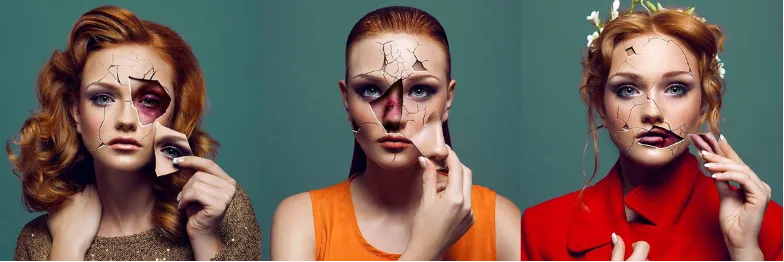
When I was 12 years old, I realised for the first time that beauty was not simple. We were all beautiful until we were old enough to be scrutinised. Until we were old enough to be told that the hair on our arms was not feminine enough, or that our skin was not pale enough, or that our shoulders were slightly too hunched, or that our bodies were slightly too thin or slightly too big.
The moment we got old enough, we were bombarded with a hundred different ideals that we were expected to fulfil and surrender our lives to. These standards only got worse as time went by because what started as certain rules of femininity turned into trends that cycled and changed every few years, as if they expect us to shed our skin and build a new one based on whatever decides to be the trend next.
Every few years, we hear the term ‘ideal woman’ circulating, but the description changes each time. One year, it’s a small waist, thin eyebrows, and skinny jeans, and then suddenly another year, it is a full figure, long hair, and heavy makeup, and no matter what year, women are expected to morph themselves into the ideal woman, no matter what the toll.
And soon enough, I realised that this is not just my struggle; this has been the struggle for every woman across time. From ancient Egypt to current times, it seems that all women have been chasing certain ideals that dictate the perfect woman, no matter what the cost.
For example, in the Egyptian and Greek eras, women were expected to have wide hips, soft bodies, and small chests that indicated their fertility and ability to give birth, which is what made them marketable to find the best husband. Similarly, in these eras, certain features further defined your social status; for example, having lighter skin and wearing kohl and rouge defined a woman as being of higher status because she could first afford these beauty products, but also she was rich enough not to need to work outdoors.
And a 1000 years later, not a lot changed. Even in the Renaissance period, a pear-shaped body signified fertility, and pale skin signified wealth; however, most notably during this period, women with higher foreheads were considered to be of great beauty, and to achieve this look, women would go as far as plucking their hairlines and eyebrows to make their foreheads look larger than they were.
And as we move towards the 1800s, we see a greater shift, a shift that we are experiencing to this day. The shift of perfection. A woman was expected to be perfect in everything, not too thin, not too thick, not too tall, not too short, just the perfect amount of everything. She must have curves but still be skinny and the perfect height to look as feminine, petite, and delicate as possible.
Being delicate was another major beauty standard that impacted how women were viewed. Women were expected to look feminine, delicate, and even sickly, just to give off the “damsel in distress” look. Women with tight-laced corsets, pale, sickly skin, and bouts of fainting were attractive because it made them seem delicate enough to be saved by a man.
Maybe the notion did not stick, but our beauty standards now still love the small-waisted, petite women, whether that be in magazines or on the runway. However, between the 1920s and the ’50s, there was a shift; women were still expected to be thin and petite more than ever but not as feminine. The androgynous look with shapeless dresses and short hair became the norm.
This era traded extravagant gowns and hair for a sleek and compact look, where women were expected to look as simple and small as possible, even as the women themselves were trying to prove their status in society as equals to men.
Further down the line, in the 50s, the economic boom shifted everything, and now culture, or status, did not define beauty standards; capitalism did. Beauty standards are now defined by the top celebrity, top makeup products, and top fashion trends of the time.
Capitalism now dictates what we look like by defining what we should do, wear, and look like through products, endorsements, and celebrity culture. In the early 2000s, we saw slim bodies and runway models wearing the top fashion and makeup that we all aimed to copy; hence, that became our beauty standard.
In 2026, the rules are a little different; we aim for perfection. The perfect blown-out hair achieved by the next best Dyson Air Wrap or overnight hair curler set. The perfect skin that is soft, delicate, and hasn’t aged a day, so that people can never guess how old you are. You are supposed to have a curated aesthetic that fits the trends and the capitalist cycle but is still supposed to be yours, even though many copies of it can be found on Pinterest.
We live in the age of Ozempic and plastic surgery, where beauty is sold to us as the next power move. We are sold fillers and weight loss drugs with the tagline of self-love and health, as if these are the things stopping us from being our best selves. We are taught not to have smile lines or any signs of ageing with retinol bottles lining our shelves. We are sold major plastic surgery as if it were just a nail appointment or a small change.
Our bodies were never accepted, and no matter how many years passed, a skinny and petite woman remains the standard, achieved at whatever cost, whether it be swallowing tapeworm eggs in the 1800s or Ozempic in 2026.
We seem to believe we are a modern society, but certain beauty standards tell us otherwise. Even today, small bodies, whether healthy or unhealthy, are idealised amongst popular media, and fair skin is still an ideal left over from racist and colonial eras.
We are still expected to look feminine with the right amount of makeup, the right amount of skin showing, the right body type, and the right fashion that makes us look like the perfect, feminine, non-intimidating women to pursue men.
We live in a society that preaches feminism, women’s rights, and independence, yet at the same time shoves misogynistic and controlling beauty standards down our throats to be acceptable and pretty.
The question is, when does this pressure go too far? And has it already gone too far?