





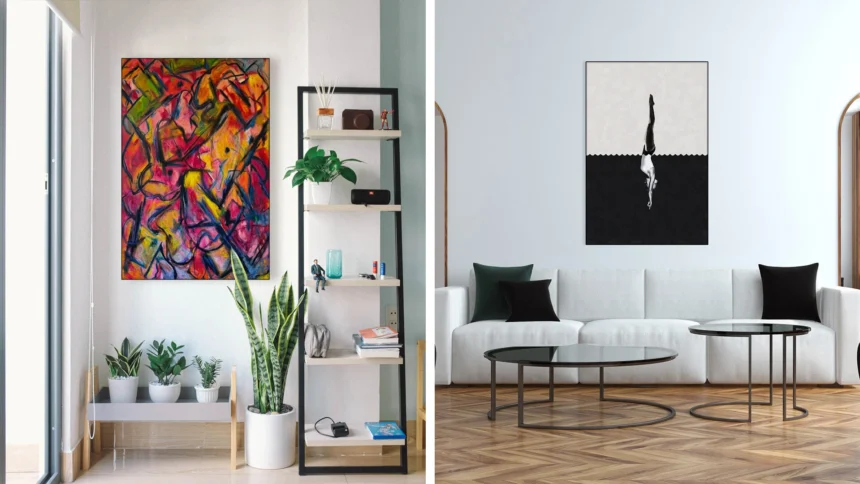
The world we inhabit has plunged into a profound abyss of overconsumption. A deep, insatiable hunger that can never be fulfilled. Common folk who don’t have enough stability to survive now buy unnecessary items through ‘buy now, pay later’ schemes to satisfy their momentary dopamine. The sensory overload has fired our brains into always wanting more. When will it ever be enough? The situation seems rather dystopian, but truth be told, this isn’t the first-time mankind has experienced this fallout.
The Industrial Revolution was the first step into the world of consumerism. And as always, fashion was the spark that ignited it all. After all, who doesn’t like to dress nice? It is common knowledge that the poor imitate the rich, but the rich prefer styles that situate them in an entirely unattainable manner. As production of fashion increased, so did the dire need for a better life, a better house, and a better status. Mass consumption ruined the authenticity that came with ornamentation. The minute details that came with excellent craftsmanship are now produced easily by machines, which has led to a loss of appreciation for art itself. Naturally, artists started preferring geometric lines over curves and materiality over ornamentation.
That’s when the forever-favourite quote among architects came into being. Ludwig Mies van der Rohe said, “Less is More”, which emphasised quality over quantity. The lack of ornamentation did not mean lack of art, as some people may say, but rather the opposite. Minimalism arose with the idea of taking time and putting effort into the conceptualisation of work produced. Nature is something that all of mankind takes inspiration from; it is perfection in its ultimate form. Scientifically speaking, our innate evolution of pattern recognition makes us naturally drawn to the geometry we perceive in our surroundings, which arose from survival in ancestral environments. Each straight line had a purpose derived from geometry; this didn’t just look appealing on paper, but when translated spatially, humans felt more in touch with the work at a subconscious level.
Adolf Loos, a famous advocate of minimalism, says in his most controversial article, “Ornamentation is a Crime,” that excessive decoration lacks depth due to demand in masses, along with lower quality of materials, allowing it to degrade over time, thus nullifying its purpose entirely. The Barcelona Pavilion, designed by Mies van der Rohe, is one of the most highly celebrated buildings in terms of minimalism. Its everlasting beauty is evident in its materiality and dominant straight lines. The most famous element is its marble wall, an entirely functional element, kept absolutely simple but bringing in the biggest point of awe in the structure due to its material.
Our spaces are a direct reflection of how we are. Minimalism brings order, discipline and humility in our spaces. We say actions speak louder than words; minimalism is the exact interpretation of the idiom. It’s not about money or exuberance but about speaking volumes without having to scream it out loud. It’s only a matter of time before our degrading society, which once turned its back on minimalism, comes rushing back to it. Will we then still call it boring for merely not understanding its foundation? Or have we been stupid enough to forget it and fall into the shackles of capitalism?