





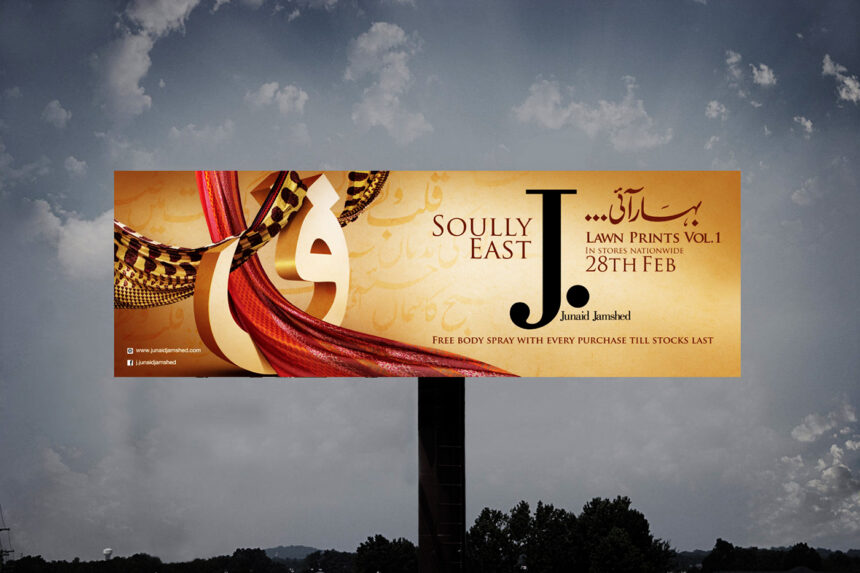
An LED sign displays a punchy slogan, half English and half Urdu, designed to linger long enough for remembrance. Minutes later, an identical sentence appears in an online group chat and then reappears in a wedding bio. This occurrence is not by chance. It highlights the emergence of a brand new diatribe, shaped by marketing and not by tradition.
In today’s era, Urdu isn’t just merely spoken; it is codified, processed and simulated. This amalgam, usually known as “Brand Urdu”, prioritises compressed expression to achieve semiotic weight and clout. Incisive verbiage, romanised script and English grafts bestride its structure, upholding the view that this linguistic blend operates on a different logic altogether. Its utility is centred on being immediately understood, instantly shared and then forgotten.
The criteria for the selection of words are not based on their profound meaning but on their efficiency and their ability to forge a split-second connection. In this shrunken syntax, language seems to mirror a seamless exchange: brisk, formalised and absolute. However, when expression thins into speed, what happens to the stillness that once held the weight of thought?
The incongruity feels most jarring when applied to moments that require unvarnished truth and emotional depth. Even expressions of empathy and grief now reflect a refined, almost glib tone; coherent and conventional, yet lacking cultural texture. In this conversion to commercial code, we bargain the heart for the hook — but at what cost to the spirit of the word?
To comprehend this transformation, it is imperative to consider the mercantile legacy of British colonialism in the subcontinent. The English language was embedded within the social structure and raised as the language of dominion, sagacity and eminence because of the influence of colonial rule.
Even though independence encouraged an ideological transformation, the cultural appraisal of English persisted. Linguistic proficiency was viewed as a primary determinant of social rank and prestige, while languages spoken locally were often regarded as unsophisticated. Linguistic choices to date continue to be influenced by this historical relic.
The mixture of English and Urdu depicts yearnings as much as comfort and ease. It is perceived that adopting a hybrid language promotes a sense of shared identity and modernity. However, this belief highlights a more internalised tension that closeness to English somehow adds to one’s worth. This scenario makes one question whether colonialism has truly ended or if its influences are deep-rooted in the way we value language.
Linguistic structures, though, are ever-evolving. Urdu itself came into being after ages of intercultural interactions. The hybrid form of Urdu may be considered a result, or rather an extension, of that adaptability. But adaptive change and externally influenced change are distinguished by the way one nurtures expression, while the latter threatens to strip away and instrumentalise its inherent value.
This shift becomes more rapid with advertising and promoting language consumed with convenience. The real question isn’t whether Urdu is changing, but what price are we paying for this transition? In our rush to mechanise communication, we are exchanging our cultural bequest for mere utilitarianism and promoting the extinction of nuance, leaving behind a formulaic expression with stilted jargon shorn of the resonance that once gave it meaning and depth.
Best Article ever! Very thoughtful very informative