





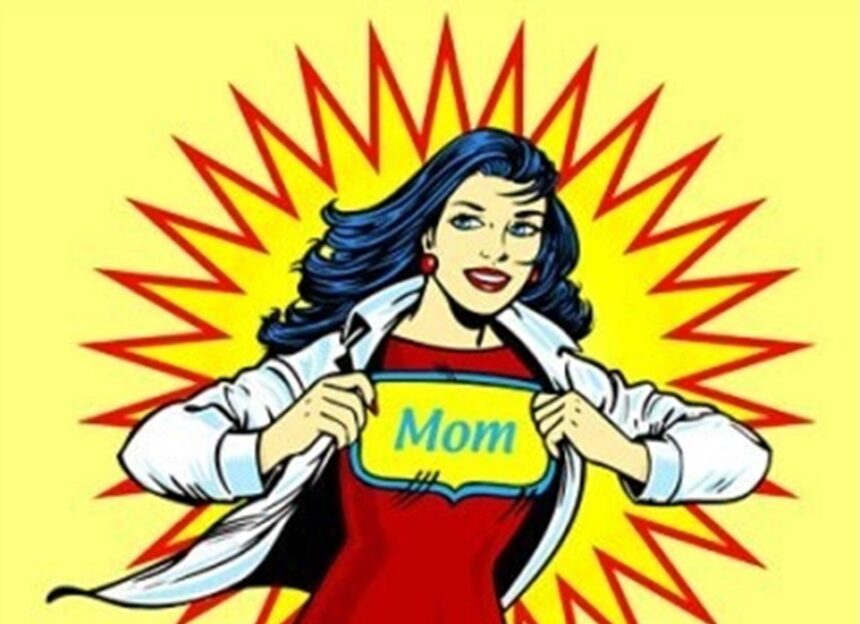
For generations, society has portrayed mothers as superwomen. They are celebrated as heroes, women who can cook, clean, raise children, manage the house, work, and sacrifice their sleep, their dreams, and often their health without a complaint. While the idea seems empowering, it hides a bitter reality. Calling mothers “heroes” sounds respectful, but it can actually hide the lack of real support they need. The idea glamorises the burden on women and often ignores their need for support and comfort.
We start to expect sacrifice when we continuously exalt it. It’s widely believed that a “good” mother is a woman who always prioritises her kids over herself. She has to let go of her job, hobbies, sleep, health, and occasionally even her identity. If she’s exhausted, she feels guilty about mentioning it. Heroes, after all, do not complain; they are resistant.
Many cultural narratives reinforce this idea. ‘Maa ke paon tale jannat hai’, ‘Maa sab bardasht karti hai’, and ‘Kaam karne wali aurat bache kese palegi’. All of these are examples of how women must sacrifice and never complain. There’s another phenomenon that keeps this myth alive: weaponised incompetence. ‘Tum ache tareeqe se karti hou’ or ‘Mujhe batao kese karte hain.’ When one parent repeatedly claims that they are bad at basic responsibilities: changing nappies, cooking meals, showing up to children’s events, and remembering doctor appointments. The workload doesn’t disappear. It quietly shifts.
This myth also deters women from asking for help. If society expects mothers to manage everything on their own, asking for help may seem like a failure. Fearing judgement, many women are hesitant to ask their partners for assistance or shared responsibility. As a result, the entire weight of parenting falls on them.
The pressure of perfection often leads to burnout and emotional exhaustion. Continually trying to live up to the idea of being a “supermom” can be damaging to one’s mental wellbeing. Mothers may experience feelings of loneliness and anxiety rather than comfort. The little praise they receive cannot be replaced by help they truly require.
In Islam, women are given an extremely high status. The Prophet Muhammad (PBUH) emphasised kindness toward mothers, and the famous narration about paradise under a mother’s feet is often quoted to show her honour. In many homes, religion is quoted when a mother is asked for forgiveness, when she is told to have patience, or when she needs to make a sacrifice. However, these teachings are not referenced when the topic is about shared responsibility and accountability. Islam emphasises forgiveness, cooperation and responsibility, but culture often highlights the parts that demand resilience from women. Several traditions claim that the Prophet Muhammad (PBUH) helped with household chores. He helped his family and fixed his clothes.
Culturally, domestic work is unevenly distributed. Motherhood is wonderful, and it’s of great significance in women’s lives. Yet it greatly transforms a woman’s mental and physical state. She stops being a friend, a daughter, a sister, a companion, and lastly a person with hobbies. All she becomes is “someone’s mother.” The disappearance is slow and gradual. It doesn’t happen suddenly.
Firstly, she gives up her hobbies and interests. Motherhood has a devastating effect on a woman’s professional life. She puts off her goals and dreams. Her social life comes to an end, and she stops meeting her friends and family. Over time, her world shrinks to her kids, their schools, and grocery runs. No one asks what she likes anymore. They ask what the children need.
The mental health cost of motherhood is rarely discussed. It is expected of a “good mother” to be patient, remain calm and composed, be available for mental support, and always be resilient. At the end of the day, she’s also a human. Continuous availability results in burnout, fatigue, and being resentful and bitter over time. However, rather than asking, ‘Are you okay?’, she gets to hear, ‘All mothers go through this.’ The issue is not mental weakness but structural disparity.
There has always been a stigma around working mothers. Despite a large percentage of working mothers, there is discrimination against them. They are expected to strike a balance between their motherhood and professional life. This raises an important question: are working mothers and fathers equal? Working mothers balance work and motherhood, whereas men rely on their partners. The problem here isn’t motherhood but the expectations around it.
Being a mother shouldn’t mean going missing. Motherhood shouldn’t obliterate a woman’s life; instead, it should expand it. Children deserve a fully functioning parent, not one burdened by expectations. A woman’s identity, her sleep, her dreams, and her inner life must be protected; a woman’s motherhood must co-exist with them. Motherhood doesn’t require a woman to go missing; even after becoming a mother, she’s a human first and a mother second.
Ahhhhhhh gut wrenching
Loved it!!