





“The absence of diplomacy — or diplomacy not rooted in a strategic vision — risks triggering uncontrollable escalation.” — Henry Kissinger
Lasting peace grows rare if pressure mounts quietly beneath the surface. That June morning in 1914, when shots struck Archduke Franz Ferdinand, exposed how thin Europe’s stability truly was. Behind closed doors, conversations between leaders betrayed empty promises — supposed safeguards embedded within alliance networks. Far from preventing chaos, such treaties ended up accelerating it. Soon after, countries surged toward war almost overnight, proving how fast distrust spreads once ignited.
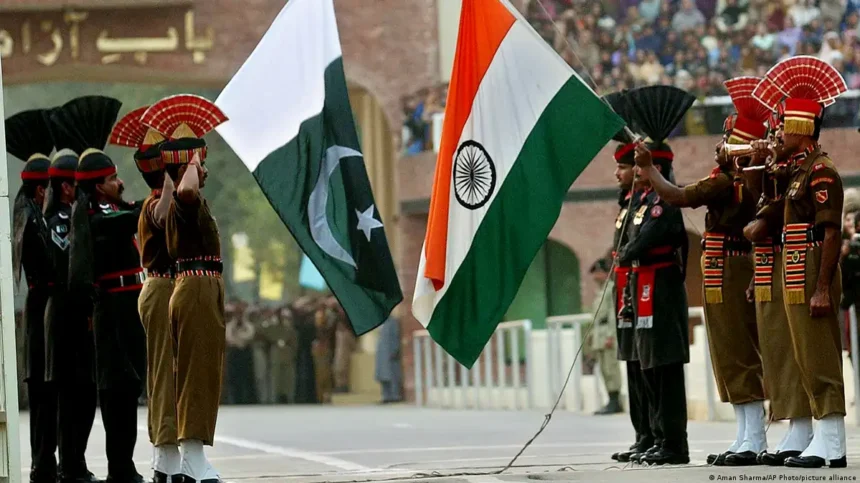
Far beyond the frontier, calm refused to take hold despite repeated efforts. Rival powers India and Pakistan, both holding nuclear arms, kept watch with tension unbroken. A shift arrived in May 2025 — air traffic thickened suddenly along their dividing line. Neighbouring states were monitored closely, and flight paths grew crowded overnight. In private meetings, American officials are said to have stepped in, helping loosen the strain that had built up behind silence. Still, these instances showed how quickly even a minor ignition could spread through the area. Brief as they lasted, such flashes exposed underlying dangers long kept out of view.
In nuclearised rivalries, deterrence lowers the likelihood of full-scale war but does not eliminate crisis instability. Limited aerial manoeuvres and forward deployments often function as signalling tools rather than preparations for war. Yet within a classic security dilemma, defensive measures by one side are frequently interpreted as offensive escalation by the other.
The Dhaka Handshake and Diplomatic Progress
Toward late 2025, talks in Dhaka hinted at fragile progress — backdoor exchanges replacing loud declarations between India and Pakistan.
These discussions reportedly involved senior diplomatic intermediaries rather than heads of government, functioning as informal backchannel communication aimed at crisis stabilisation.
Instead of grand announcements, S. Jaishankar, serving as India’s foreign minister, leaned on low-key dialogue, step by step. Observers watched closely; minor actions sparked debate over intent: long-term planning or mere political balance? The real weight lay less in words spoken and more in what they implied — that quiet efforts could still open doors once thought shut.
Still, brief instances of reaching across the divide run into deep-rooted obstacles. Long stretches of weakening confidence, internal policy demands, and narratives tied to national identity influence reactions to every move. In South Asia, a quiet word between leaders can carry consequences comparable to military repositioning. While relief may follow a shared moment, when dialogue fades, louder forces of fear and pride often rush to fill the space.
Water as a Strategic Lever: Implications for Pakistan–India Relations
What added even more strain came from India suspending certain cooperative mechanisms under the Indus Waters Treaty in 2025. Stopping data exchange and breaking down coordination systems turned water into a strategic lever, something Pakistan called a “hydrological quake.” Suddenly, access to water sat at the heart of power struggles across the region, proving old agreements cannot hold tension back without trust behind them.
From New Delhi’s perspective, such a suspension signalled strategic leverage amid heightened tensions. From Islamabad’s standpoint, however, weakening treaty coordination threatened institutional stability. This divergence reflects the securitisation of shared resources during crises, where technical agreements become entangled in broader strategic rivalry.
What happens next depends on how weak systems really are when pressure builds. If water turns into a threat, talks between nations need more than presence — strength matters, quick moves matter, and staying power matters.
Diplomacy Gains Greater Importance Over Time
What looks like a quiet process can actually stop disasters before they start. Old enemies in Western Europe chose talks instead of tanks after decades of bloodshed. One example stands out — a joint plan for coal and steel tied economies together so tightly that conflict lost any point. Over time, that 1951 agreement expanded, reshaping borders without resorting to violence. When nations hurt each other deeply in the past, peace seems impossible — until it isn’t.
Places like South Asia carry wounds just as deep, yet change might come not from force but from sitting across the table. History also shows why talks often collapse. Past efforts like the Composite Dialogue reveal how stubborn distrust can unravel progress. Political winds at home tend to shift outcomes despite noble intentions. Sudden flare-ups break momentum whenever they appear. The goodwill behind moments such as the “Dhaka Handshake” rarely survives loud opposition. Nationalist voices rise fast when compromise seems near. Priorities change just when agreement feels possible.
Economic Implications: India–EU Agreement
Money matters — but when it leaves, relationships change too. On January 27, 2026, India and the European Union sealed their massive trade deal, one that some began calling historic almost immediately. That shift pulled attention westward, making SAARC feel less urgent from New Delhi’s view. When economies realign, old partnerships often fade without drama or announcement. Trade pacts alone can’t hold regions together if bigger forces pull elsewhere. Adjusting course is normal; ignoring pressure isn’t smart. Moves made today quietly define what comes next tomorrow.
Informal Paths to Cooperation
Though SAARC aimed to boost cooperation between neighbours, doubts have weakened its results. After the Uri attack, India skipped the 2016 meeting in Islamabad — showing how violence halts diplomacy. Yet ways still exist for countries here to move forward together. Off-the-record talks give space for thinkers, former leaders, and community voices to test new ideas without cameras watching. Quiet conversations often spark paths official meetings miss.
Behind closed doors, fresh thinking finds room to grow. Ideas flow when pressure fades. Unseen dialogue sometimes shifts what seems stuck. Different answers emerge when headlines aren’t pressing. Secret talks behind the scenes often stop conflicts from spilling into the open. When people talk quietly, tensions might never reach a breaking point.
Trade across borders ties nations together through shared roads, power systems, and buildings that connect regions. Business rewards on both sides make cooperation sensible most of the time. Projects requiring joint effort push countries toward coordination by design. Mutual gain quietly shapes how governments act despite tensions elsewhere.
Friendships grow when students visit each other’s countries. Shared art projects help communities understand one another slowly. Games between teams from different nations open doors over time. Trust forms quietly through these moments.
When trouble hits, having clear ways to react matters. Open phone lines for urgent calls help communities stay informed. Teams working together to monitor risks make responses faster. Coordination that moves quickly stops small problems from growing. One incident might fade if handled fast enough.
Starting with shared challenges like water or power grids, nations often find common ground without intending to. Over time, fixing floods together might lead to talking about borders. When teams work on health alerts across countries, trust grows quietly but steadily. Fixing roads near frontiers sometimes opens doors no one expected. Little by little, handling storms side by side shifts how leaders see each other.
Escalation Risks Under Nuclear Deterrence
A single spark could ignite tensions across South Asia, where nuclear weapons shadow every move. Missteps like Operation Sindoor — a limited cross-border military manoeuvre intended as calibrated deterrence — or using rivers as tools of pressure show how quickly misunderstandings might spiral out of control. Yet moments such as the Dhaka Handshake hint at another path — peace hanging by a thread, still within reach.
True engagement never rests on gestures alone. Without constant effort across many fronts — through SAARC, face-to-face meetings, informal dialogues, trade ties, and emergency coordination — it loses meaning. When communication fades, distrust grows stronger. Left unchecked, small misunderstandings swell into larger confrontations. Such clashes may begin locally, but their effects ripple outward.
A Forward-Looking Vision
Communication that holds firm across political, military, and technical lines matters more than showy moves when measuring strategic calm in South Asia. Caution emerges under nuclear deterrence, yet ongoing dialogue fills gaps that weapons alone leave open. Mistrust spreads faster once contact thins out. As structures fade, chances for rapid worsening rise. Practical steps — diplomacy built in layers: official meetings, quiet exchanges, shared economic planning, and emergency protocols — remain the only reliable shield against repeated clashes.