





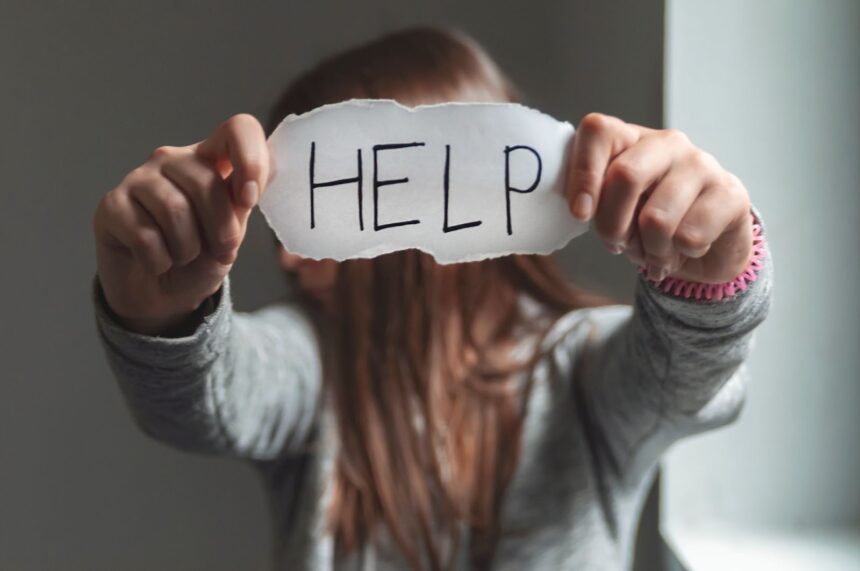
It is often said that health is the greatest wealth in life, but sadly in developing countries like Pakistan, the life and welfare of an ordinary citizen hold little value in the eyes of those in power. It is the state’s responsibility to craft policies and initiatives that cater to people’s needs and ease their tensions, thereby ensuring their happiness and love for their homeland. However, the reports and data present a starkly different picture. In Pakistan, 20 to 35 people die by suicide every day, which is roughly one person an hour. This statistic is largely because our country has long been embroiled in issues like poverty, unemployment, inflation, and debt, which have directly afflicted the mental well-being of its people on the score of the government’s wrong policies and misplaced priorities.
Our country stands at a critical juncture where its youth are on a suicidal path, grappling with a pervasive mental health crisis that’s silently eroding the nation’s fabric and driving many to suicide. In the past few months, two University of Lahore (UOL) students attempted suicide by jumping from the rooftop — one died, and the other was critically injured. These tragic incidents sparked concern, leading to the university’s closure and classes shifting online. Everyone was wondering why these students resorted to such a desperate act and what the real cause was. How many other students are undergoing these suicidal thoughts? Only God knows.
Suicide can be simply defined as ending one’s own life voluntarily and deliberately, often seen as an escape from life’s unbearable trials and hardships. Suicidal thoughts primarily stem from hopelessness and a lack of emotional support from family members, society and professionals. It’s considered a grave, yet preventable, and morally complex act. The Pakistan Institute of Living and Learning (PILL) reports that suicide is now the fourth leading cause of death, particularly among youth, who make up 60 per cent of the population aged below 30.
In Pakistan, over 20,000 people end their lives every year and over 700,000 globally. These cases are just the tip of the iceberg, while numerous similar cases go unreported in both print and digital media daily. If my memory serves me, I can recall five people from my personal experience who took their own lives — four were under 30, and the fifth was an elderly person. In three cases, the cause was the father’s debt cum profound familial psychological trauma — a fragile father-son bond.
Suicide spares nobody — it cuts through gender, age, caste, class, or nationality. It can severely afflict anyone, ravaging lives and sparing not even the pillars of families: parents. A few months back, I stumbled upon gut-wrenching accounts of a man who took his life after taking the lives of his children and wife, crushed by the weight of unmet basic needs. In another harrowing report, a mother drowned herself after throwing her children into a canal. But who cares?
Readers will be saddened to know that Pakistan’s poverty rate stood at 42.5% last year, as highlighted in a World Bank report, with the poverty headcount ratio creeping up to 44.7%. In their article published in Dawn (09-01-2026), Miftah Ismail and Zafar Mirza, drawing on a Household Integrated Economic Survey (HIES), also underscored that people are eating less than before in Pakistan. But who cares?
A life is a gift from Allah Almighty, and sound health is a blessing. Committing suicide is not an act of bravery for which you will be rewarded but an act of cowardice. To live and survive in challenging times is true bravery. Prophet Muhammad (PBUH) said, “He who commits suicide by throttling shall keep on throttling himself in Hell (forever), and he who commits suicide by stabbing shall keep on stabbing himself in Hell.” (Sahih al-Bukhari, 1365). In other words, the method used to take one’s life in this world will be the same as that used to punish in hell.
Major factors contributing to the alarming spike in suicides among youth include unemployment, inflation, poverty, unexpected exam results, lack of mental health awareness, and a paucity of professional support in their nearby areas. Those who committed suicide were mainly under 30 and belonged to low- and middle-income families. A grim breakdown of methods reveals the devastating choices victims made: 50% opted for poisonous substances, 37% resorted to hanging, while firearms accounted for 7% of cases, the lowest among the three.
Suicide is a global phenomenon and a serious mental health issue creeping into our society — one that Pakistan can’t afford to overlook at any cost. It’s a major sin, yet preventable if addressed timely. It is a clear example of failures at various levels — be it state, family or community. Therefore, how can we prevent our youth from taking this irreversible step?
First, access to poisonous substances must be curtailed, as 50% of victims resorted to this method. The state must crack down on those selling these substances without a prescription from registered and reputable pharmacies and welfare clinics. Moreover, pharmacies should be required to only sell these substances to individuals accompanied by someone else and never to those buying alone.
Second, families have a crucial and hyperactive role to play here. Watch for signs. If they see any family member speaking less than usual or behaving unusually, or even looking glum, don’t leave them alone in a room with means they could use to harm themselves (37% of cases involve strangulation).
Third, firearms account for 7% of cases — the least common method. If you have a licensed weapon at home, secure it where kids and adolescents can’t access it.
Lastly, mental health is as important as physical health. The state should launch massive awareness campaigns across digital, print, and social media platforms to educate people about recognising suicidal thoughts and seeking professional, familial, and community help. The state is and should bring more and more destitutes into the Benazir Income Support Program (BISP) initiative and distribute monthly stipends to those indigent families who can hardly afford two square meals a day.
These steps can help decrease, if not eliminate, suicide cases and heal our youth. Let’s strive to build a community where people support each other in times of hopelessness and depression — where talking about silent mental struggles and other social or physical issues, especially those affecting women, isn’t taboo. It’s high time the state made determined efforts to protect the youth, as they’re the ones in whom the future of this country and its people remains.