





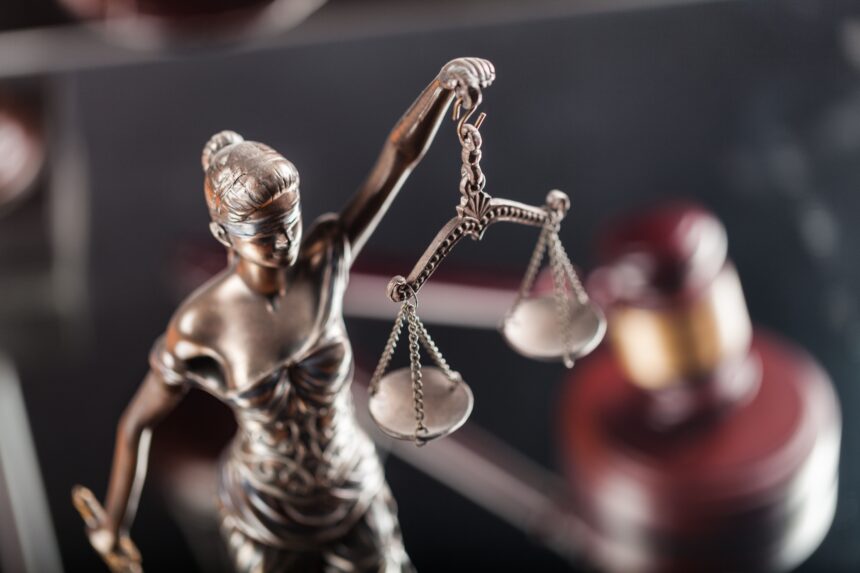
Justice often drapes the finery of irresistible beauty. Our courtrooms always gleam with their expensive, polished wood and elevated benches, and the carefully choreographed procedures used are almost pressurising in their demand for authority. It is strange the way news reports frame injustice through compelling images and narratives while activists present us with moral causes imbued with emotionally resonant language. Beauty surrounds the idea of justice so completely that it has become difficult to distinguish the ethical substance of an issue from the aesthetic way it is presented to us.
The relationship between aesthetics and morality is way older than modern politics. Philosophers have long noted that human beings respond to form before they respond to reason and that an easy narrative to follow or a powerful image is capable of generating concrete moral conviction way faster than a rationally complex argument. This tendency creates a paradox in public life because aesthetic power mobilises attention towards genuine injustice, but on the other hand, it is equally capable of concealing violence or manipulation underneath a persuasive surface. Modern political communication demonstrates this; e.g., governments increasingly rely on emotionally charged visual symbolism and carefully stage media events to shape perceptions of what justice is. The language used to describe military operations emphasises the need for precision and stability while brushing over the possible destruction they usually entail. Institutions design even their internal political trials to safeguard authority and order. Humanitarian campaigns have become used to framing suffering through images that elicit empathy, but they tend to oversimplify the political conditions that created the crisis in the first place.
The aesthetic presentation of justice, therefore, draws attention to moral claims, but then it also risks transforming justice into a mere spectacle. Consider the courtroom itself. Legal systems place a lot of emphasis on ritualistic elements such as proper robes, formal language, elevated seating, procedural choreography, etc. This is done because such elements act as signifiers of seriousness and help establish the legitimacy of a court system. They help to reassure the public that justice operates within a stable framework of rules. The same aesthetic can obscure the more serious inequalities within legal systems, as access to a skilled lawyer and financial resources often determines outcomes more strongly than the ideal of impartial judgment. Beauty, in this context, becomes a form of institutional theatre.
The same pattern appears in media representations of justice, where modern news organisations compete for attention within a much more crowded information environment. Thus, stories about injustice frequently rely on visually compelling narratives, and these aesthetic strategies render complex issues understandable to larger audiences. Without them, many forms of injustice would remain invisible. Next, the way aesthetic framing compresses reality confronts us. Structural problems such as economic exploitation or systematic discrimination often disrupt emotionally satisfying narratives, leading the audience to a simplistic story of heroes and villains instead of a complicated diagram of power. This style makes attention move quickly in a binary fashion from one crisis to another and leaves the underlying conditions unchanged by the nature of a broad brushstroke. The philosopher Jacques Rancière describes politics as a struggle over what becomes visible and what remains unseen, which thus brings forth the idea that aesthetics determines the boundaries of visibility itself. Aesthetics define which forms of suffering count as injustice but also what must disappear into the background of ordinary life to make sure that our carefully curated definition of ‘aesthetic justice’ can be sustained.
This dynamic explains why certain injustices receive global attention and, incredibly, why many others persist in silence. A single dramatic event may dominate the headlines for weeks while many other forms of harm, like poverty, labour exploitation and ecological decline, unfold without equal visibility because ‘those topics are just not pretty enough to be the centre of attention’. In activism, this dilemma stares us in the face, especially in the form of social movements where public attention must be captured to the maximum to achieve any form of political change. Compelling slogans and emotionally powerful storytelling are central to providing the impetus needed to mobilise large audiences. However, aesthetic activism now runs the risk of replacing actual ethical complexity with superficial moral branding. Movements sometimes simplify their goals into easily recognisable images and slogans that can travel quickly across digital platforms and let the message become diffused, but such simplicity leaves the underlying challenges unresolved. It is now that justice becomes an aesthetic performance and not a revolutionary structural transformation as we need it to be.
Recognising this tension does not mean that we should abandon aesthetic communication now. It means that it is true that beauty and persuasion remain essential tools in public life because, without narrative, moral arguments rarely reach beyond small intellectual circles. The real problem arises when aesthetic appeal becomes a threat to and replacement for genuine ethical scrutiny. This is the reason that a mature understanding of justice demands a double awareness. One must appreciate the aesthetic forms that bring injustice into public consciousness while at the same time also questioning the narratives those forms create. Images depicting suffering successfully invite compassion, but they also shape perception in very specific ways. In the same way, political language promises security or freedom but ends up framing reality through particular assumptions that may not always be as representative as we may desire.
Justice, in other words, cannot be evaluated solely through what appears persuasive or moving, but instead, it requires sustained attention to the structures present beneath the convincing surface of presentation. The challenge for contemporary society lies in learning to see through the aesthetics of justice. Ethical responsibility begins when the audience asks a difficult question. To see beyond the compelling image, beyond the elegant speech and beyond the symbolic ritual, to ask what conditions of power essentially remain unchanged? Only then does justice move from merely upholding appearances to changing them for the better.