





Over the course of centuries, superstitions have played a pivotal role in society. Your religion or sect doesn’t matter. Superstitions have been taught and passed down from generation to generation.
Grandmothers pass it down to their children, and their children to theirs. We are taught that swinging your legs in the air causes your father’s financial debt and that playing with scissors may result in your parents fighting, but despite these claims, as we grow up, we realise that they are indeed wrong.
But these are minor claims that do not cause harm to an individual; when we add religion to the mix and belief in falsified claims alongside mass illiteracy, the results are more harmful.
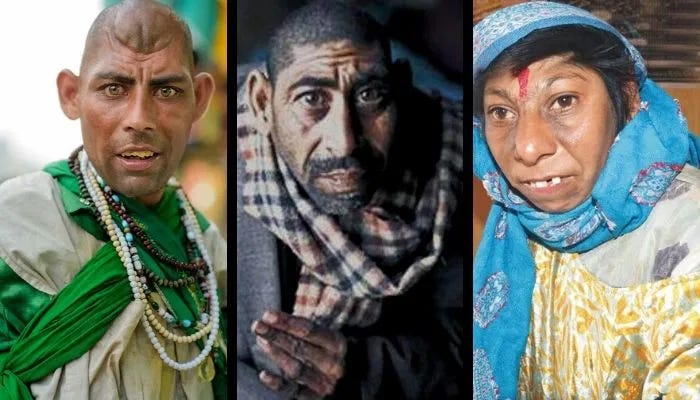
In Gujrat, Pakistan, we have a shrine called Shah Dola Ka Darbar, where you will find rat-children, known locally as chuai.
According to tradition, married couples who cannot procreate come visit this shrine and pray to the saint and are later blessed with a child. The catch?
The firstborn child is given to the temple as a propitiation gift. The story goes that if you do not give up your firstborn child, they will turn into a rat-like creature.
This belief creates a powerful social and psychological pressure, and hence, children are left on the altars to appease a divine being that does not exist.
But the reality is very different. These rat-children are not created due to any supernatural curse but rather a very real neurological condition called microcephaly, in which the head and brain do not develop properly. Some, though, are deliberately harmed. Bound tightly, intentionally starved and abused to stunt growth.
And due to these deformities, they are forced into begging. Their appearances are used as a tool to garner sympathy and make them an effective tool for exploitative labour. They have no autonomy nor any education. Their lives are no longer theirs.
Blind faith and fear of curses that will never come have led to the exploitation of children. Coupled with the desperation and stigma around infertility, these children are sacrificed. The pressure of childbearing on couples makes them vulnerable to promises of miraculous cures and blessings.
Begging networks use superstition as a tool for profit, preying on the vulnerable.
The lack of education has led to the abuse of children. The world has condemned them, their livelihoods exploited.
This practice violates basic human rights. Children’s rights are being infringed upon. The right to protection, care, education, and dignity was stripped away from them. The weaponisation of folk tales results in the abandonment and mutilation of children.
There is a difference between faith and superstition.
This case serves as a stark reminder of the weaponisation of beliefs, which can result in unspeakable cruelty. When superstitions are used to manipulate, they become tools of exploitation.
The protection of children demands more than the passing of laws. It requires education and the courage to call it out for what it is. Abuse of children becomes common, and we raise generations upon generations of children who deserve more than what they get.
Faith can be a force for good, and more often it is, but only if it is built upon compassion. It is essential to defend and protect the most vulnerable amongst ourselves. It is important to protect all those amongst ourselves, no matter the cultural or religious contexts.