





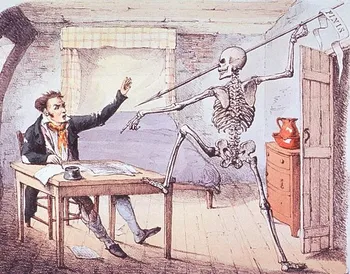
History has patterns. Disdain, judgement, alienation, and hate dominate the patterns of history. This pattern has not spared anyone since the start of time, from world leaders to scholars to writers and artists. The rise to infamy for writers in history, like all other things, follows a seamless pattern: hate, disdain, and alienation in their lives and fame, followed by recognition and respect after they die.
Posthumous fame is not only a pattern but also the distinction between a disregarded writer and a legendary writer. For most of these writers whose death was celebrated more than their life, this fame often comes at a cost. The cost of losing control over how their work was edited, distorted, and published.
Many writers gained infamy for the same work they wished to stay hidden and locked away, with Franz Kafka’s last wish to his friend being to burn all his manuscripts. Those same manuscripts have now become his most popular works, creating their own genre in the literary world called Kafkaesque.
This relinquishment of control and consent often resembles the end of the autonomy of the writer. Without the writer present, we only know what they wrote, not what they intended, and can never determine the balance between changes made and the writer’s original intent.
Posthumous fame is often beneficial to all others but the writers themselves. These well-acclaimed writers in their lifetime were disregarded, disrespected, and treated as worthless, gaining no benefit for the craft that they so loved, and then they died feeling just as worthless until their headstones were turned into monuments of greatness, and that same worthless craft was now their legacy.
Most writers dream of a legacy, for their work to leave behind a trail of ideas and thoughts beyond their mortal being; however, most writers would still love to see at least a bit of this fame in their lifetime, a sign that they are doing something right. Posthumous fame is often a tragedy for these writers, with their names and works being used and distorted by the people around them.
So often is the autonomy of these writers snatched away from them by editors, publishers, and even family members who are now owners of their hard work. In the case of Sylvia Plath, for example, her Pulitzer Prize-winning poetry collection “Ariel” was published after her death, left in the hands of the same man who allegedly abused her and had affairs that further disturbed her mental health.
Ted Hughes used Sylvia’s work as a prize rather than a responsibility. He took it upon himself to censor and disrupt all traces of their volatile marriage in fear that it might be used against him, valuing his appearances above the truth. He went as far as to edit the letters between Sylvia and her mother, as well as destroying the last volumes of her private journals, fearing that they would be used against him.
In all her writing, Sylvia aimed for honesty, change, and greatness, and yet her most vulnerable pieces of writing were left in the same hands that may have led to her death in 1963. We now know Sylvia as a martyr, as a literary icon, but are those words still hers if their execution was so flawed?
Sylvia is just one example of the many female writers who, in their lifetimes, were shunned and disrespected, but after their deaths, their words became retellings, information, and storytelling of their era. Emily Dickinson, a legendary poet and recluse, wrote around 1800 poems in her lifetime; however, only 10 of those were published while she was alive.
Despite pursuing a higher education, she was highly introverted and kept mostly to herself in her family home, with her family being the only crowd for her immense talent. Before she passed, she had ordered her sister Lavinia to destroy all her correspondence, but with no course of action for her drawers of poetry, Lavinia worked to publish her works.
The first of these published poem collections was a heavily edited version in 1890, followed by many such edited volumes. It was not until 1955 that Thomas H. Johnson published the complete and correct collection of Dickinson’s work.
For the longest time, what the public read of the poetess Emily Dickinson was not what she had written or intended but a misconstrued version sold in her name. These women are prime examples of what happens when writers lose control of their own writing or simply do not exist to control the narrative.
Not only is the writing controlled, but so is the perception of the writer themselves. After their deaths, people turn these same writers into martyrs, idols, visionaries, and geniuses. Those same people who were once shunned by society are now the flagbearers of new ideas and changing times.
Jane Austen is recognised now as a flagbearer of witty romance with a pinch of scrutiny, but at the time when she was alive, she published anonymously, and her writing, albeit perceived well, was still subversive with its critique of the norms and gentry of the time sprinkled between pages of light romantic marriage plots.
As a society, regardless of which culture or background, we have turned literary figures into names, legacies, and ideals to be followed rather than focusing on their writing, ideologies, and questions to be examined, debated, and pondered over.
Every writer who has gained fame after their death is one who wrote something that questioned the norms and ideals of their society. Their writing aimed to question. Their writing aimed to create perspective, and yet now, as we have turned them into these major personalities, we are less focused on their work and more focused on their life.
We have put these writers on a pedestal to be seen and quoted without context but not fully heard. Their lives have been turned into memorials and reflections of their work rather than a separate entity.
After a writer dies, people analyse not just their work but also their lives and relationships with a magnifying glass as if that will provide answers to the themes in their stories. Their work, now that they are gone, is a non-replenishable resource and goes from rock to gemstone just like that. We value what we get very little of, and now that the person is gone, so are the ideas in their head.
Their death then becomes a symbol. A symbol of their hardships, their ideas, their intellect, their passion, and their unexplored potential further adds intrigue to their work. And with their death, the scarcity of their work makes them more lucrative, one of a kind, and non-replenishable.
Those same ideas and thoughts that were once rejected are now a source of income. A prized pony to be paraded at a circus. Publishers use dead writers’ names, history, and lives as a tagline to sell the same work that they would have once rejected.
Posthumous fame is a second chance for writers, a shot at immortality, but at the same time, this fame often comes at the cost of their autonomy as writers. The only question is, is it worth it?
Its a very good article also highlight an important truth of human behavior and literature.