





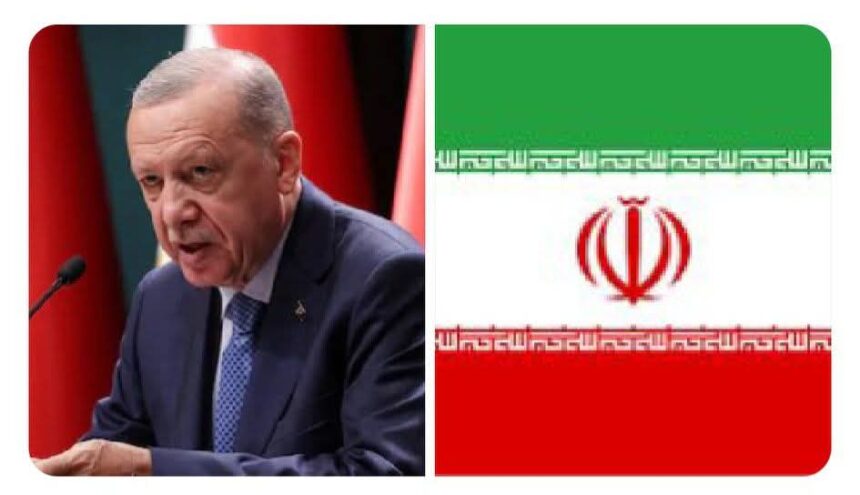
Iran hit US bases in Iraq, Kuwait, amd Qatar. They hit bases in Bahrain. And in the UAE as well as in Jordan. Iran also hit bases in Saudi Arabia. They hit Oman’s Duqm port. And British RAF Akrotiri in Cyprus. They fired missiles at Israel.
But they did not touch Turkey.
Incirlik Air Base, one of America’s most important forward platforms in the Middle East, sits in southern Turkey. Kürecik base houses a NATO radar that feeds intelligence to Israel. NATO AWACS aircraft from the Konya base shifted routes from Russia to Iran days before the strikes, per Bloomberg. Turkey hosts an unspecified number of US troops across multiple sensitive installations.
Iran hit none of them.
The standard explanation is NATO. Article 5 collective defense. Striking Turkey means war with 32 nations. Al-Monitor quoted Ankara University’s Arif Keskin: a direct military move against Turkey could push the conflict beyond manageable limits.
That explanation is real but incomplete.
Reuters reported in January 2026 that Turkey’s National Intelligence Organization, the MIT, warned Iran’s Revolutionary Guards about Kurdish fighters seeking to cross from Iraq into Iranian territory. That is a NATO member passing time-sensitive operational intelligence to the IRGC during a period when the United States and Israel were preparing to strike Iran.
In January 2026, Erdogan congratulated Iranian President Pezeshkian for his handling of the December protests, echoing Tehran’s narrative that the demonstrations were foreign-backed terrorist plots linked to Israel. The Foundation for Defense of Democracies documented this. When the strikes came on February 28, Erdogan condemned the US and Israeli attacks as a clear violation of international law, expressed deep sorrow for Khamenei’s death, and offered condolences to the Iranian people. He denied US forces access to Turkish air, land, and maritime space for operations against Iran.
Then Turkey arrested three journalists for national security offenses over footage filmed near Incirlik.
Israel Hayom published the most direct assessment: Turkey is not neutral. It is enabling Iran. Operating from within the Western security system, Ankara functions as a strategic enabler for Tehran. The US Treasury has sanctioned Turkey-based entities tied to Iranian sanctions evasion, the Revolutionary Guards, and Iran’s drone and missile programs.
The deeper mechanism is structural fear. Turkey shares a 534-kilometer border with Iran. Fifteen million Kurds live inside Iran. If the Islamic Republic collapses, Turkey faces a refugee crisis dwarfing Syria, Kurdish state formation across its southeastern border, and the loss of gas contracts expiring mid-2026. Erdogan does not need Iran to win. He needs the regime to survive.
So Iran spares Turkey. And Turkey condemns the war while hosting the surveillance infrastructure that enabled it.
To Washington, the indispensable NATO platform. To Europe, the migration buffer. To Russia, the energy corridor. To China, the western anchor of the Middle Corridor. To Tehran, the quiet ally who will never let the regime fall.
The most dangerous player in this war is not the one firing missiles. It is the one that made itself untouchable by everyone simultaneously.