





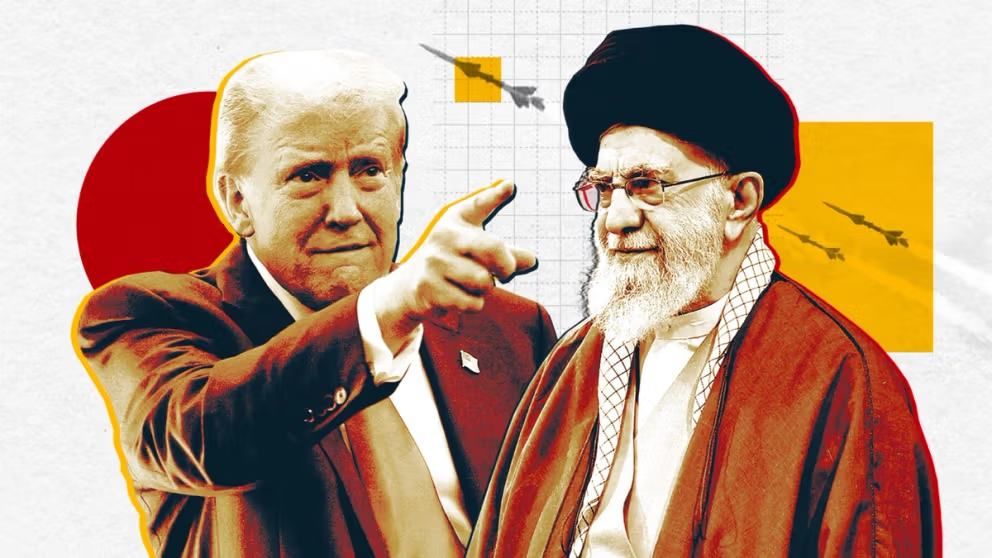
Donald Trump, Iran, and the Call to Protect Shia Muslims
History shows that religious identity and political power have long influenced the Middle East and South Asia. Around 711–712 CE, Muhammad ibn al-Qasim, a young military commander of the Umayyad Caliphate, was sent by Hajjaj ibn Yusuf to the Indian subcontinent. At only seventeen years old, he led a campaign against Raja Dahir of Debal after reports that Muslim travelers and traders had been mistreated and Arab ships attacked. Ibn al-Qasim eventually captured Aror, Brahmanabad, and Multan, establishing the early presence of Muslim administration in the region.
Today, the political struggles of the Muslim world are different but equally complex. In recent years, many Iranian citizens have protested against their government, demanding political reform and greater freedoms. Demonstrations have taken place both inside Iran and among diaspora communities in cities such as Washington and New York. Protesters argue that their movement is not against Shia identity or the Islamic Republic itself, but against political leadership that they believe suppresses democratic expression and dissent.
Contemporary Iranian Politics
Iran is a country where approximately 92 percent of the population follows Shia Islam. For many citizens, religion remains central to identity, yet political tensions have intensi ed due to economic hardship, international pressure, and internal political disagreements. Critics of the government claim that harsh punishments and restrictions have been used to silence opposition voices. At the same time, Iranian authorities maintain that stability and national security require strong control over political movements.
Religious Heritage and Sacred Sites
Religious history also shapes the region’s political landscape. The martyrdom of Imam Husain remains one of the most powerful memories in Shia Islam. His sacrifice symbolizes resistance against injustice, courage, and devotion to faith. For Shia communities around the world, the holy sites connected with this memory— especially Karbala Sharif, where Imam Husain was martyred—hold profound spiritual importance.
Just as these places are sacred to Muslims, Christian communities also regard certain places as deeply holy. No Muslim would tolerate an attack on Khana-e-Kaaba or Karbala Sharif. In the same way, no Christian would tolerate an attack on Jerusalem and the sacred places connected with the life of Jesus Christ, because the memories and history of Jesus are preserved there. Millions of believers travel to these sites every year to pay homage and strengthen their faith. Protecting such places is therefore not only a political responsibility but also a moral and religious one.
Regional Dynamics and Historical Shifts
Relations between Iran, Israel, and Arab states have long been complicated by both political rivalry and sectarian divisions. Before the Iranian Revolution of 1979, Iran maintained diplomatic and strategic relations with Israel and cooperated with Western countries in areas such as technology, agriculture, and military development. However, after the revolution, the new leadership adopted a very different stance, supporting groups opposed to Israeli influence and aligning itself with regional movements that challenged Western policies.
These developments contributed to long-standing tensions between
Iran and several Arab governments, particularly Saudi Arabia, where Sunni leadership dominates political and religious authority. The rivalry between Shia-led Iran and Sunni-led Arab states has often in uenced regional con icts and alliances.
The Role of International Powers
International powers, especially the United States, have played a significant role in shaping the strategic balance of the Middle East. American influence in oil markets, regional security arrangements, and alliances with Gulf states has helped shape economic and political dynamics throughout the region.
In the current geopolitical environment, conflicts and confrontations risk further destabilizing the region. Any escalation involving Iran, Israel, or major global powers could have serious consequences for millions of people across the Middle East and beyond.
Conclusion
Ultimately, the preservation of holy sites—from Karbala and Khanae-Kaaba to Jerusalem—is a shared concern for humanity. Regardless of political differences, respect for religious heritage and human life should remain a guiding principle for leaders and citizens alike.