





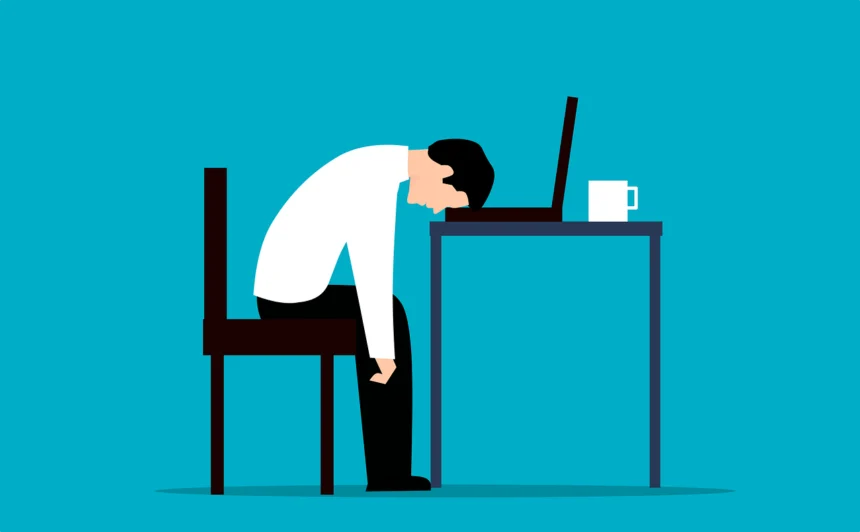
Realising that creativity thrives on both input and absence, effort and ease, and structure and spaciousness is essential to innovative ideas.
We feel uncomfortable when there is no activity happening. One example is an elevator that takes too long. We discover ourselves in a queue without Wi-Fi. The night is quiet; there’s nothing to do, no alerts to answer. Subconsciously, we instinctively press the keys until the silence awakens us, forcing us to rely on our remaining common sense.
We live in a time that regards boredom as a design flaw. Now all the breaks are optimised, filled in, and plumped up. Podcasts for walks. Reels are ideal for waiting rooms. We use white noise to amplify our thoughts. We learn to relax out of necessity, or so we are told; if we get bored, there is nothing useful here, and much of what isn’t useful can be harmful.
But what if boredom is not a problem to fix? What if that thing is precisely what creativity wants?
Long before “creativity” became a buzzword slapped onto brainstorming sessions and productivity hacks, it thrived in open spaces. It originated from idle afternoons spent gazing out of windows, allowing the mind to roam freely. Now both are rare, and so is the creativity that sprang from them.
Boredom is more than just a dearth of stimuli, as we have come to think. The external world doesn’t control our thoughts. When we’re bored, we turn inward. Our thoughts drift, undertaking separate journeys of remembrance, curiosity, and sentiment, resulting in sustained diversion. At this phase of modern science, it repeats the old knowledge of poets and philosophers. At this stage, imagination begins to slow down.
Contemporary science allows us to endorse what poets and philosophers have always felt. Science has shown that when the mind isn’t busy with a specific task, it turns on what researchers call the default mode network. This situation also bears some similarity to daydreaming, introspective thought, and creative insight. That is, when we stop putting content in the brain, it generates its own.
And yet, we have built a culture that fears this state. Silence feels awkward. Stillness feels unearned. We worry about squandering our free time due to laziness or not reaching our full potential. So we fill it. Endlessly. And in doing so, we deprive ourselves of what is fertile and original about the space.
Innovation can’t be ordered up. Between calls, you can’t force a breakthrough to occur or summon inspiration at the arrival of a notification. Ideas need time to ferment. They want boredom to be long, slow, and invisible.
Think of how many ideas appear not at your desk but in the shower or on a walk, from what is often called blank staring. These are not coincidences. This phenomenon is the result of allowing our minds to roam freely.
What if the next time we find ourselves bored, instead of being afraid that something is wrong with us (or our children), we lean in and embrace it for what it really is: a mental compost pile where the reeking rich soil of fresh inspiration will soon grow? On the surface, it seems unimpressive, but underneath, there is something that will develop and grow.
The issue is not technology itself, but rather the colonisation of every unoccupied moment. The phone is not something you use as a tool; it’s an impulse. A: We want nothing; we just loathe the void. The irony is striking. We want constant arousal, the source of all creativity, but we remove the conditions that allow it to reproduce.
Our leisure time is now curated and optimised — playlists for your mood. These algorithms are built to suit individual tastes. These are the cues that guide us, highlighting topics we are familiar with rather than unfamiliar ones. When we are spoon-fed, when every hour of our days is prepackaged and every moment considered, the imagination withers.
Boredom, by contrast, is democratic. It doesn’t tell you how to view it. It simply remains open and attentive.
Of course, not all boredom is enjoyable. There can be a sort of antsiness or discomfort in that.” But the work of creation was never completely comfortable. It often begins with confusion, an unnerving sense of lack. This lack is not an emptiness to run from, but a beckoning.
Kids instinctively understand this until we teach them to disregard it. A child who is bored will make games, stories, and whole universes out of scraps and shavings. A kid in an environment filled with endless distractions has little reason to dream. Yes, we adults have one too — we just call it “being busy” because, you know, we have shit to do.
What if we made boredom cool again, guilt-free? Why weren’t we continuously berating ourselves for squandering a leisurely weekend hour?
This is not a plea to turn our backs on technology or advocate the virtues of idleness. It’s an appeal for balance. I value input, effort, release, structure, and spaciousness. “This life, which is supposed to echo, doesn’t echo at all!”
Even boredom is essential for self-reflection. The distractions of the world outside vanish, and our thoughts remain. This sort of activity can be challenging, and that’s precisely why we don’t do it. But it’s in moments like these that we start to know ourselves a bit better. We try to understand our desires and our fears. They are moments during which our fears and desires become evident. What is left when there is nothing else to distract you?
Without boredom, we would no longer be makers of our own ideas but consumers of other people’s. We swipe through opinions, then aesthetics, then narratives, until we land on thinking. But borrowed exhilaration isn’t the same thing as original insight. Creativity comes from ownership, and ownership comes from solitude.
We have not exhausted our ideas; instead, we have excavated and sealed them. Perhaps, like a field that requires fallowing, the mind occasionally requires a period of silence?
You don’t need to upend your whole life to reclaim boredom. It begins with small acts of defiance. Simple actions such as going for a walk outside without my phone can make a big difference. Perhaps I should refrain from searching for information online. When I take them home, ground up like that. ‘This is why I often wonder, what remains in my sound mind when I commute to and from work? You need to permit yourself to do nothing without making it a competition for self-care.
All of these things may feel weird at first. You will want to fill them. However, over time, boredom itself transforms into something else. Curiosity. Memory. Imagination. It’s subtle because these were ideas you didn’t know you could even have.
In a culture that equates busyness with aliveness, the idea of opting for boredom can feel subversive. However, creativity has consistently existed on the periphery of conventional norms. It exists more in the unheard intervals than in the noisiest places.
Therefore, when the next wave of boredom strikes, resist the urge to dismiss it. Let it linger. Let it unsettle you. Let it work.
Something new is coming to your ear in that silence.
If we want more creativity, love, and truth in our lives and in the world, we must start by requiring them of ourselves. We need to cut through the untruth around us and build a path toward authenticity. And where else can we do that but inside ourselves?
If you are creative, then anxiety is part of who you are. You’ll never get rid of it. Over time, if you listen well enough, often at 3 a.m. while feeling overwhelmed, you may discern a purpose on the other side: something that darkness and defects have transformed into light as bright as any truth has ever been.
So, put the phone down. Step into the silence. Be bored, deliberately.
Your imagination will thank you.