





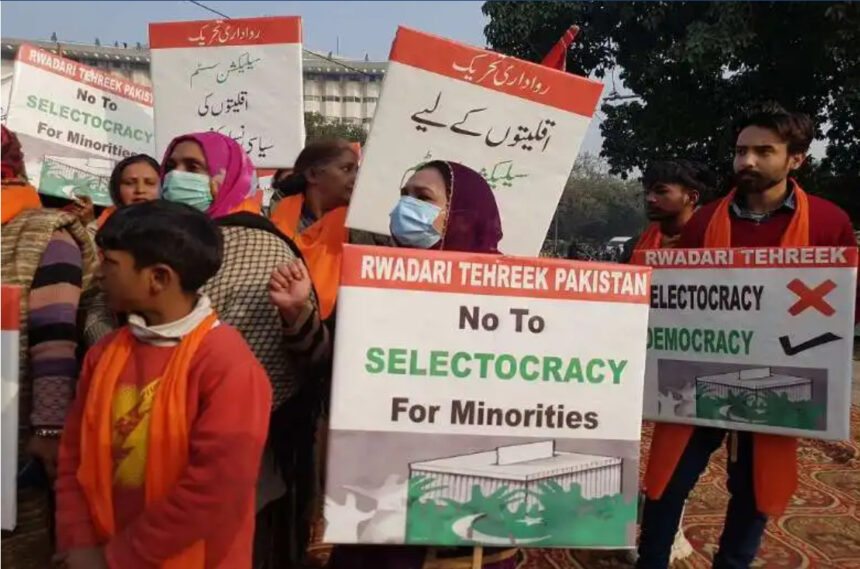
The question of separate electorates for minorities periodically resurfaces in Pakistan’s political discourse. While it is often presented as a means to protect minority rights, many Christian community members and observers believe this system does not serve the long-term interests of minorities or national unity.
Historically, the system of separate electorates was introduced during the rule of General Zia-ul-Haq in 1985. Under this arrangement, minorities could vote only for candidates from their own communities. However, in 2002, the system was reversed, and joint electorates were restored, allowing minorities to vote for mainstream political candidates alongside the broader population.
Supporters of joint electorates argue that this change was an important step toward inclusion. It allowed minorities to participate in the broader political process and ensured that their votes carried weight in general elections rather than being limited to a small, separate pool.
Critics of separate electorates believe that isolating minority voters reduces their political influence, confines them to symbolic representation, and weakens their role in shaping national policies. In contrast, joint electorates enable minorities to support candidates who can win general seats and represent diverse constituencies.
Moreover, minority representation in national and provincial assemblies is already ensured through reserved seats, which are filled through proportional representation. This system allows minority voices to be present in legislative bodies without segregating voters.
Many within the Christian community emphasize that Pakistan’s strength lies in unity among its citizens, regardless of faith. They argue that separating voters along religious lines may create divisions rather than foster integration and shared citizenship.
At a time when inclusive governance is essential for social harmony and national progress, the focus, they suggest, should be on strengthening equal participation rather than returning to systems that may inadvertently marginalize communities.
Christians in Pakistan, like other citizens, seek dignity, inclusion, and the opportunity to contribute to the country’s future as equal stakeholders.