





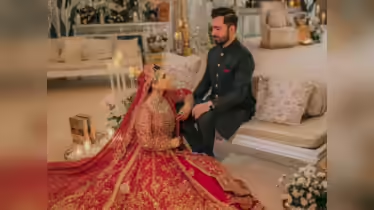
At one point, marriages were made over tea in the drawing rooms: biodata files, reserved smiles, and low-key questions about the family background. Nowadays, the first rishta frequently occurs on a screen – between a ring light and a very carefully edited life.
Here is the age of the influencer Rishta, where Instagram feeds have already taken the place of family albums, and the question of what she does is not the starting point of marriage talks, but the number of her follower count. How great?
Social media has not only got into the marriage market, but it has also reorganised it. The social networks such as Instagram, TikTok, and YouTube have become informal CVs of matrimony: open and staged, and constantly edited. The profiles promote travel, fitness, fashion, faith and financial success, all in a scrollable promise of happiness.
To families, such visibility is enticing. An already known potential spouse is vetted as endorsed by likes and comments. A blue tick is an indicator of credibility. Brand partnerships suggest revenue. A lifestyle aesthetic implies discipline, ambition, and, probably, most importantly, status. Social media provides something that cannot be resisted in a society where marriage is highly collectivised, and that is evidence.
But proof can be deceptive.
Aspirations rather than authenticity are the driving force behind the influencer economy. The sieved gladness, the commoditised love, the domestic happiness that is made up – these are acts, not promises. But lots of rishtas are pegged on this online theatre. Civil affinity is being shadowed by civic attractiveness.
This change of direction falls upon women, in particular. The demands are unstoppable: to be learnt yet not obnoxious, to be new yet not proud, to be ambitious but to be marriageable, and now to be beautiful and charming on the internet. Good social media presence can help a woman to increase her value in the rishta market, yet it may also bring criticism, preachy behaviour, and judgement. Too conspicuous, and she is attention-seeking. Too unseen, and she lacks personality.
Men are not exempt. Being financially stable is no longer established by profession but by lifestyle content. The travel reels and gym habits and even luxury labels now become additions to, or even substitutes for, the conventional indicators of success. The stress of making money is real and frequently tiring.
Next, there is the paradox of choice. The endless profiles give an illusion of a better person being a swipe away. Dedication wanes as the comparison becomes constant. Why become content with something algorithmically possible?
And still, social media has broken the previous hierarchies. It has enabled people, especially women, to have agency, refuse inappropriate matches and get partners outside of strict social groups. Love marriages are now blossoming in comment boxes and DMs. Inter-class, inter-city, and even inter-national unions have been made more open.
The Influencer Rishta is not as dystopian as it is liberating. It reflects what is happening today, where intimacy is social, identity is a product, and marriage is becoming more influenced by visibility.
The debate on whether social media has a place in the marriage market is no longer a question. It already does. The actual issue is, can we be taught to tell the difference between a well-edited life and a liveable one?