





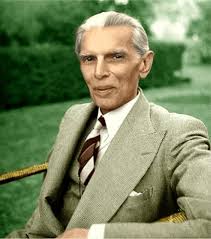
Jinnah Beyond the Quaid
While we commonly refer to Muhammad Ali Jinnah as the Quaid or the founder of Pakistan, how many of us have taken the time to understand him beyond that role and explore his career as a barrister? Jinnah was one of the most skilled legal minds of his time.
Early Life and Education
Born in Karachi in 1876, Jinnah was the first of seven children born to Mithibai and Jinnahbhai Poonja. Jinnah’s initial education was at Sindh Madressa-tul Islam, and then he went to Bombay with his father’s sister and his favourite aunt, where he completed his remaining education. Jinnah, in 1893, at the age of sixteen, left for London for greener pastures. Jinnah’s request to join Lincoln’s Inn was approved on April 25, 1893, when he was just 19 years old, making him the youngest Indian barrister at that time. Jinnah was deeply influenced by the British legal system and admired public figures like Dadabhai Naoroji and William Gladstone, whose speeches he frequently attended. Jinnah’s tenure at Lincoln’s Inn polished his sense of logic, articulation, and discipline – the qualities that became hallmarks of his advocacy. On May 11, 1896, Mohammad Ali Jinnah petitioned the benches of Lincoln’s Inn for a certificate confirming his admission to the Bar and his good conduct. With that certificate, he would be able to practice at any court in British India.
The Young Barrister in Bombay
Jinnah was enrolled as a barrister in the Bombay High Court on 24 August 1896. Nothing is known of young Barrister Jinnah’s first three years of his practice. By 1900, he was introduced to Bombay acting Advocate General, John Molesworth Macpherson. John took a great interest in Jinnah and invited him to work in his office. Macpherson was a beacon of hope in Jinnah’s early legal career. In his chamber, Jinnah had access to information long before it reached any pleader.
A Stint as Magistrate
When Macpherson broke the news to Jinnah that one of Bombay’s four magistracies (municipal judgeships) was about to fall vacant. Jinnah sensed an opportunity and went straight to the office of Charles Ollivant. Charles was a judicial member of Bombay’s provincial government, and he found Jinnah so impressive that he hired him as a temporary magistrate. Jinnah sat on the bench for six months, hearing every sort of criminal case. Jinnah was a fearless and fair judge, and Charles Ollivant offered him a permanent place at the bench at the respectable salary of Rs 1500 per month. Jinnah declined the offer, replying, “I will soon be able to earn that much in a single day.” He indeed lived up to his words, becoming one of the richest lawyers in the Indian subcontinent. He represented a range of wealthy clients, from Muslim princes to industrialists. Imagine if Jinnah had accepted the post of magistrate; would he have become that brilliant lawyer and politician? What would have been the fate of Pakistan?
Mastering the Art of Advocacy
Jinnah had something in himself when he pleaded before the court and prepared his cases. In Gen-Z terminology, we can say Jinnah had an infinite aura, which gained him respect in both elite and intellectual circles of London and Bombay. One of his fellow lawyers noted about him that he was a ‘great pleader’. He had a sixth sense: he could see around corners, and he was a very clear thinker. Another contemporary noted that when he stood up in court, slowly looking towards the judge, placing his monocle in his eye with the sense of timing you would expect from an actor, he became omnipotent. Jinnah’s most famous legal apprentice, M.C. Chagla, reminisced about Jinnah, saying that his case presentation was nothing less than a piece of art.
Reversal of the Wakf Validating Bill
In 1894, the London Privy Council had invalidated the testamentary gifts of Muslims’ property left in tax-free trusts (Wakfs) for ultimate reversion to religious charity. Jinnah, on 17 March 1911, introduced his first legislative measure — the Wakf Validating Bill. He called for legislative reversal because it was opposed to the tenets of Islamic jurisprudence. Probate law became Quaid’s most remunerative field of knowledge and legal interest. His wealthy probate clients included the Nizam of Hyderabad, the Nawab of Bhopal, and other wealthy Muslim princes.
The Famous Caucus Case
As a lawyer, Jinnah gained recognition for his skilled handling of the 1908 “Caucus Case”. This controversy emerged from the municipal elections in Bombay, where Indians alleged that a group of Europeans, referred to as a “caucus”, had rigged the elections to prevent Sir Pherozeshah Mehta from being elected to the council. Jinnah earned significant respect for leading the case on behalf of Sir Pherozeshah, who was also a well-known barrister. Following this case, Jinnah established an impressive record, becoming renowned for his advocacy and legal reasoning.
Defending Political Opponents
Bal Gangadhar Tilak of Congress was arrested in 1908 on charges of violence and sedition. Tilak secured the services of Jinnah, and Jinnah argued boldly, but his arguments fell on deaf ears. In 1916, Quaid defended Tilak again on another charge of sedition and won this time. This was the character and professionalism of Jinnah as a lawyer. Stanley Wolpert, in his book Jinnah of Pakistan, writes that “any petty man might have found some excuse for refusing to plead on behalf of the leader of a political party opposing his own.”
Barrister in the Political Arena
Jinnah kept his principles of equity, good conscience, and fair play not only in the court of law but also in politics. In 1919, the Rowlatt Act (Black Law) was tabled on 6 February 1919 to suppress the voices of natives of the subcontinent. Quaid warned in such words.
“To substitute the executive for the judicial will lead to the abuse of these vast powers… There was no precedent or parallel in the legal history of any civilised country to the enactment of such laws… This was the most inopportune moment for this legislation, as high hopes about momentous reforms had been raised… If these measures were passed, they would create unprecedented discontent and agitation and would have the most disastrous effect upon the relations between the government and its people.”
Sadly, his warnings fell on deaf ears, and the Black Act was passed into law in March 1919.
Pleading the Case for Pakistan
Jinnah pleaded the case for Pakistan more vigorously than any other case in his life. His speeches are a clear testament to what he expected Pakistan to be. A democratic country with a safe space for minorities. Today, Jinnah is only evident on stamps and lucrative oil canvas paintings hung on the walls of parliament and the offices of public servants. Lawyers and law students ought to study Jinnah as a lawyer and as officers of the court; they must ensure integrity and equity in their professional dealings and must respect the profession as Jinnah did.
Well written Article ! Good Job done ❤️
Mr Aalmeen possesses a keen understanding of history and the ability to capture its essence through writing ✍️