





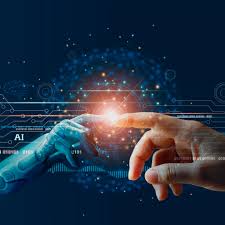
We all know this isn’t the first time humanity has stood at the edge of a technological transformation, which feels like staring into the unknown, somewhat like a monster under the bed. But what’s funny, and perhaps even tragic, is that every generation believes its monster is different, bigger, and more catastrophic. Although if you do scroll back through history, you’ll notice a pattern that is so repetitive, it’s practically a meme: humans fear the future until they have no choice but to accept it and live in it.
AI is just the newest chapter in this long and predictable saga. Yet the panic surrounding it feels louder, more dramatic, and almost theatrical. People speak about AI with the same trembling reverence usually reserved for prophecies. But peel back the panic a bit, and the truth underneath is embarrassingly human:
We don’t fear AI. We fear the loss of control. We fear changing into a digital mask. The machines aren’t really the threat; we are.
Let’s travel back for a minute.
Imagine a scholar in ancient Greece shaking his head as students begin writing things down instead of memorising them. Writing, he warned, would “weaken the mind.” Fast forward a millennium or two, and scribes claim the printing press will “destroy the beauty of handwritten manuscripts.” Then came painters insisting cameras would ruin art. Radio hosts are furious at television. Journalists panicking over the internet. DJs claiming streaming would annihilate music.
And yet here we all are, living in a world built on every single one of those threats. The pattern is unmistakable:
What begins as disruption becomes infrastructure. The typewriter didn’t exactly kill writing; it just industrialised it. Radio didn’t really kill spoken storytelling; it amplified it instead. Podcasts didn’t kill radio; they evolved it. Digital cameras didn’t kill artistry; they democratised it. Humans have always responded to innovation in the same three neat steps over the years:
Fear it.
Fight it.
Then swear you always supported it.
So why exactly should AI be an exception?
The fear wrapping itself around AI isn’t exactly philosophical. It’s more of a psychological thing. It comes from the sinking feeling that AI is moving too fast for us to absorb comfortably, and it’s performing tasks we once considered ours and took pride in: writing, analysing, designing, and creating. And that stings, stings really badly. (The writer in me breaks down over it more times than it should over this.)
It challenges the myth that our value lies solely in our output rather than our imagination. It undermines the illusion that certain skills are untouchable. It threatens the structures we’ve built around what work, creativity, and expertise “should” look like.
People aren’t afraid AI will create art. They’re afraid AI will reveal how much of our “art” was actually technique, not soul. People aren’t afraid that AI will take jobs. They’re afraid of being exposed as unprepared to adapt. The fear isn’t mechanical. It’s personal. It’s that constant whisper in the back of your mind:
“What if I’m not enough without the comfort of the familiar?”
Here’s the question that never gets enough airtime:
When, in the entire timeline of innovation, has a new tool ever wiped out human purpose? Did calculators end mathematics? Did translation software end multilingualism?
Every innovation eliminates the limits and does not completely wipe out the field. It transforms roles, workflows, and expectations. It never destroys the human element — it simply shifts where that element is needed most.
AI is no different. Sure, it takes over repetitive tasks and accelerates complex ones. Also, expose inefficiencies we’ve normalised. And it will demand new skills — strategic thinking, oversight, ethical judgement, and creativity infused with direction rather than drudgery. But in every field out there, AI doesn’t erase humans. It elevates them by forcing a migration from labour to leadership, from repetition to refinement.
So if AI is inevitable, why do we fear it?
Because, well, inevitability forces honesty. It forces us to acknowledge that progress won’t slow down for our comfort. It forces us to admit that our resistance is emotional, not logical. It forces us to confront the possibility that we must change, too. We humans, love the idea of growth… until it requires letting go of what is safe and comfortable. AI makes that tension visible. It’s a mirror held up to our anxieties:
What if I must learn something new?
What if my identity can’t be tied to outdated skills?
What if the world doesn’t look the way I want it to anymore?
But maybe the better question is: When has the world ever looked exactly the way we wanted?
The simple and uncomfortable truth is that AI is not asking for our permission. It’s becoming the backbone of modern creation, innovation, and decision-making. Rejecting it won’t stop it. Resisting it won’t slow it down. Fearing it won’t make it less powerful. What it will do is leave us unprepared for a world that has already changed.
We can spend the next decade fighting ghosts, shouting warnings into an empty theatre, insisting this time is different… Or we can do what humanity has always done when faced with a new frontier:
Learn. Adapt. Expand.
AI is not the end of human relevance, just the end of pretending progress won’t come knocking. And if the future is inevitable, maybe the real question is why we keep pretending fear has ever stopped history from moving forward.