





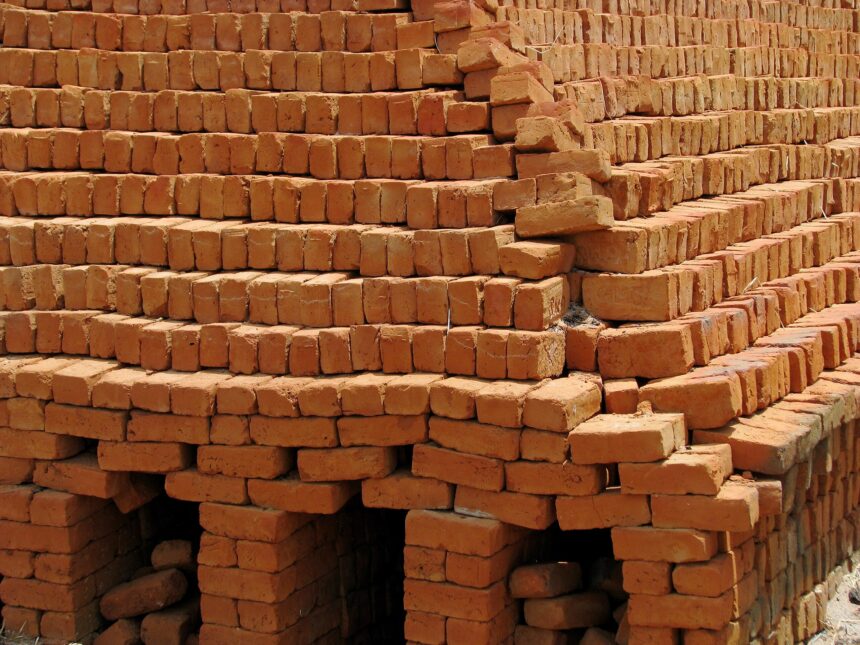
The story behind every brick: Imagine being born into a life where your inheritance is hefty, but not because of a sum of land or money, but rather the opposite, a never-ending debt. Your fate had already been decided even before your birth, with you working excess hours to celebrate the cruel inheritance that your family has been stuck with for decades. It seems ridiculous to even fathom such a scenario, but it’s not that funny when it’s the reality of approximately 3.1 million Pakistanis.
The vicious cycle of Peshgi:
By definition, Peshgi is a type of bonded labour in which an advance payment in the form of a loan is provided by a landlord or employer, which is reciprocated by the borrower performing labour. Because of the large sum of money, borrowers often fail to repay the debt and thus enter into a vicious cycle of repayment which continues through various generations. The victims become stuck in between paying back and sustaining their basic life needs, especially when they’re not allowed to work elsewhere. Resultantly, their job in the brick kilns becomes their sole income-generating resource. More often than not, the debt continues to grow larger and larger as the borrowers try to barely provide themselves with the basic necessities. With no knowledge of signed contracts or the due amount, the kiln owners continue to exploit the lives of their workers.
Compromised conditions or a life sentence?
As these kilns are mostly located in dry areas such as Thar, the workers are used to the scorching temperatures of both the sun and the brick kilns, which normally border around 1100°C. With no houses, non-existent sanitary conditions, degraded air quality, and unclean water, the quality of life for the workers is highly compromised. Such detrimental conditions have led to the development of asthma, tuberculosis, blindness in children, skin problems, permanent respiratory issues and many other conditions for many workers.
Abuse in the shadows:
Since the kiln owners are primarily politicians or powerful landlords, any complaint filed against them with the authorities is often ineffective, as these complaints are frequently ignored by the police, who work in collaboration with the kiln owners to ensure that no viable case is ever pursued. According to Al Jazeera, the workers are promised Rs. 960 as a daily wage, out of which half is often deducted to “pay off” the debt. However, this small amount is also conditional and dependent upon the workers crossing the limit of baking 1,000 bricks per day. To top it all off, there are even speculations that women are subject to harassment and sexual abuse by the kiln owners and are forced to turn a blind eye to avoid negative consequences. Some cases also report that women workers’ pictures are taken to blackmail and harass them.
Stolen Childhoods:
A documentary by Insider captured such injustices in their rawest form. They recorded the Meghwars, a family with three generations stuck within this cycle, with the youngest being born inside it and knowing no alternative reality. The need to pay a hospital bill is what trapped them in this situation. Similarly, Al Jazeera investigated the case of an eleven-year-old, Qaiser Dad, who has met a similar fate due to his father being ill a few years ago. According to Qaiser, he gets up around sunrise and works his way until 8pm at night. This bonded labour does not only extend to slavery but also to extreme child abuse. With no time to have friends or go to school and bearing such a huge responsibility, the kiln owners are responsible for the death of their childhood and innocence and for thrusting them into an abyss that should have never been theirs to begin with.
A governmental system designed to fail:
The most devastating thought is that no governmental institution has tried to counter such issues. The so-called policies hold 3 to 5 years of imprisonment or a fine of Rs. 50,000, policies that fail to do even an inch of damage to the wealthy mafia controlling such systems. Non-governmental agencies and activists such as Syeda Ghulam Fatima have worked towards emancipating 85,000 victims. Although such actions are incredibly commendable, the need for strict governmental intervention is still critical to create a more promising and sustainable change.