





Gone are the days when accessing books and codices was a privilege for the clergy, ruling elites, and scribes. What made books so privileged were the resources required to attain them. The act of reading was imbued with prestige and social distinction, acting as a cultural currency.
However, with the passage of time, quintessentially the post-Gutenberg era, the revolution of the printing press made books accessible. No longer a symbol of wealth and notoriety, reading culture reached its zenith with the advent of mass printing and public libraries. Historic and legendary fiction and non-fiction were written at the time, although momentous work had been done before too. However, this era of dismantled manuscript exclusivity was then followed by the zenith, which ultimately culminated in a paradox. The digitalisation of literature and the emergence of PDFs, e-books, and blogs did alter the traditional landscape of reading, but they have also been criticised by various scholars and thinkers.
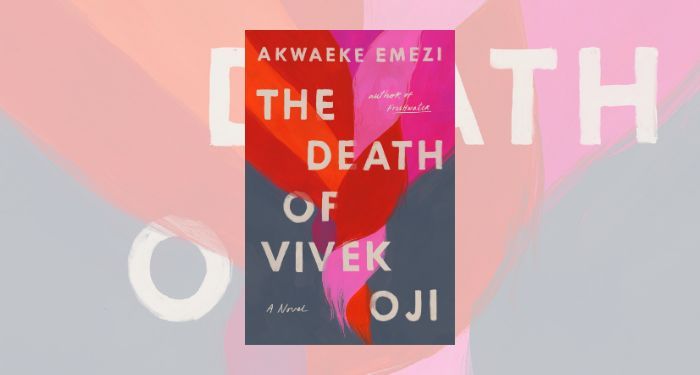
At this juncture emerges the theory of the Death of the Novel, coined by Roland Barthes in 1967. His essay with the similar title ‘Death of the Novel’ discussed the contemporary standing of the novel in parallel to technological advancements, media consumption and changing world preference. While Barthen situates the decline of the novel in the narrative authority, the modern precedent debate stands where the very capacity for provocative and deep reading has been diminished.
The development of digital and social media has magnificently affected all forms of art and content with novel, non-exceptional ideas. Succeeding generations are facing the dilemma of attention spans and radical patience. A generation captivated by dopamine and saturated media has struggled to develop the ability to comprehend the complexities of reading and its intricate details.
In this substantial era of opinion and vocal jurisdiction, any book, no matter its literal depth and impact, is labelled as ‘overhyped’. Writers of contemporary fiction are forced to draft engaging themes, digestible monologues, and an easy-going approach. The reduced tendency of the present generations to cope with canonical text and dense narrative is a composite causality: over-consumption of short-form content, reduced stamina due to fast saturation, disturbed bandwidth due to cognitive pressure emerging from use of multiple media platforms within the same time impulse, over-stimulation and fragmented media consumption. All the aforementioned factors gradually contribute to demonetising patience levels.
Provocative reading requires radical patience, as it cannot be absorbed quickly because of its underlying complex themes, intense emotional impact and in-depth analysis of respective nature. What needs to be considered is that novels have always been a mode to discuss morality, human nature, and complex themes with the disguise of fiction. This needs to be revived in today’s world of saturation, where writing has also started to serve as a tool for bandwagoning.
Instead of maintaining the legacy title of the legendary form of novel, writers have fleeted towards trend-writing. This undermines the overall theme of the novel and its nature. In time, books have stood as a literary heritage and reverence, but this culture is dwindling, making reading a disposable act only. In such an environment, one can say that ‘novels’ are becoming a prestige again, but this time not because of their uniqueness but because of the saturation of the text.