





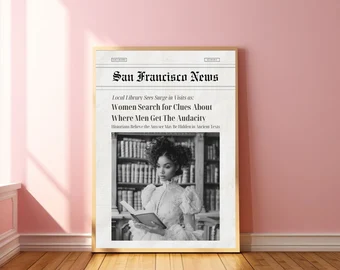
There’s this specific nerve in a woman who chooses herself. She does not view marriage as an afterthought or a placeholder, but rather as an intentional and unapologetic way of living. This society finds such a woman offensive. In a culture that determines a woman’s worth from her ability to be chosen by a man, the single woman becomes a disruption, a reminder that fulfilment can be self-determined.
She is sneered at not because she is deficient, but because she refuses to perform the role of lack. To be single by will is to reject a script that has been practised for generations: find a partner, build a family, and prioritise their wellbeing over selfhood. But some women simply do not seek completion in another person, and others do, just not in the pattern that society demands. Both choices require bravery.
The “Incomplete” Woman
A single man is considered independent, ambitious, and even enviably free. A single woman is often perceived as an incomplete person.
People enquire when she’s getting married in a way they ask about a late package, with an agitating impatience and the assumption that something has gone wrong. They think if she’s “too demanding,” “too career-focused,” or “too rigid.” Her self-sufficiency is admired only until it becomes threatening to the cycle of the same fate chosen for every woman by society.
What’s never considered is that she may simply prefer the normality of the life she has built for herself or she may value her own space, time, and emotional clarity. She may wish for friendships, a career, and solitude, or a life void of monotony, unlike the typical one chosen for a woman. She may prefer her mental peace over a companionship that doesn’t nourish her but revolves around easing the life of her partner.
Independence as a Fundamental Act
Deciding to remain single, even for a while, is not an act of rebellion in itself. It becomes radical only because of how deeply patriarchy is ingrained in the roots of society and how it ties a woman’s identity to her relations.
A woman alone in a café is considered lonely. A man alone is considered intellectual.
A woman who travels alone is careless, and a man? He is adventurous. A woman who prioritises her career over marriage is self-centred, while a man is just doing his job and being responsible.
Women are allowed to be progressive only when it aligns neatly alongside their “real” purpose, marriage, and motherhood. And when it doesn’t, the world labels it as deviance.
But being single blesses a woman with something rare in patriarchal societies: complete ownership of her own life. She can travel across cities, switch careers, and transform herself. She’s answerable only to her own hopes, not the expectations of a spouse or in-laws. She discovers her wants, not what she must negotiate. That is not adhoorapan; it is sovereignty, something she deserves to have if she wants it.
The Scrutiny She Faces
The single woman carries titles she never asked for. People alleged that she was pleased about the entitlement of someone reviewing a public service. Her choices are interrogated more than respected.
At family gatherings, her name becomes a tagline:
“Still not married?”
“Don’t wait too long.”
The irony is that society nags about her future while disregarding how she is thriving in her present. Some women delay marriage because they refuse to settle. Others prefer not to marry at all because marriage doesn’t align with their vision of fulfilment. And some ache for love, but not at the cost of losing themselves. It takes audacity to follow your own path in a society that is determined to dictate your path.
The Act of Living in Authenticity
The liberation of being single is often mistaken for resistance to romance. It certainly isn’t. It’s simply a refusal to force oneself into an ill-fitting mould.
Single women cultivate lives full of connections; they construct households of their own structure. They travel, rest, heal, and grow. They do things because they want to, not because they are compelled to. The goal is to embrace love. It is to avoid the loss of their own selves.
In choosing this freedom, women demonstrate something dynamic: partnership is worth only when it is chosen by will, not demanded by culture or imposed by fear.
What Fulfilment Really Is for Women
The single woman forces society to confront an uncomfortable truth: that a woman’s value cannot be reduced to her relational status. She is whole whether she is coupled or not. She is not missing a half; she is not on pause. She is living. And perhaps what unsettles society most is the fact that she is not afraid to do so publicly.
Her life is not an act of rebellion; it is an act of honesty. The audacity of the single woman is simple: she believes her life is hers. She chooses it, owns it, and shapes it. In a world that still expects women to anchor themselves in others, choosing oneself is not selfish. It is sacred.