





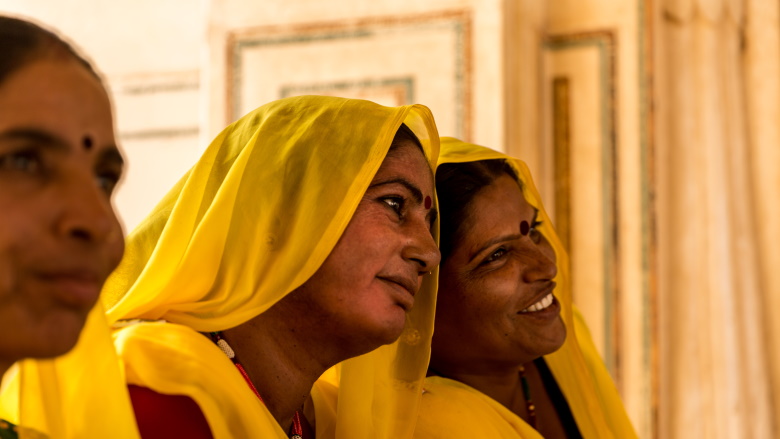
In the days when the first generation of women professionals entered Pakistani university life in the 1980s and 1990s, being empowered meant having access to education, the ability to work in a salaried position, and being visible. Now, after thirty years, empowerment is ‘performance’. The contemporary empowered woman shares her success, pays her bills, and, more than ever, goes to bed with a phone that rings but will never be connected.
In Lahore, Karachi, and Islamabad, a silent exhaustion pervades the lives of young women who have achieved all that their mothers had hoped for in their lives, yet they seem to be still emotionally adrift. It is not the disempowerment of dependence but rather a paradox that is more subtle: every form of autonomy in a world that remains based on inequality.
The Promise of Freedom and the Price of Self-Sufficiency
Contemporary empowerment had been sold as an escape from fathers, from the gaze of husbands, and from the dependence that had characterised womanhood over centuries. Yet the rationale of that freedom was presented in bulk on a neoliberal platform: be self-reliant, be productive, be your own saviour.
This script is gaining new urgency among the Pakistani urban middle class. Women born under the banners of feminism and meritocracy found themselves in workplaces constructed by and about men, in which being assertive meant suppressing feelings of vulnerability, and being a confident person meant projecting oneself repeatedly.
One sociologist, Afiya Zia, once remarked that Pakistani feminism has long been divided into two sides: activist collectivism and aspirational individualism. The latter, she insists, was taken over by market logic, where the liberated woman became a consumer, but not a citizen. The outcome is feminism, which tends to glorify visibility over solidarity.
In this respect, independence is transformed into an economic and emotional act: women should not only be able to do it, but they should also be seen as needing it. Sana, a 32-year-old architect in Lahore, tells me that his family compliments him on being a strong person. But they will never have me complain either. In case I confess that I am tired, I betray the entire concept of empowerment.
The Emotional Economy of Loneliness
Research by the World Values Survey and the Pew Global Attitudes Project reveals that young and educated women worldwide, often regarded as the most empowered, experience the highest levels of loneliness. The available Pakistani data is relatively scarce. However, qualitative research (such as Pakistani researcher Rubina Saigol’s work on gendered subjectivities and studies of female mobility by Pakistani researcher Shahnaz Rouse also indicates this: Autonomy breeds exposure, but not necessarily intimacy.
It is not only personal isolation but also systemic. Connection or linking is a failure when empowerment is determined as a state of self-sufficiency. Any woman who wants emotional or financial help seems to be the one who wants to be dependent, a term still spoken in a low voice and with a hint of derision. Empowerment is often legitimised by delegitimising care — the stuff of social life.
This reflects what philosopher Nancy Fraser has argued as the crisis of care, namely, the erosion of interdependence in capitalist societies. Once assigned the duty of caregiving, women have found themselves in structures that applaud separation and personal benefit. The outcome: according to one Karachi therapist, functional depression in women is doing well, but not fully.
Urban Pakistan: Empowerment within a Patriarchal Paradigm
Empowerment in the Pakistani cities is found in untransformed patriarchal structures. Women can get degrees, but the shadow of respectability follows all the success. The new woman must be modest yet visible, assertive yet likeable, and accomplished without being threatening.
In the case of working women, there is no line between advancement and punishment. Promotion can bring admiration as well as rumours. On the one hand, unmarried professionals are praised as career women, and on the other, they are lamented as being too ambitious to get married.
This two-sidedness leaves women in a sociological double bind: to be empowered in patriarchy, women are to engage in learning its grammar.
In the meantime, domestic labour and emotional care, both of which are still feminised, are unseen indicators of value. Empowerment without disrupting this power structure is prone to recreating it in new forms: the mother who must have a successful career, the single woman who must demonstrate that she is not enough to find a partner, and the entrepreneur who will be glorified on social media but remain lonely in person.
The Digital Mirage of Connection
Feminism was to be democratised via the internet. Digital feminist organisations, such as Aurat March, Girls at Dhabas, and Hum Aurtain, have established new platforms of solidarity and opposition in Pakistan. However, digital empowerment has also increased isolation due to performative activism and algorithmic visibility.
Empowerment is reduced to a brand online. Influencers share edited power, corporate campaigns push to buy strong womanhood, and online harassment is a policy that disciplines women who reveal their powerlessness. The same media that have been used to enhance feminist discourses also reproduce the same surveillance and judgement that women attempted to avoid.
One of the Lahore-based journalists said that she is a part of an online feminist movement and is met with silence at home. The followers do not reflect belonging.
Such a paradox reflects Western feminist criticism, not only of the danger of feminism taking itself too seriously, as Simone de Beauvoir put it, in the myth of self-completion, but also of bell hooks’ stance that feminism lacks community, which is the new hierarchy of privilege.
Feminism at a Crossroads: From Independence to Interdependence
It is not that women in Pakistan or elsewhere should not be more independent, but perhaps the next frontier of feminist thought lies in improved interdependence.
Interdependence does not imply going back to dependence. It means rediscovering the social, emotional, and collective ties that have been destroyed by capitalism and patriarchy. It reinvents empowerment as the ability to relate, to work together, to trust, and to create solidarities that extend beyond individual achievement.
This logic is reflected in the working-class women’s cooperatives in Karachi, which reside in the city’s informal neighbourhoods. Microfinance organisations, needlework groups, and childcare networks in the communities do not support lives by their own powerful hands, but by mutual responsibility. Their paradigm of empowerment, namely cooperative, reciprocal, and relational, is the opposite of the competitive spirit of urban professionals.
Feminist theorists such as Adrienne Maree Brown and Judith Butler have presented a politics of mutual care to the world, namely, that survival and justice are both shared practices. This might involve a Pakistani form of reconceptualising empowerment that is not based on an individual’s career trajectory but rather on forms that redistribute both care and chance, such as safer communal spaces, flexible working environments, community childcare, and mental health services that acknowledge social and not solely personal alienation.
Reconsideration of the Empowered Self
The empowered woman myth is based on the illusion of control, where the self is perceived as sovereign, and emotional independence is considered supreme freedom. However, as experience within society, particularly in the subcontinental society, such as Pakistan, has shown, empowerment minus affiliation is fragile.
It is not to cut off ties but to live in them in a conscious way to be really free. It is to create a feminist culture in which listening is as essential as achievement, and reciprocity is as vital as recognition.
According to an ethnography of women’s activism written by Dr Nida Kirmani of LUMS, empowerment is not a destination but rather a dynamic relationship characterised by a balance of power, support, and a sense of belonging.
It is not, then, to abandon independence, but to humanise it, to make such a sterile self-reliance of neoliberal feminism human with a caring autonomy that does not ignore our interdependence.
The Quiet Revolution Ahead
A successful woman tomorrow might not be the same as we see a successful woman today. Her success could be gauged not by her pay or loneliness but by her ability to maintain relationships without degradation, to be dependent without giving up agency.
The future of feminism, particularly in South Asia, may well be pegged to this change, namely, the shift from the language of ‘I’ to the ‘we-practice’. Since isolation, which is often equated with empowerment, is not liberation. It is yet another enclosure, another veil that is unseen.
The question that remains is not whether women can be independent or not, but whether societies can be reorganised such that independence and belonging can be reconciled.
Until such a time, the empowered woman will still be at her window — free and accomplished.