





Today, we are witnessing the promise of digital connectivity: work from anywhere, at any time. Just a few decades back, the work environment looked entirely different. The office meant grey cubicles, fluorescent lights, and a nine-to-five schedule that dominated work life. Perhaps the greatest contributor to this change, Covid-19, has forever transformed the expectation of constant availability. This leaves the question: Are we really liberated from the nine-to-five or merely stuck in a perpetual, Wi-Fi-fuelled workday?
Working from home has outlived the pandemic-era fix; with Covid-19, the contemporary world has forever been reshaped and reimagined. Millions of professionals rediscovered that productivity exceeds the traditional cubicle workspace. Traditionally, cubicles were a symbol of corporate control, where employees were expected to be physically present during working hours and meet the norms of the traditional workspace, even if it came at the expense of individual autonomy.
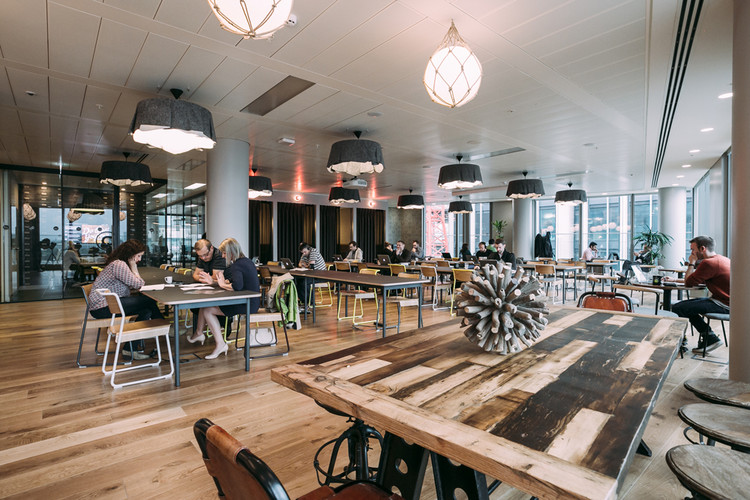
Pre-COVID, the world was slowly transforming from this idea, with freelancing and start-ups gaining success amongst different industries, and the industrial-era efficiency was no longer tied to traditional cubicles and marking a turning point. Workers began working together in shared spaces, which offered them a shared space for entrepreneurs, and coming together for digital nomads was fruitful, both financially and emotionally, as it increased their economic productivity, as Behaviour Public Policy, Cambridge Core, notes that there was an average productivity increase of 11% where workers participated in non-hierarchical team discussions. Hence, worker participation and collaboration boost performance, rather than merely working from a cubicle.
Accelerated by the COVID-19 pandemic, millions were affected globally, from education to corporate structures. The world became adaptable to the virtual lifestyle, where physical files in an office cubicle were replaced by the ability to showcase an office presentation on Zoom. High-speed internet and video conferencing clouded the workspace; initially, what was adopted as a precautionary and short-term alternative to physical interactions transformed into the ‘new normal’. As Investopedia reports, as of August 2025, about 22.1% of US workers are reportedly working from home, merely a shortfall of a quarter for US workers, but a significant number for an economic giant like the US.
The co-working, remote hotspots, and virtual offices have benefited both the workers and the companies. Employees, as an alternative to the cubicle workspaces, now enjoy autonomy over how and where they work from, with flexible working hours, which has been greatly advantageous for stay-at-home parents, who manage their work and personal life through the freedom of remote work. Conversely, companies now have a recruitment pool open to global talent, whose connections are one tap away; companies now hire employees from across the world, complementing their company and financial structures.
Signiant reports collected over the past decade advocate for how the hybrid working environment has reshaped different sectors. Technology infrastructure, from 2007 to 2024, expanded by 75%, as CBRE reports. Further, HRD Asia illustrates the psychological and emotional benefits this environment brings. HCA Magazine reports 90% of workers reported their physical health improved, while 93% found their mental health improved since the world has now adopted a virtual workspace model, as the FlexJobs survey showed. The same survey highlights the significant change in commute time, which now averages 72 minutes per day.
The shift has consequently changed the employee-employer relationships, best illustrated by a survey conducted at Owl Labs. In 2020, 50% of employees refused to return to physical work unless remote work was on the table; 38% in 2024 stated that they would refuse a job unless it was an option. Nearing 68%, as Statista reports, tech professionals across the world now work remotely, either partially or fully, with 50.6% in the finance industry and 48.7% in the insurance industry following in their footsteps.
Further, the benefits the transition has brought along can be best shown through a survey conducted by the US Career Institute. With improved physical health by 28%, increased exercise by 30%, increased sleep by 32%, and mental health at 33%, while reducing depression and anxiety by 34%. Furthermore, lifestyle changes have included better and healthier food priorities at 35% and a reduction in burnout at 36%. This has resulted in Kinsey reports and increased productivity, with 50% of HR professionals agreeing with this idea.
To conclude the discussion above. The contemporary world is liberated from the orthodox nine-to-five culture, with opportunities for creativity and autonomy; however, with a phone in the hand and access to the internet 24/7, work does seep into private corners of life. While we may never return to the traditional cubicle, we must strike a balance in creating a ‘cloud club’, which we envision to build like the World Economic Forum, in its white paper published in 2024, it predicted that by 2030, 92 million global digital jobs will emerge that can be performed from any location with internet access.