





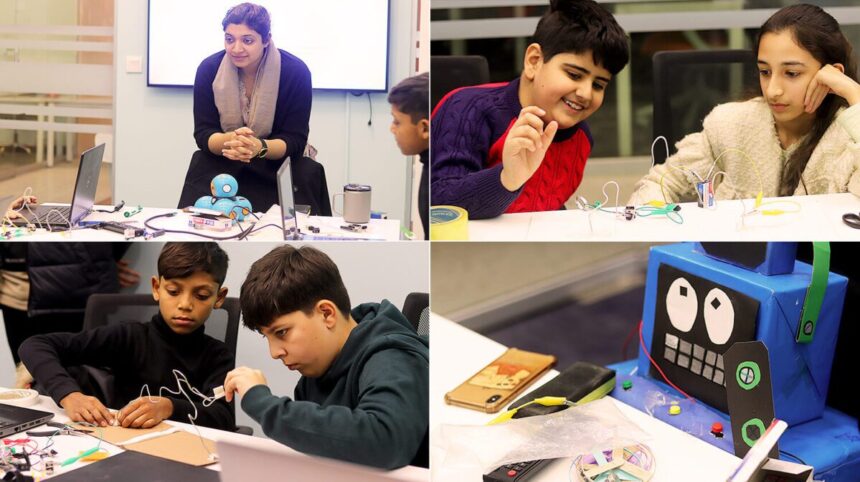
Education is a country’s weapon, its strength, and, most importantly, its hope. Recently, Pakistan has made several efforts to improve its education system so that it can stand in line with international standards. For years, the education sector in the nation remained neglected, but with time, Pakistan has realised the importance and need for adequate education for all and has introduced several reforms to transform its education system.
Progress:
Curriculum Development
Pakistan has placed a major emphasis on modernising its curriculum so that it meets international standards. A pivotal step toward this was the recent introduction of the Single National Curriculum. Introduced in 2020, its aim was to standardise education until grade 12 across all public, private and religious schools in Pakistan. For all students, a minimum of six subjects were made compulsory, including mathematics, English, Urdu, science, Pakistan studies, and religious education.
Emphasis on Girls’ Education
Pakistan continues to make efforts to improve women’s literacy rates. According to UNICEF, the literacy rate of female education has risen from 36% in 2001 to 53% in 2025. One of the greatest successes in this field has been the Benazir Income Support Program, which has aided over 5 million children, with the majority of girls enrolled in school. The Taleem Foundation and the Khyber Pakhtunkhwa Insaaf Afternoon School Initiative have greatly contributed to providing education for all in remote and underdeveloped areas.
“You educate a man; you educate a man. You educate a woman; you educate a generation.” (Brigham Young)
Teacher Training Programs
The government has launched several initiatives to provide training for teachers. The NCC is now focusing on Teacher Professional Development Programs, and for this, it is collaborating with several schools across the country to train teachers on the National Curriculum.
Challenges
Despite these efforts, we still have not met international standards in education. There are many hurdles that need to be addressed and resolved, such as:
- Poverty: Many people in our nation are unable to pay school fees and afford the syllabus and uniforms.
- Lack of Resources: The majority of our country lives in rural areas; however, schools in rural areas lack basic facilities and classrooms. They still teach an outdated curriculum.
- Early Marriages: Early marriages steal away the right of education from not only girls but also boys, as they have to ‘earn’ for their family.
- Social and Cultural Norms: They create barriers for women’s education, prioritising male education over them, believing that educating girls won’t bring back economic returns.
The Way Forward
The path forward demands immediate, targeted action over generalised commitment. Policymakers must prioritise resource allocation to rural infrastructure, ensuring basic facilities and up-to-date curricula are standard, not a luxury. Crucially, comprehensive social programmes must combat poverty and early marriage by providing financial incentives directly tied to school attendance, especially for girls. Finally, national dialogues are needed to actively challenge social norms that devalue female education, making the economic and societal returns of educating women a clear, undeniable national priority.