





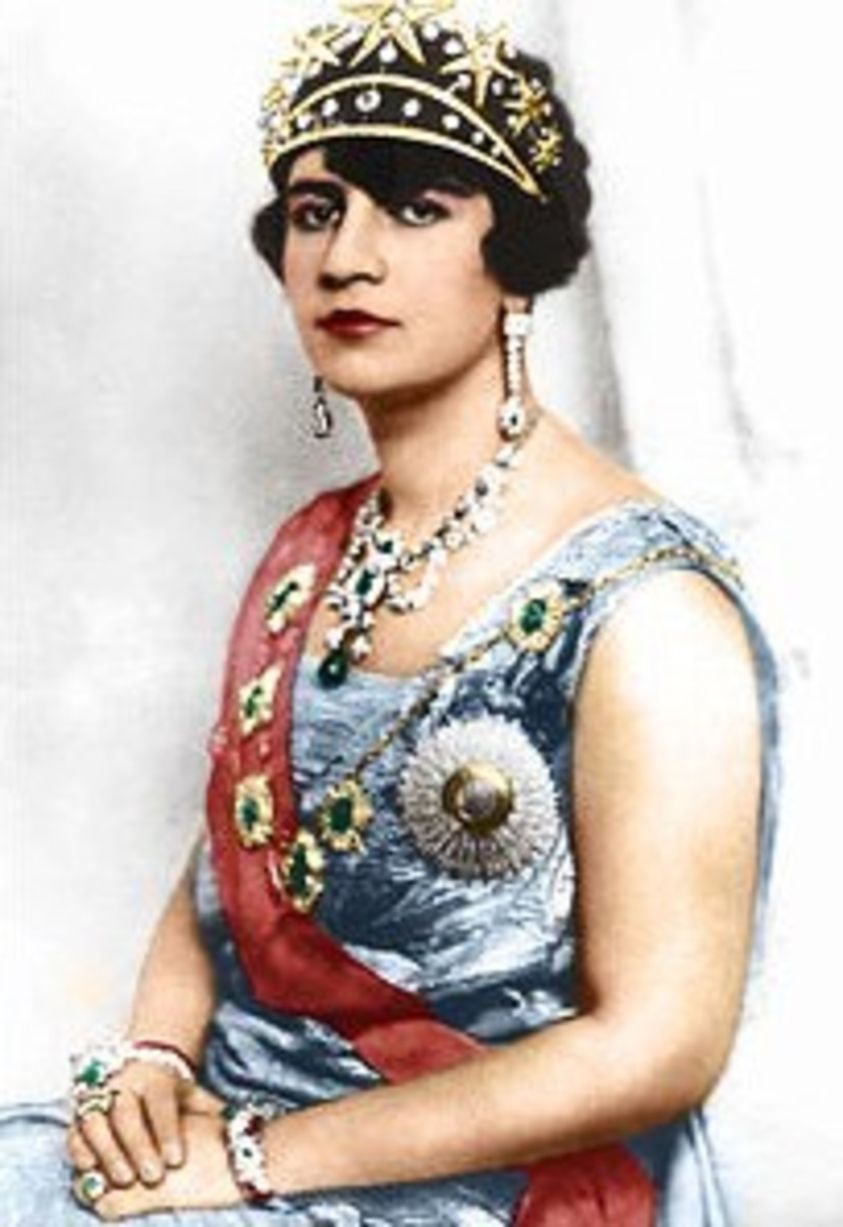
Soraya Tarzi: While the world mourns the death of women’s freedom in Afghanistan, there was a time when that very soil had a queen who defied societal norms and broke stereotypes — Soraya Tarzi, a feminist — long before the term itself gained popularity in the region. Born to the Afghan political leader Sardar Mahmud Beg Tarzi and the Syrian feminist Asma Rasmaya Khanum, Soraya grew up to leave a legacy that remains largely forgotten in spite of the events that unfolded in her country in the 2000s.
Soraya was raised in Syria and got married to King Amanullah Khan, who was then a prince, shortly after her family’s arrival in Afghanistan as their exile ended. With Amanullah Khan’s accession to the throne as the Emir of Afghanistan in 1919, the Third Anglo-Afghan War took place only a few months later for Afghanistan to be fully independent of British rule, after which the couple started implementing their modern and liberal policies, including those related to women’s rights and education. In 1921 Soraya Tarzi established the first girl’s school, Maktab-i Masturat, in Kabul, an institution which, in the next seven years, would provide 800 girls with the opportunity to study. The establishment of this institution sparked controversy, with debates over the appropriateness of sending girls away from their homes for education.
Challenging Social Norms
As pioneers of modernisation in their country, the couple denounced polygamy and dissolved the harem, resulting in the freedom of many enslaved women and promoting gender inequality in the long term in a society where it was common for a man to have four wives, regardless of whether he fulfilled the conditions for having more than one or not.
In 1926, Soraya Tarzi became the queen as her husband declared Afghanistan a monarchy, with himself as the king. Soraya went on to defy the stereotypical expectations that came with her title as she accompanied the King at national events, hunting parties, and cabinet meetings while he visited more sensitive and dangerous areas, instead of just being in charge of the domestic affairs of the palace and ruling the harem.
As she was appointed as Minister of Education, she often emphasised the connection between women’s education and Islamic teachings.
“Do you think, however, that our nation from the outset needs only men to serve it? Women should also take part, just as women did in the early years of our nation and Islam. From their examples we must learn that we must all contribute toward the development of our nation and that these tasks cannot be done without being equipped with knowledge. So we should all attempt to acquire as much knowledge as possible, in order that we may render our services to society in the manner of the women of early Islam.”
Since the country did not have institutions established for higher education, fifteen girls were sent on government scholarships to study in Turkey, an action that was met with alarm from the public. Moreover she also founded Ershad-i-Niswan (Guidance for Women), Afghanistan’s first women’s magazine and a women’s rights organisation called Anjuman-i Himayat-i-Niswan (Protection of Women).
The couple sought to modernise a primarily tribal nation with culturally rooted conservative values, but their measures were met with criticism and unrest. The final nail in the coffin turned out to be their eight-month tour of Europe, where they aimed to study modernism and take more drastic measures on their return; however, the king was forced to reverse most of his secular actions upon his arrival back home, as British-backed propaganda against his rule based on the queen’s attire in the European tour had helped in fuelling a rebellion. It seemed as if all of Queen Soraya’s efforts had been in vain. The country was lost to civil war; the king eventually abdicated and fled with his family.
Though the reign was controversial, with the plans being implemented rather abruptly, Soraya Tarzi gave Afghan women the empowerment that seems to be missing in Afghanistan today, and even after her demise, she continues to serve as a common ground for two seemingly distinct words: ‘feminism’ and ‘Afghanistan’.